Most lab casework specifications in North America include a line saying the cabinets shall meet SEFA 8. It is the most common performance reference for lab cabinets, but it is often cited loosely. This guide explains what it is, what it tests and how to check a supplier's claim.
What SEFA is and what SEFA 8 covers
SEFA is the Scientific Equipment and Furniture Association, an industry association of laboratory furniture and equipment manufacturers. It publishes recommended practices: documents that define test methods and minimum performance for lab products. They are voluntary unless a specification or contract makes them mandatory.
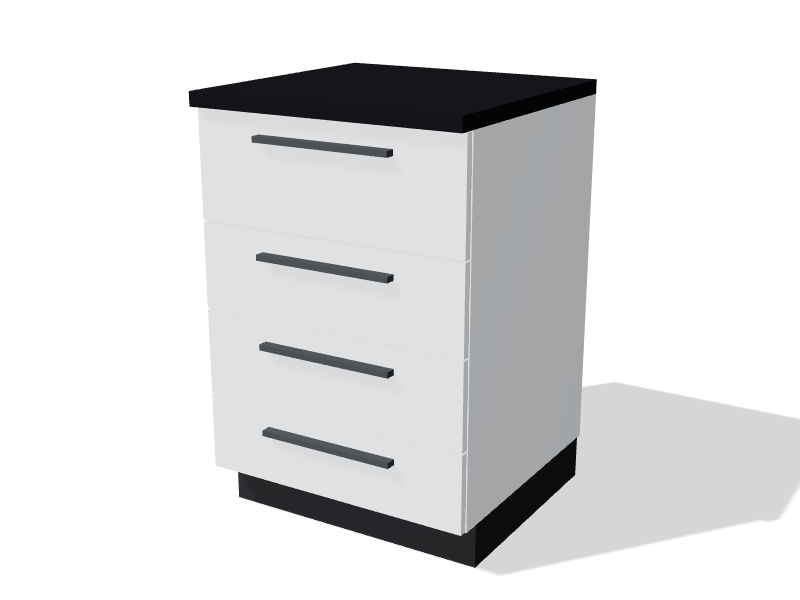
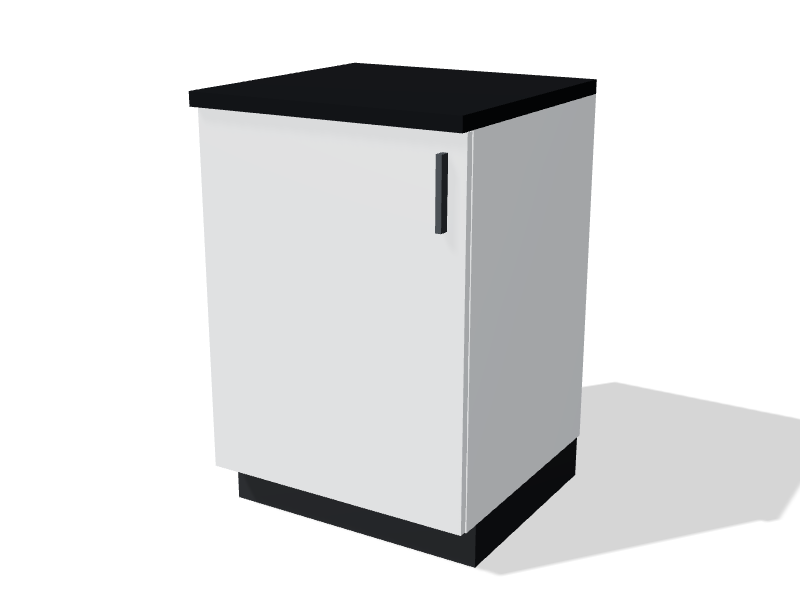
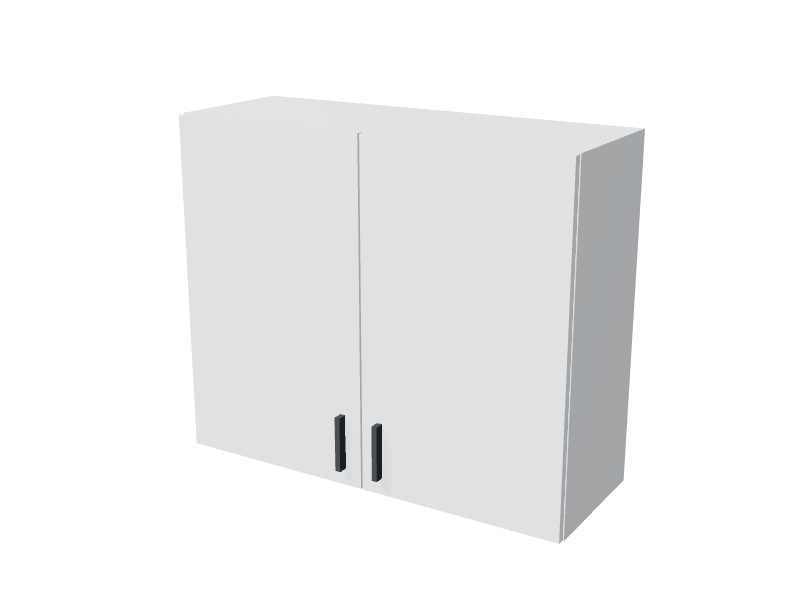
SEFA 8 covers laboratory casework: base cabinets, wall cabinets, tall cabinets and their components. It is published in parts by material. The ones most labs meet are:
- SEFA 8M for metal casework, which in practice usually means painted steel.
- SEFA 8W for wood casework.
- SEFA 8PH for phenolic casework.
Fume hoods fall under SEFA 1, and SEFA publishes separate recommended practices for work surfaces and for installation. A cabinet run can therefore pass SEFA 8 while sitting under a worktop, and installed in a way, that SEFA 8 never examined.
SEFA revises its documents from time to time. Specifications should name the edition, or require testing to the current one.
What the tests check
The tests fall into two families: structure and finish.
| Test group | What it checks | Why it matters |
|---|---|---|
| Cabinet and shelf loads | The box, shelves and wall-hung units carry a static load without permanent deformation | Heavy instruments, glassware and reagent stock |
| Drawers | Static load, repeated opening and closing, and impact | Drawers are the most-used moving part |
| Doors and hinges | Load on an open door, repeated cycling, and impact | Sagging and loose doors are a common failure |
| Finish chemical resistance | Spots of common lab reagents left on finished panels, then rated | Shows which chemicals mark or damage the finish |
| Other finish tests | Typically hot water, impact and coating adhesion | Whether the finish stays attached and intact |
The chemical spot test uses a fixed list of reagents: acids, bases, solvents and salts found in most labs. After the exposure period, each spot is rated on a scale running from no visible effect to failure of the coating, and the recommended practice limits how many severe results a finish may have. Two finishes can both pass and still behave very differently with the reagents you use most.
What SEFA 8 does not tell you
A SEFA 8 test report is useful evidence, but it leaves several questions open:
- It does not cover worktops. Ask for separate data on the epoxy resin or phenolic top you choose; see choosing a lab worktop.
- It does not cover installation quality, leveling, anchoring or seismic restraint.
- It does not make a cabinet suitable for hazardous storage. Flammable liquid cabinets have their own construction requirements under NFPA 30 and the fire code, and corrosives need a cabinet designed for them.
- It does not test your chemicals at your concentrations, or your cleaning regime.
- It says nothing about ergonomics, accessibility or appearance.
Reading a compliance claim
Suppliers describe SEFA 8 in different ways, and the wording matters.
- Tested, with a report. This is the claim you want. The report should name the independent testing laboratory, the test date, the edition, and the exact product line and finish tested.
- Complies or meets, without a report. This may be accurate, but you cannot verify it. Ask for the report.
- Designed to meet. This usually means the product has not been tested as a whole.
Check that the tested product matches what you are buying. A report on one construction or finish does not automatically cover a different door style, steel gauge or coating line. If some tests failed and passed on a retest, ask what changed between the two.
Read the individual spot-test ratings, not just the overall pass. The reagents that left marks are a practical guide to what to keep off those surfaces, or to wipe up quickly, once the lab is running.
Specification checklist
- Name the part of SEFA 8 that applies to each material: 8M, 8W or 8PH.
- Require a test report from an independent laboratory with the shop drawing submittal.
- Require the tested finish and construction to match what is supplied.
- Specify worktop performance separately, with chemical resistance data for the actual top.
- Cover installation, anchoring and seismic restraint in their own sections, coordinated with the engineer of record.
- For the base cabinets and wall units in the run, list the loads you expect so the supplier can confirm they fall within tested limits.
- Keep the reports with the project records for future renovations and warranty claims.
The lab casework buying guide puts these checks in the context of the whole purchase.