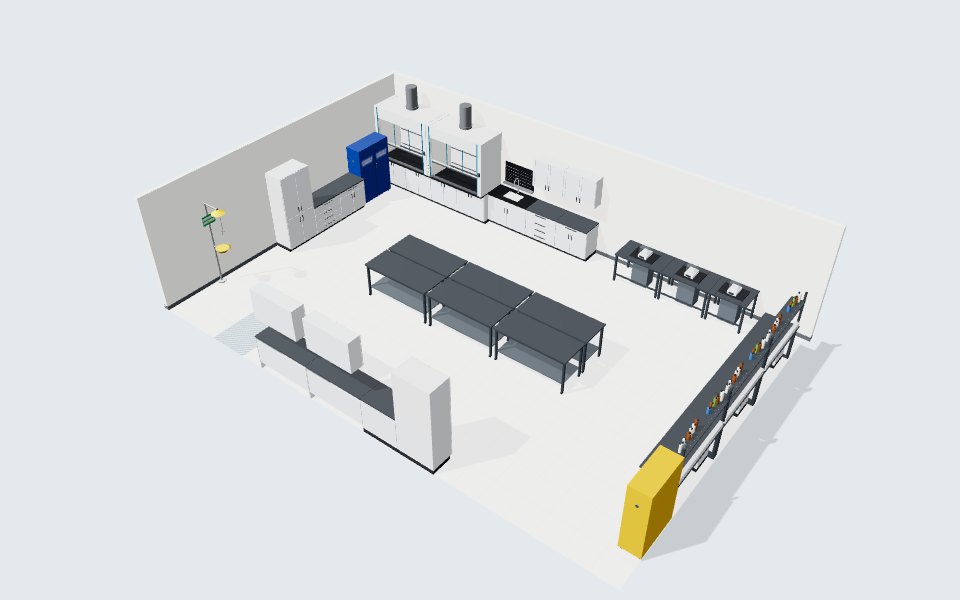
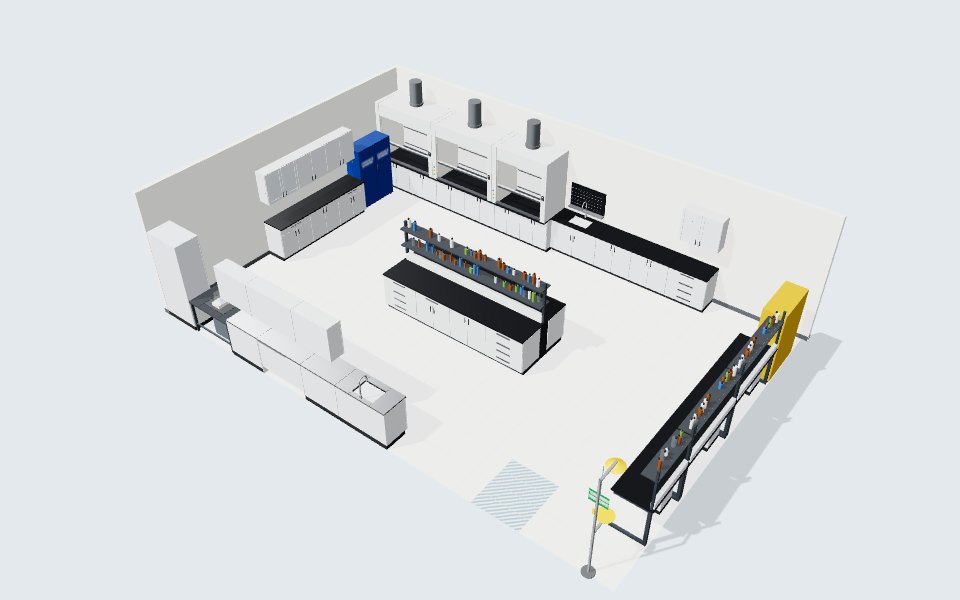
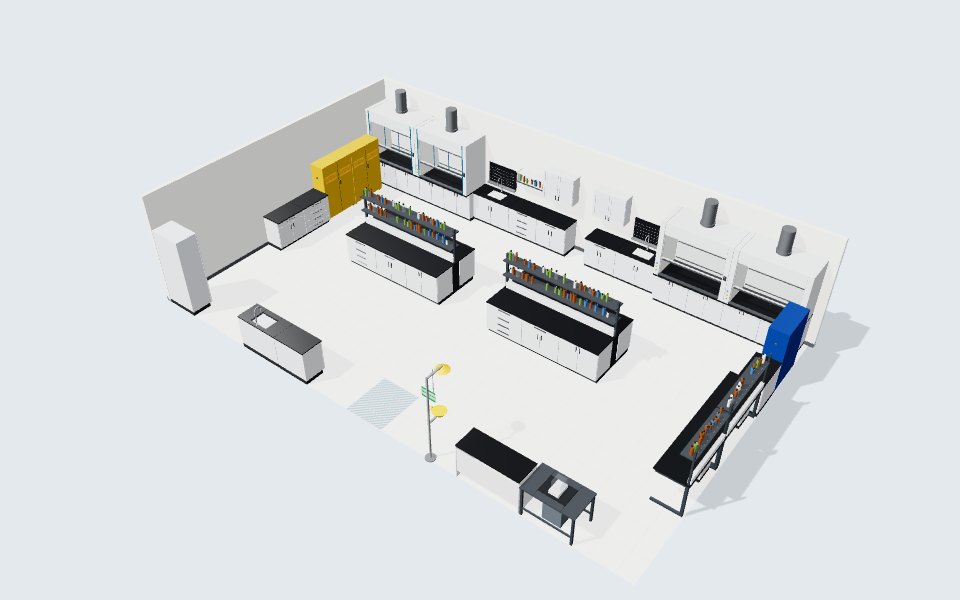
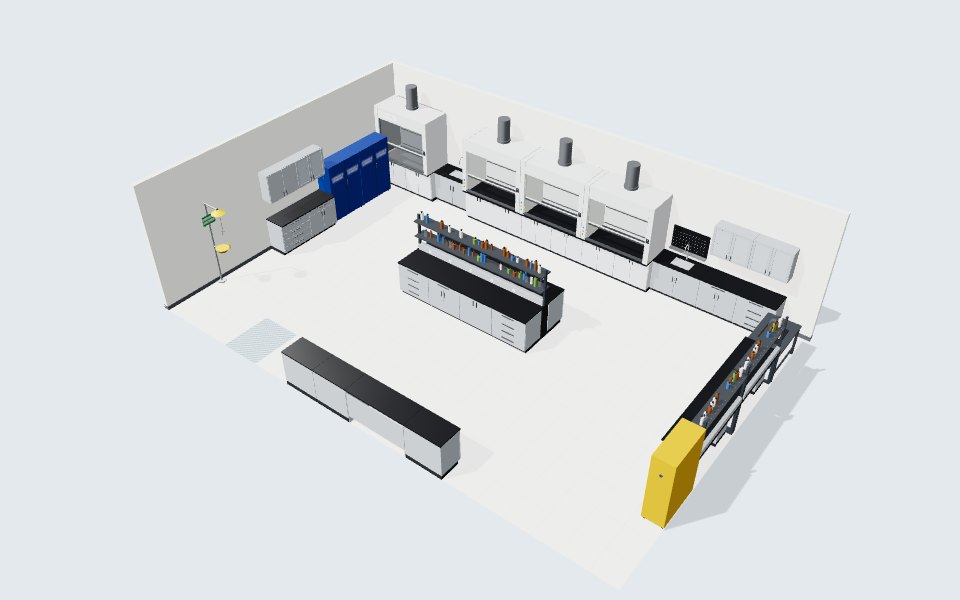
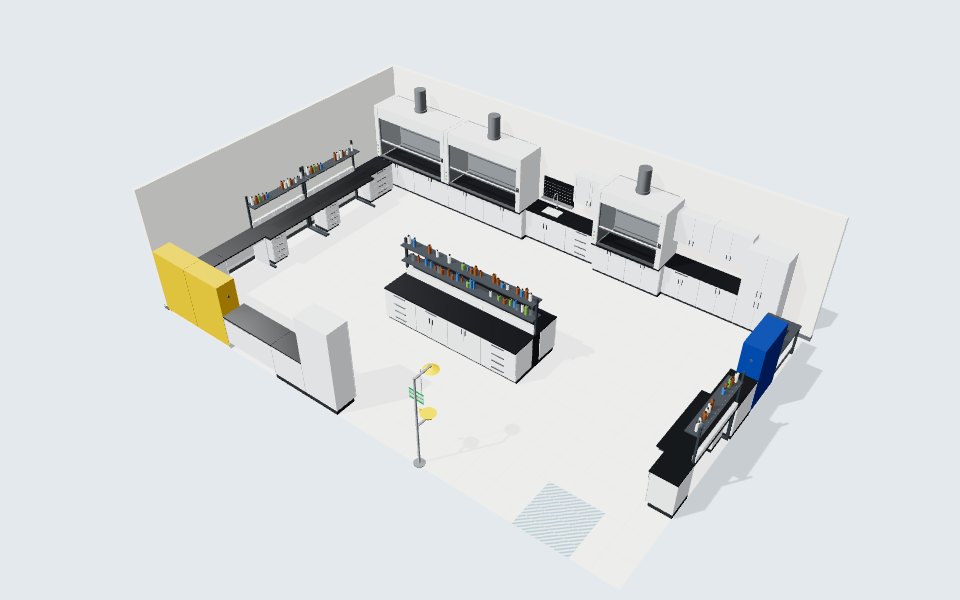
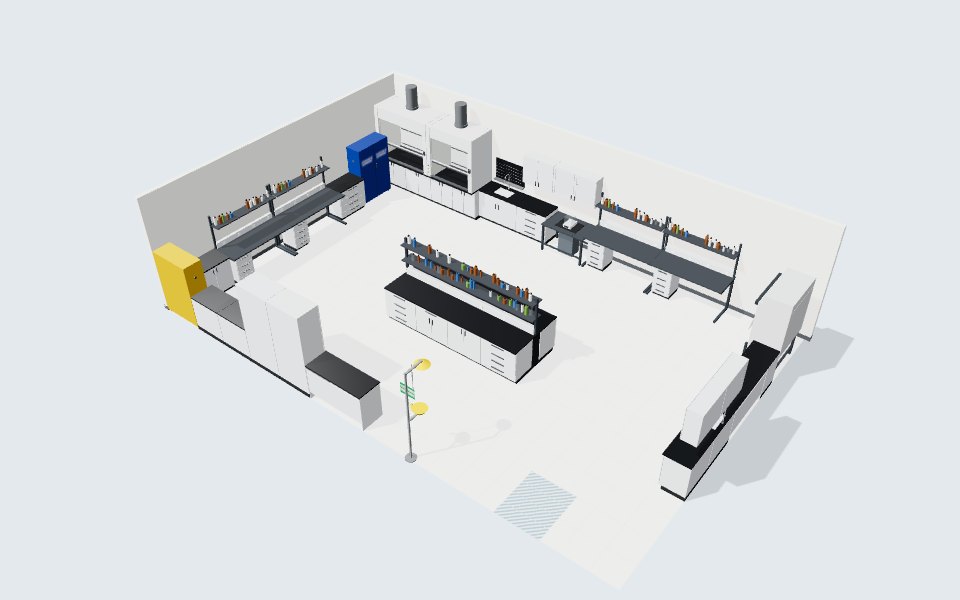
Industrial labs exist to answer a production question quickly and defensibly. Is this batch within specification? Does this water sample meet its permit? What is the grade of this core? The lab may sit inside a plant, beside a mine site or in a commercial testing facility, and it often runs on the same shifts as production. Throughput, repeatability and robustness drive every decision.
What shapes an industrial lab
QC throughput. Samples should move in one direction: receipt and login, preparation, analysis, review and retention. Each step needs enough bench length and storage for the peak load, not the average. Instruments such as HPLC and GC systems need dedicated benches with power, data, gases and exhaust close by, and room behind or beside them for service access. A pharmaceutical QC lab is a good example of how instrument benches, wet chemistry and balance areas fit together.
ISO/IEC 17025 and GMP. Many testing labs hold accreditation to ISO/IEC 17025, and pharmaceutical QC labs also work under GMP. Both expect suitable environmental conditions, separation of incompatible activities and controlled access. Balance areas need stable tables away from doors and supply diffusers; our guide to balance tables and vibration explains why. Sample retention and reference standards need secure, organized storage.
Shift work. A lab that runs around the clock gets no quiet week for maintenance. Specify hardware, finishes and fixtures that survive constant use, and plan so one hood or bench can be serviced while others keep working. Cleaning between shifts should be fast, which points to sealed worktops and simple casework fronts.
Harsh chemistry. Industrial methods are often aggressive:
- Metals analysis and environmental testing use acid digestions with nitric, hydrochloric and sometimes hydrofluoric acid. Hoods with a PVC liner resist those acids far better than standard liners.
- Some mining and materials methods use perchloric acid, which needs a dedicated perchloric acid hood with washdown and its own exhaust.
- Petroleum and solvent labs store and handle large volumes of flammable liquids, which need approved cabinets and attention to NFPA 30 and the National Fire Code of Canada.
- Food and dairy labs run wet, frequently sanitized benches where stainless steel performs best.
Our guide to choosing a lab worktop matches surface materials to these exposures.
Plant conditions. Labs inside a plant or mine site may face dust, vibration, forklift traffic and temperature swings. A mining assay lab, for example, separates dusty sample preparation and hot fire assay areas from clean wet chemistry and instrument rooms. Dust collection and furnace exhaust are usually engineered as their own systems.
What we typically supply
- Painted steel or solid phenolic casework, with epoxy, phenolic or stainless worktops matched to the chemistry
- Benchtop bypass hoods, high-performance low-flow hoods and walk-in hoods for larger apparatus
- Perchloric acid hoods and acid-resistant PVC-lined hoods for digestion work
- Mobile tables and adaptable benches for instruments that come and go
- Anti-vibration balance tables
- Flammable liquids cabinets, corrosives cabinets and tall storage
- Emergency showers and eyewash stations
How planning works
- Map the sample flow. We record sample volumes, methods, turnaround targets and peak periods.
- List the instruments. We build an equipment matrix with footprints, utilities, heat loads and exhaust needs.
- Zone the hazards. We separate acid digestion, solvents, dusty preparation and clean instrument areas.
- Lay out and model. We produce 2D layouts and a 3D model for lab staff and the quality team to review.
- Coordinate engineering. We pass hood schedules and utility loads to the engineers. The engineer of record, the site's EHS team and the local authority settle ventilation and code questions.
- Install around production. We schedule work in phases so testing continues.
Questions to ask before you start
- What is the peak daily sample load, and how fast must results be reported?
- Which methods use acids that attack standard hood liners and worktops?
- Which areas need controlled temperature, humidity or vibration?
- How will the lab keep running during installation?
- What do your accreditation assessors expect to see in the facility?
Lay out your workflow in the lab planner, or request a consultation to plan a QC or testing lab with us.