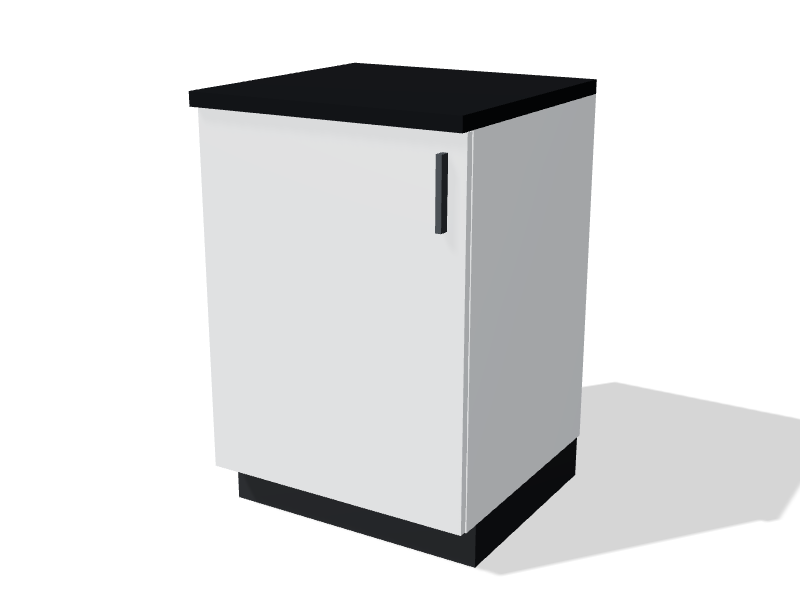
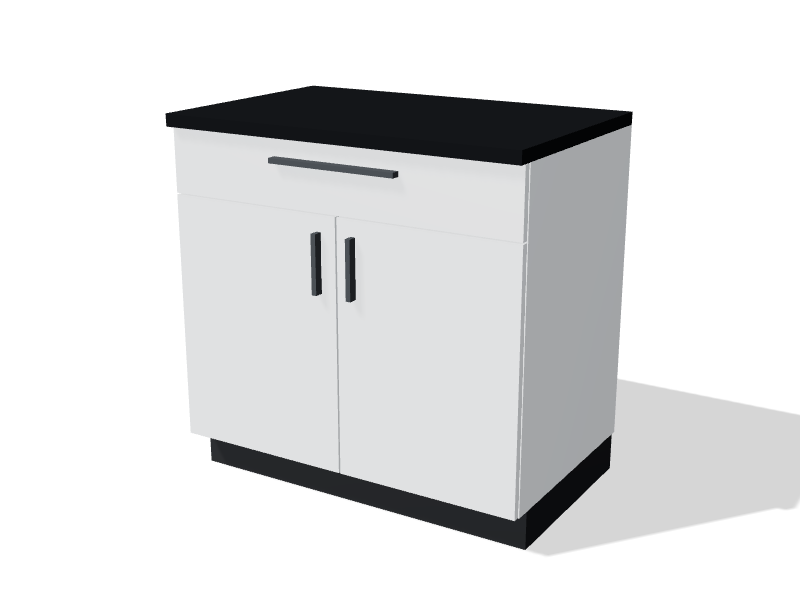
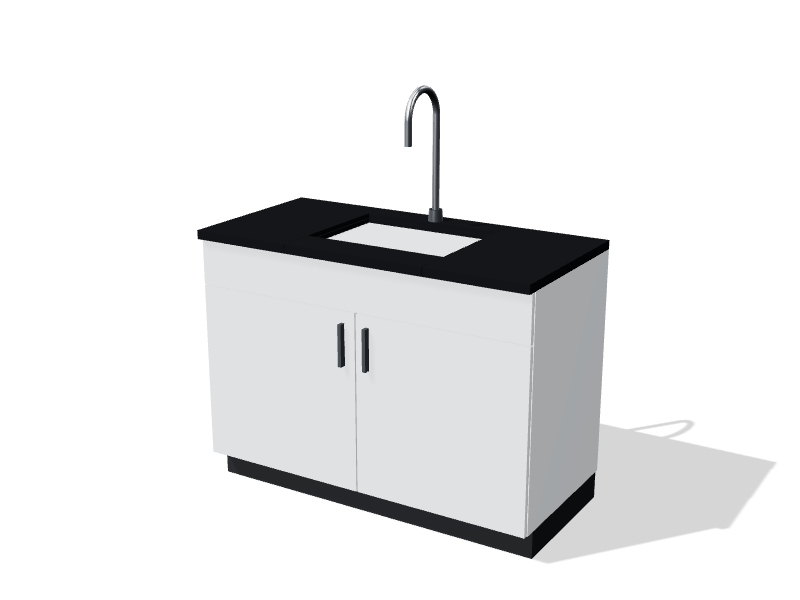
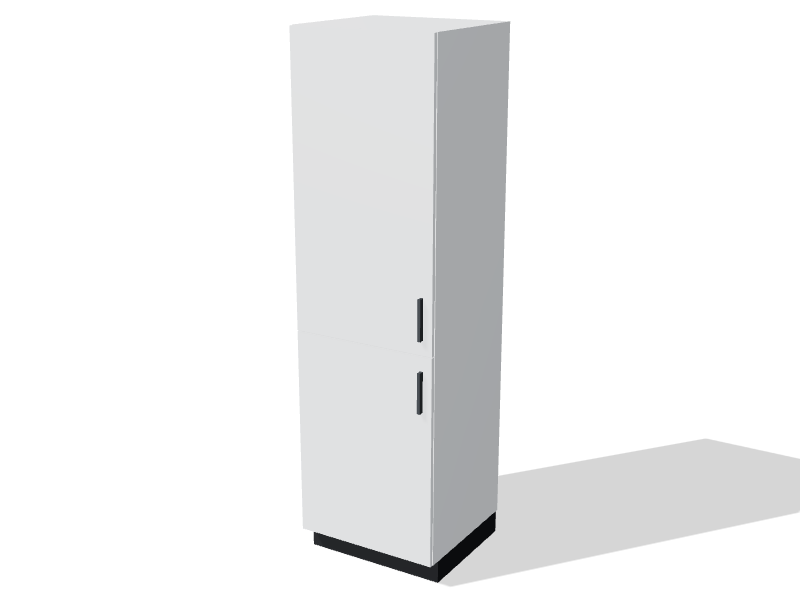
The material of the cabinet box decides how casework copes with water, chemical vapour, impact and cleaning over its life. Worktops are a separate decision. This page compares the three most common cabinet materials; stainless steel has its own guide.
The three materials
Painted steel
Painted steel casework is formed from cold-rolled sheet steel, welded or fastened into a rigid box, then powder coated. The coating is usually an epoxy or epoxy-polyester powder baked onto the metal. Heavier gauge steel goes at corners, top rails and other load points.
Strengths. Steel boxes are strong, dimensionally consistent and available in many standard sizes, so a long run goes together quickly and units can be swapped later. A good powder coat resists most everyday lab chemicals and cleans easily. In most markets, painted steel is the economical default for chemistry, analytical and teaching labs.
Limits. The coating is the protection. Where it is chipped or scratched through, the steel underneath can rust, and rust can creep under the surrounding coating. That makes sink bases, cabinets that sit in water after floor washing, and rooms with constant acid vapour the weak spots. Steel also dents, and steel doors are louder than wood or phenolic.
Wood
Wood casework uses hardwood, most often maple or oak, as veneered panels and solid face frames, sealed with a catalyzed chemical-resistant finish. Maple veneer is the familiar look in many teaching labs.
Strengths. Wood is quiet, warm in appearance and comfortable in rooms where people also teach, write and meet. Damaged finish can often be touched up or refinished in place. It suits dry labs, physics and electronics rooms, write-up areas and schools where the feel of the room matters.
Limits. Water is the enemy. Once the finish is breached, veneer and core materials swell, delaminate and stain, and the damage usually starts at sinks, toe kicks and door edges. Wood is a poor fit for wet chemistry, frequent wash-down, high humidity or any space that needs repeated disinfection, because a breached finish leaves a porous surface.
Solid phenolic
Solid phenolic casework is built from compact phenolic panels: layers of kraft paper saturated with phenolic resin and pressed under heat and high pressure, with a decorative surface layer. The cabinet box, doors and shelves are all made of panel, assembled with corrosion-resistant hardware.
Strengths. Phenolic does not rust, swell or rot. It tolerates water, steam, many acids and bases, and repeated disinfectant cleaning. It is the usual upgrade from painted steel for sink runs, wash-down rooms, humid spaces and labs with corrosive vapour, and for coastal sites where salt air attacks steel.
Limits. It typically costs more than painted steel. Panels are heavy, cut edges show the dark core, and hardware needs care because screws in a dense panel need the right fixings. Like any resin, phenolic has limits with some strong oxidizing acids at high concentration, so check the chemical resistance data against your own list.
Side by side
| Property | Painted steel | Wood | Solid phenolic |
|---|---|---|---|
| Water and humidity | Good while coating is intact | Poor once finish is breached | Excellent |
| Chemical vapour | Good; rusts at chips | Fair | Very good |
| Impact | Strong but dents | Moderate | Good |
| Repair | Touch-up paint | Refinish in place | Limited; replace panel |
| Typical fit | General chemistry, analytical, teaching | Dry labs, schools, write-up | Wet, humid, corrosive, wash-down |
Each material has its own part of SEFA 8 (8M, 8W and 8PH), so test reports let you compare like with like. See SEFA 8 casework standards explained.
Mixing materials in one lab
You do not need one material for the whole room. A common pattern is painted steel for the general runs, with phenolic for the sink base and the cabinets either side of it, where water does most of its damage. Teaching labs sometimes pair wood perimeter storage with phenolic or steel at the student benches. A room with one acid digestion area can use phenolic in that zone only.
When mixing, keep door styles, toe kick heights and worktop heights consistent so the room still reads as one continuous run, and confirm that the suppliers' modules line up if more than one manufacturer is involved.
Checklist
- List the wet zones: sinks, eyewashes, wash-down areas, places where floors are mopped heavily.
- Note any constant vapour source, such as acid digestion or open baths, and keep painted steel away from it or choose phenolic.
- Ask for each material's SEFA 8 test report and the chemical spot-test results for the exact finish offered.
- Check hinges, slides and fasteners: corrosion-resistant hardware matters as much as the box in humid rooms.
- Plan how damage will be repaired: touch-up paint, refinishing kit or spare panels.
- Agree cleaning products with whoever cleans the lab; see cleaning and caring for lab surfaces.