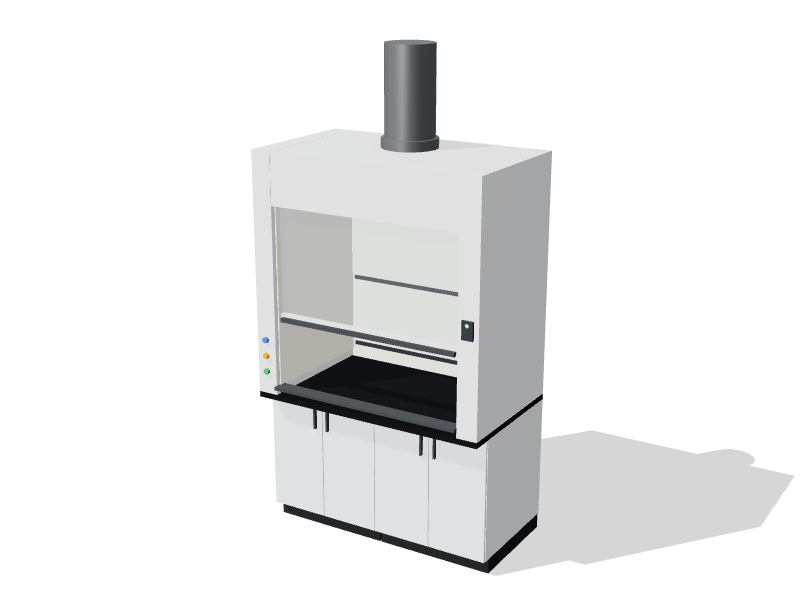
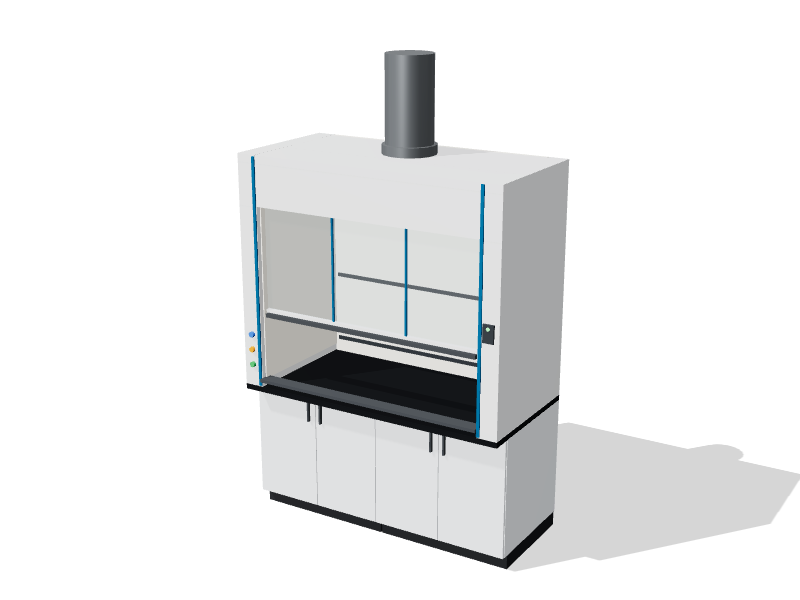
CSA Z316.5, Fume hoods and associated exhaust systems, is the Canadian standard for laboratory fume hoods. Published by CSA Group, it is used by universities, hospitals, government labs and industry as the reference for how hoods should be designed, installed, tested and maintained. If you are planning hoods for a Canadian building, read it alongside your organization's own lab design standard before you write a specification.
What the standard covers
CSA Z316.5 takes a whole-system view. A hood is only as good as its exhaust, its room and its users, so the standard reaches well beyond the hood cabinet. Its main topics include:
- Hood design and construction: materials, the sash, features that affect airflow, and labelling.
- Exhaust systems: ductwork, fans and discharge, including where exhaust is released relative to air intakes.
- Installation and location: placement in the room and the influence of supply air and traffic.
- Performance testing: at the factory, after installation and at regular intervals afterward.
- Monitoring: devices that tell users whether the hood is operating as intended.
- Operation and maintenance: inspection, records and user practices.
Exact requirements change between editions. Confirm which edition your organization or the regulator has adopted, and work from that text rather than from a summary, including this one.
Is it mandatory?
A CSA standard is voluntary on its own. It becomes binding when something else points to it:
- Occupational health and safety rules. Provincial, territorial or federal regulations may reference it directly, or an inspector may treat it as the recognized good practice an employer is expected to follow. This varies by jurisdiction and changes over time.
- Owner design standards. Most Canadian universities, health authorities and government departments name it in their facility design guidelines.
- Contracts. Once a project specification calls for compliance, it is a contract requirement.
- Insurers and auditors, who often use it as the benchmark when they review a lab.
The National Building Code and National Fire Code of Canada, as adopted by each province, govern related matters such as ventilation, fire separations and hazardous materials. NFPA 45 is also widely used as a reference for fire safety in chemical labs. These documents work alongside CSA Z316.5 rather than replacing it.
How it relates to other standards
| Document | Focus | Typical role on a Canadian project |
|---|---|---|
| CSA Z316.5 | Fume hoods and their exhaust systems | Primary Canadian reference for hoods |
| ANSI/ASHRAE 110 | Test method for hood containment | Tracer gas, smoke and face velocity testing |
| ANSI/AIHA Z9.5 | Laboratory ventilation as a whole | Program-level guidance, often cited by EHS teams |
| SEFA 1 | Industry recommended practices for hoods | Common reference in manufacturer literature |
| NFPA 45 | Fire protection for labs using chemicals | Fire safety, including special hood types |
The documents overlap, and on some points they differ. Your organization's design standard should say which one governs where they conflict. A good specification states this explicitly, so the contractor, the hood supplier and the tester all work to the same numbers.
What it means for a project
Designing to CSA Z316.5 shapes several decisions early on:
- Hood selection. Ask suppliers which edition their hoods were designed against, and for ASHRAE 110 reports showing performance at your intended face velocity and sash height. Do not accept a statement of compliance without the reports behind it.
- Location and supply air. Because the standard looks at the room as well as the hood, hood positions, diffuser layouts and door locations need to be coordinated by the architect and mechanical engineer at the design stage, not settled late.
- Exhaust design. Duct material, fan location, discharge height and separation from intakes are part of the hood's performance. See exhaust ducts, fans and stacks.
- Monitoring. Plan for an airflow monitor on each hood, with alarms users can both see and hear.
- Testing and records. Budget for testing after installation and at regular intervals afterward; annual testing is the common practice in Canada. Keep a file for each hood with test reports, monitor calibration, repairs and changes to the room.
- Training. A hood that passes every test can still be misused. Plan user training on sash height and work practices before the lab opens.
Questions to ask your supplier
- Which edition of CSA Z316.5 was the hood designed against, and which parts of it does your scope cover?
- Can you provide an ASHRAE 110 as-manufactured test report for this exact model, size and sash type?
- What face velocity and sash height were used in that test?
- What airflow monitor is supplied, and how is it calibrated in the field?
- What labels and user instructions come with the hood?
- Will you support as-installed testing and commissioning, or should we engage an independent tester?
The engineer of record and your EHS office decide how the standard applies to your building. For help turning it into a hood schedule and specification, book a consultation, or ask about fume hood certification.