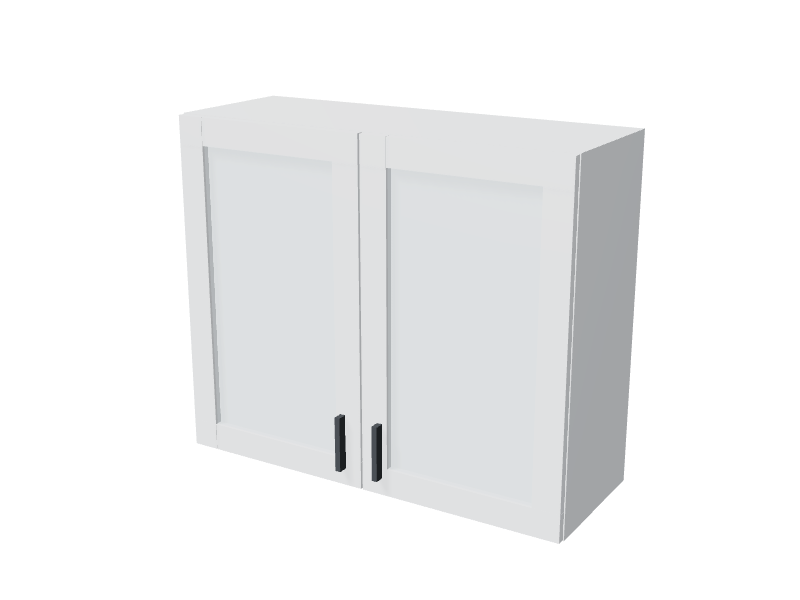
Lab casework is the built-in and movable furniture of a laboratory: base cabinets, wall and tall cabinets, worktops, benches, shelving and the service fixtures mounted on them. It often stays in place for decades and outlives several research programs, so a careful purchase pays back for a long time. This guide walks through the decisions in the order they usually come up.
Start with the work, not the catalog
Before comparing materials or suppliers, write down what will happen at each bench. A short brief answers these questions:
- Which processes run here, and are they wet (chemistry, washing, buffers) or dry (instruments, computers, write-up)?
- Which chemicals are used, at what concentrations, and how often are they spilled?
- What heat sources sit on the worktop: hot plates, burners, ovens, heating mantles?
- How many people work at once, and do they stand, sit, or both?
- Which equipment needs bench space, and what does it weigh?
- How likely is the program to change in the next five years?
The answers drive almost every later choice. A dry instrument room and an organic synthesis lab can share a floor plan and still need very different casework.
Five decisions that shape the order
Construction material
Most lab casework is built from painted steel, wood such as maple veneer, solid phenolic or stainless steel. Painted steel is the common default. Phenolic and stainless earn their higher cost in wet, humid or wash-down rooms, and wood suits teaching and dry labs. The trade-offs are covered in steel, wood or phenolic casework.
Worktop
The worktop takes most of the abuse, so match it to chemical and heat exposure rather than to the cabinets. Epoxy resin and phenolic resin cover most labs; stainless steel and chemical-resistant laminate fill specific niches. See choosing a lab worktop.
Configuration
Fixed base cabinets under a continuous worktop are the most economical choice for a stable program. Mobile tables and adaptable frames cost more up front but let a lab reconfigure without calling in trades. Most labs mix the two: fixed wet benches on the perimeter, flexible benches in the middle.
Cabinet mix
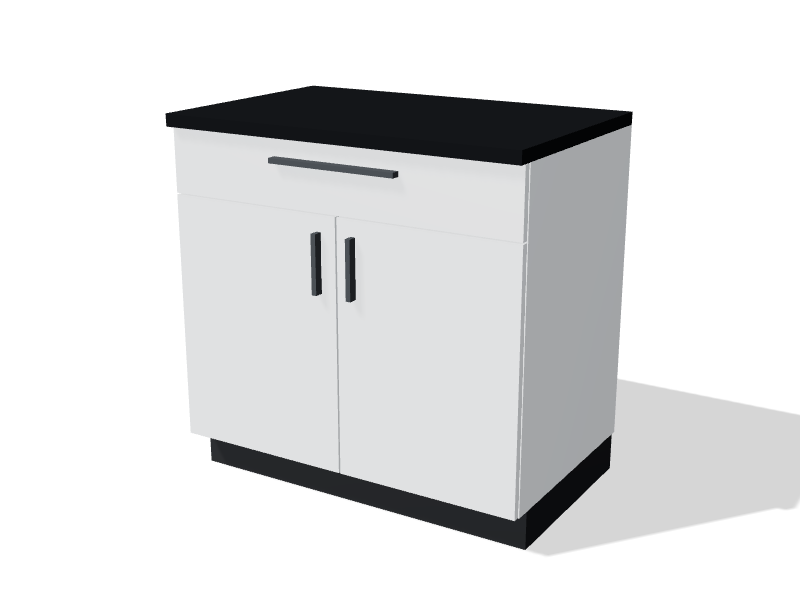
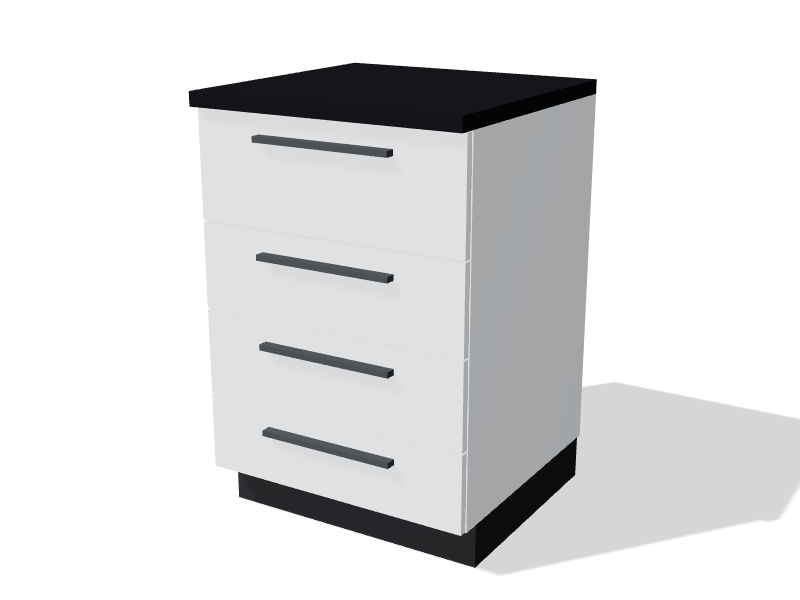
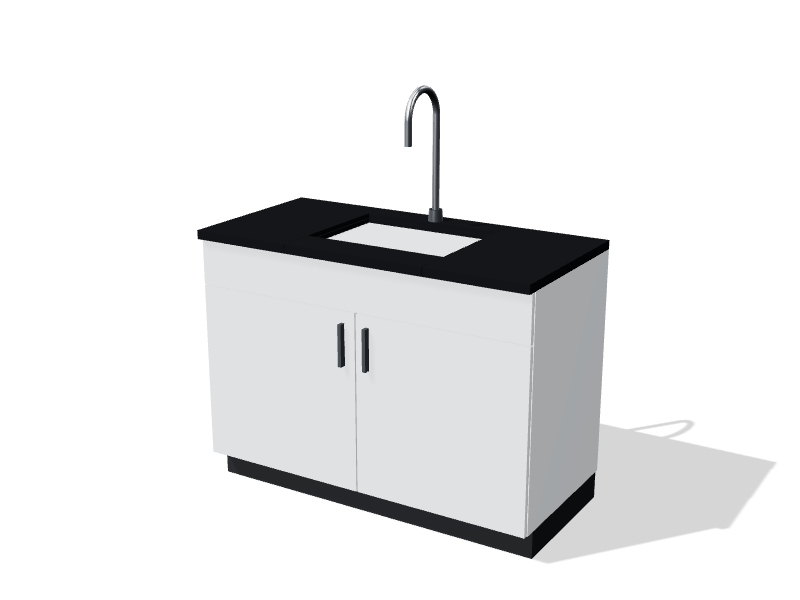
Count what needs storing before choosing cabinet fronts. Drawers keep small items visible and reachable; door cabinets hold bulky items and bins. A drawer-over-door unit such as the combination base cabinet is a sensible default for most of a run, with full drawer stacks where pipettes, tools and consumables live. Leave knee spaces for seated tasks such as microscopy and data entry, and plan sink bases, fume hood bases and flammable storage as part of the same run rather than as afterthoughts.
Hardware and details
Details decide how casework feels after ten years of use. Look at drawer slide type and load rating, hinge design, door construction, locks, leveling at the toe kick, and removable back panels that give access to services behind the cabinets. Ask whether worktops rest on the cabinets alone or on a separate support frame. That matters when cabinets may be swapped or removed later.
Standards, codes and documentation
In North America, lab casework performance is usually specified against SEFA 8: SEFA 8M for metal, SEFA 8W for wood and SEFA 8PH for phenolic. These recommended practices set load, cycling and finish tests. A brochure statement is not evidence; ask for the test report. SEFA 8 casework standards explained covers what the tests check and how to read a claim.
Codes apply at installation. Casework and tall cabinets must be anchored, and in seismic regions the National Building Code of Canada includes requirements for anchoring nonstructural components such as casework and shelving. The engineer of record sets those details. General storage casework is never a substitute for a flammable liquids cabinet, and fire code limits on flammable quantities apply regardless of the furniture.
Lead times, delivery and installation
Lead time depends on material, finish and order size, and it often drives the project schedule more than anything else in the room. Standard painted steel sizes usually ship sooner than custom phenolic or welded stainless. Coordinate the order with service rough-in: plumbing, gas and electrical stubs must land where the casework drawings say they will. A site measure after walls are up and before final fabrication prevents most fit problems. Lead times, delivery and installation covers the sequencing in detail.
Plan the delivery route as well. Long worktops and tall cabinets need a clear path from the loading dock to the room, including elevator sizes and door widths.
Questions to ask your supplier
- Which SEFA 8 tests has this product line passed, which laboratory ran them, and when? Can we see the report?
- Which finish was tested, and does it match the finish we are ordering?
- What are the load ratings for drawers, shelves and the worktop support?
- How are worktops joined, sealed and supported, and how are sinks mounted?
- Which cabinets can be moved or swapped later without cutting the worktop?
- What seismic anchoring hardware is included, and who designs it?
- What is the lead time from approved shop drawings, and what does the warranty cover?
- Who installs, who handles touch-ups and deficiency items, and who removes packaging?
To try configurations before you request pricing, build a run in the lab planner.