Lab work combines long periods of standing, fine hand movements, repeated pipetting and awkward reaches into hoods and cabinets. Over months, these add up to sore necks, shoulders, wrists and backs. Most of the fixes are cheap if they are planned into the furniture, and expensive once a fixed bench is installed at the wrong height.
Get the work height right
Standard lab benches sit at two heights: around 900 mm (35½ in) for standing work and around 750 mm (29½ in) for seated work. These suit an average user. Taller people stoop at a standing bench, and shorter people raise their shoulders to work at it.
The right height depends on the task as much as the person:
| Task | Best work height | Lab examples |
|---|---|---|
| Precise, close visual work | At or slightly above elbow height | Microdissection, fine assembly, reading small graduations |
| Light hand work | Slightly below elbow height | Pipetting, sample preparation, labelling |
| Work that needs force | Well below elbow height | Tightening fittings, mixing large volumes, packing |
Remember that the object on the bench sets the real working height. A tube rack, a stirrer plate or a tall flask can raise the hands well above the worktop. A bench that feels right for paperwork may be too high for work on top of a 150 mm (6 in) instrument.
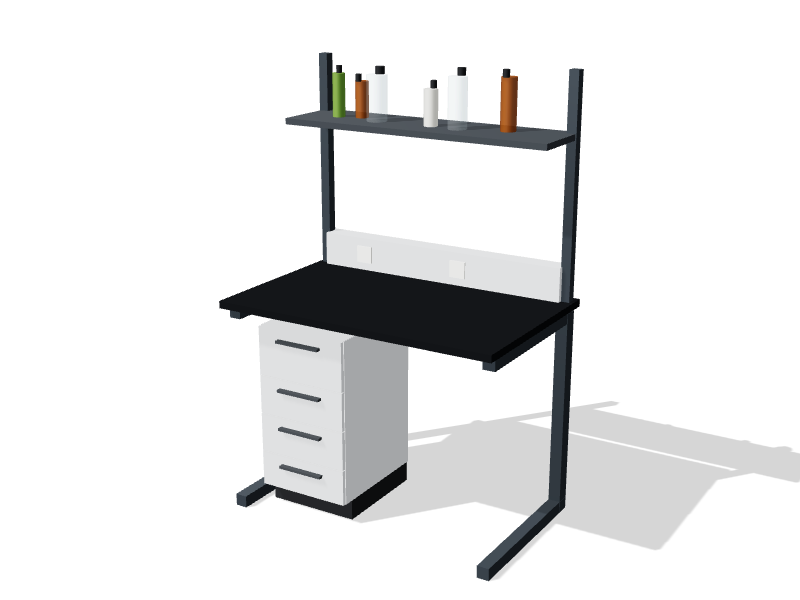
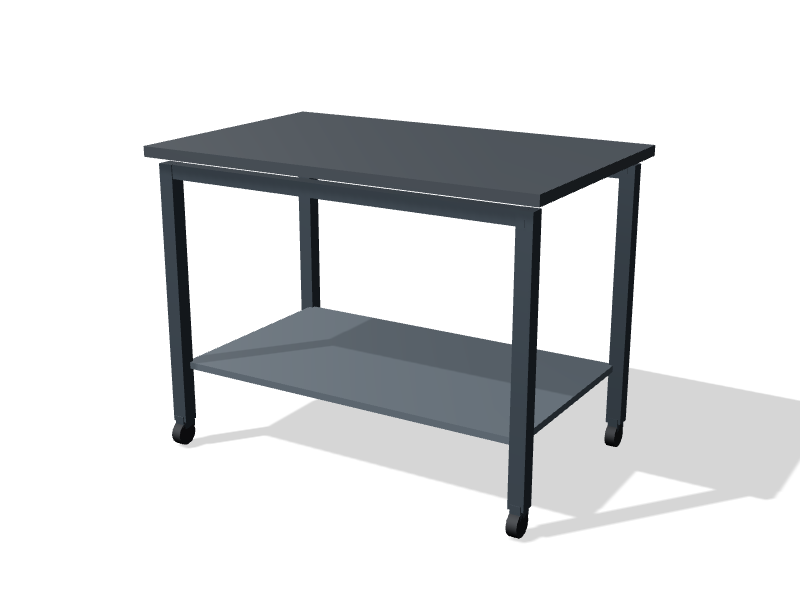
Adjustability solves most of this. Height-adjustable C-frame benches can be reset as users and tasks change, and electrically adjustable tables let one station serve both standing and seated work. Where benches are fixed, provide a mix of standing and seated heights in each room. The guide to standard bench dimensions gives the usual starting points.
Seated work: knee space, chairs and footrests
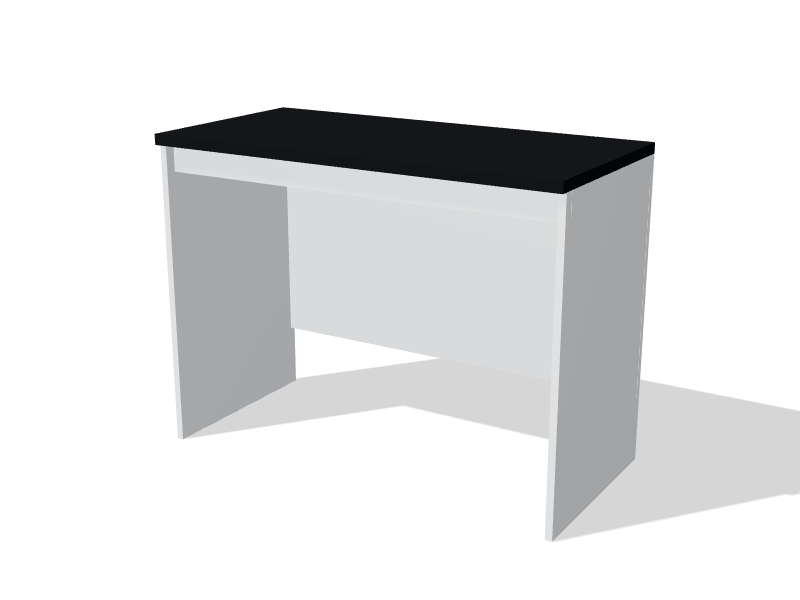
Seated work needs real knee space: a clear opening under the worktop with no drawer, apron or plumbing at knee level. A dedicated knee-space unit under a continuous worktop gives that opening while keeping the bench line tidy. Plan knee spaces wherever people use microscopes, balances, computers or biosafety cabinets.
Sitting at a standing-height bench is common in labs and acceptable with the right chair:
- Use a tall lab stool or chair with a foot ring, so the feet are supported. Dangling feet put pressure on the backs of the thighs.
- Choose upholstery that can be wiped and disinfected, such as vinyl or polyurethane. Fabric absorbs spills.
- Pick casters or glides to suit the floor, and a five-point base for stability.
- Check that the seat height range actually reaches the bench height in use.
- Budget for chairs with the casework. They are often left out and bought later at the lowest price.
At a microscope, raise or tilt the eyepieces so the neck stays close to upright, and support the forearms. At a biosafety cabinet, sit close with a footrest if needed, and keep forearms off the front grille, which disturbs the protective airflow.
Reach, repetition and posture
Keep frequently used items within forearm reach of the working position, and occasional items within a full arm's reach. A typical wall bench is about 750 mm (29½ in) deep. Use the front half for work and the back half for instruments and items in occasional use. Put consumables used all day in drawers at the work position; see drawer configurations.
Overhead storage causes many awkward reaches. Wall cabinets usually start around 1450 mm (57 in) above the floor, and their upper shelves are out of comfortable reach for many people. Keep heavy items and liquids in base cabinets, and use overhead shelves for light items in daily use.
Pipetting deserves special attention because it repeats a forceful thumb movement thousands of times. Options that help:
- Low-force or electronic pipettes, and multichannel pipettes for plate work.
- Low-profile racks and tube openers, so the arm stays low and close to the body.
- Rotating tasks and taking short breaks during long pipetting runs.
At a fume hood, reaching deep inside strains the back and shoulders. Raise apparatus on a platform or lab jack so the work sits at a comfortable height, and keep the sash at the working height your safety program sets; see sash height and safe working habits.
For long standing tasks, chemical-resistant anti-fatigue mats with bevelled edges help, as do supportive shoes and the option to alternate between sitting and standing. Glare from glossy worktops and poorly placed light fixtures causes people to lean and squint, so check task lighting at the bench.
Planning tips
- Survey tasks before the layout is fixed: what is done seated, what is done standing, and for how long.
- Provide both standing and seated positions in every lab, and at least some adjustable stations.
- Put knee spaces at microscopes, balances, computers and biosafety cabinets.
- Specify chairs and footrests with the casework, not as an afterthought.
- Store heavy items in base cabinets, ideally in the upper drawers and shelves, and keep liquids below shoulder height.
- Involve your occupational health or ergonomics staff when choosing stations for long, repetitive tasks.
The same choices also support people with disabilities; accessible lab design covers the additional requirements.