Every lab changes. Research groups turn over, instruments arrive and leave, and teaching programs are rewritten. The real question is how much of that change your casework should absorb, and at what cost. There are three broad approaches, and most well-planned labs use more than one.
Three approaches
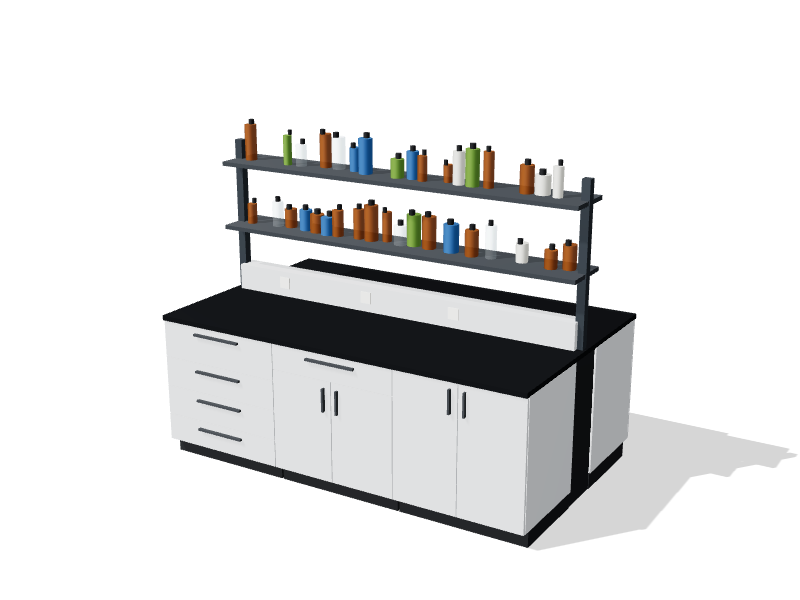
Fixed casework is the traditional lab: base cabinets set on the floor, anchored to the wall or floor, and topped with a continuous worktop. Services run in the wall or a chase behind the cabinets and come up through the backsplash. Changing it means trades, dust and downtime.
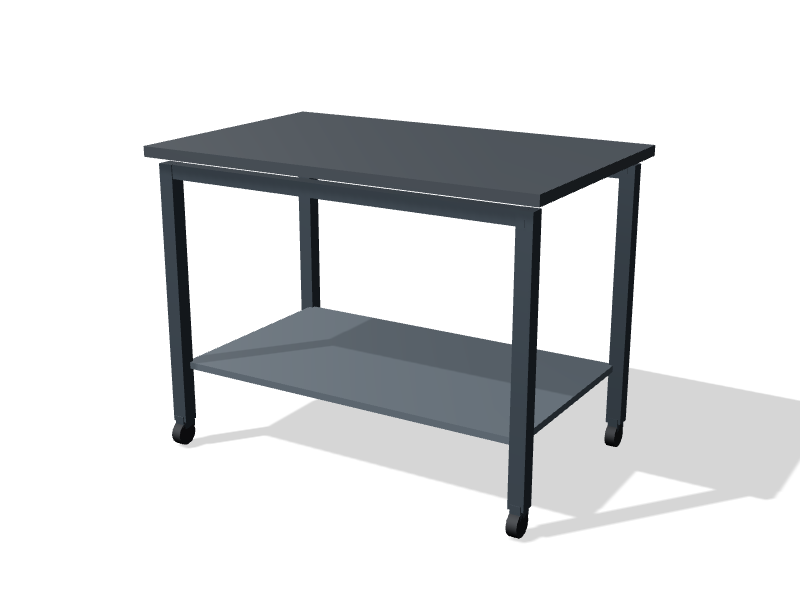
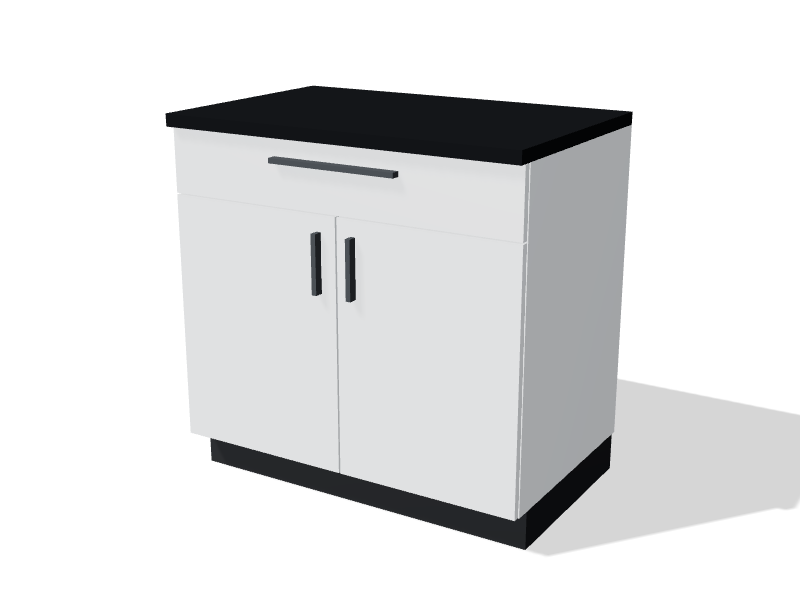
Mobile casework puts the work surface and storage on casters. Mobile tables and mobile base cabinets roll into place and lock. Storage pedestals slide under tables or line up against walls. Users can rearrange a room in an afternoon.
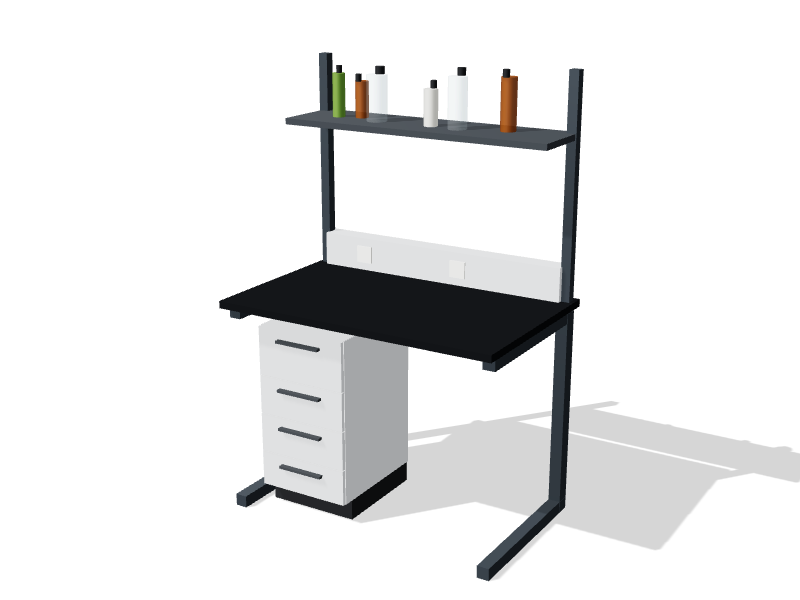
Adaptable casework uses steel frames, often a C-frame or cantilever design, that carry the worktop at an adjustable height. Cabinets hang from the frame or roll underneath, so the floor below stays clear. Services usually arrive from a spine or an overhead carrier. The adaptable C-frame bench is one example. Phenolic resin is the usual top for mobile and adaptable benches because it is lighter than epoxy.
The table summarizes how the three approaches compare.
| Factor | Fixed | Mobile | Adaptable |
|---|---|---|---|
| Upfront cost | Lowest per metre of bench | Moderate | Highest |
| Reconfiguration | Trades and downtime | Users, in minutes to hours | Users or facilities staff, with simple tools or none |
| Heavy loads and wet work | Best | Limited by table and caster rating | Good within the frame rating |
| Services | Built into the run | Must come from above or from walls | Spine or overhead carrier |
| Typical fit | Wet chemistry, sinks, hoods, teaching labs | Instrument rooms, overflow, temporary setups | Core facilities, biology, shared research floors |
Flexibility is a services problem
Benches move easily. Services do not. A mobile table is only as flexible as the power, data, gas and vacuum that can reach it wherever it lands. Plan the service strategy with the furniture, or the flexible furniture ends up parked in one place with extension cords running to it.
Common approaches are overhead service carriers suspended from the ceiling, ceiling service panels at regular spacing, and utility drops that can be relocated along a grid. Quick-connect fittings for gas and vacuum make reconnection practical, but each one is a joint that must be specified, installed and checked properly. Your facilities team and EHS officer should agree on the details before users start reconnecting gases themselves.
Drainage is the hardest service to move. Keep sinks, cup sinks and anything plumbed to waste on fixed runs at the perimeter or along a spine. The same goes for fume hoods: they depend on ductwork and exhaust capacity, so a hood is never really mobile. Planning the room on a regular lab module makes it far easier to add services where they are needed later.
Safety points
- Locking casters. Mobile items need casters that lock reliably, and users need to lock them. Check the load rating with the worktop and equipment combined.
- Seismic restraint. In seismic regions, including coastal British Columbia and parts of Quebec and eastern Ontario, the National Building Code of Canada calls for anchorage of many nonstructural components. Fixed casework needs anchoring, and mobile or adaptable furniture may need a restraint method such as tethers. The engineer of record decides what applies.
- Tall frames. Adaptable frames with overhead shelving can tip if shelves are loaded unevenly or a frame is left unanchored. Follow the manufacturer's load limits.
- Height changes. Most adjustable frames are not meant to change height with equipment on top. Clear the worktop first unless the frame is rated for loaded adjustment.
- Cords and hoses. Flexible services create trip hazards. Route them overhead or along frames, not across the floor.
A practical mix
Many labs settle on fixed perimeter runs for sinks, hoods and wet chemistry, adaptable benches across the middle for instruments and biology, and a few mobile tables for overflow and temporary equipment. Teaching labs tend to stay mostly fixed, because the curriculum changes slowly and fixed benches stand up to heavy daily use. A molecular biology and PCR lab is a typical candidate for adaptable benches, while an organic synthesis lab usually relies on fixed hood and sink runs.
Questions to settle before choosing
- How often has this space been reconfigured in the past, and why?
- Who will move furniture: researchers, facilities staff or contractors?
- Which services must reach every position, and which can stay at the perimeter?
- What loads will sit on the most heavily used benches?
- Does the building's seismic design require restraint for movable furniture?
- Is the extra upfront cost of adaptable systems justified by the changes you actually expect?
You can compare fixed and adaptable runs side by side in the lab planner.