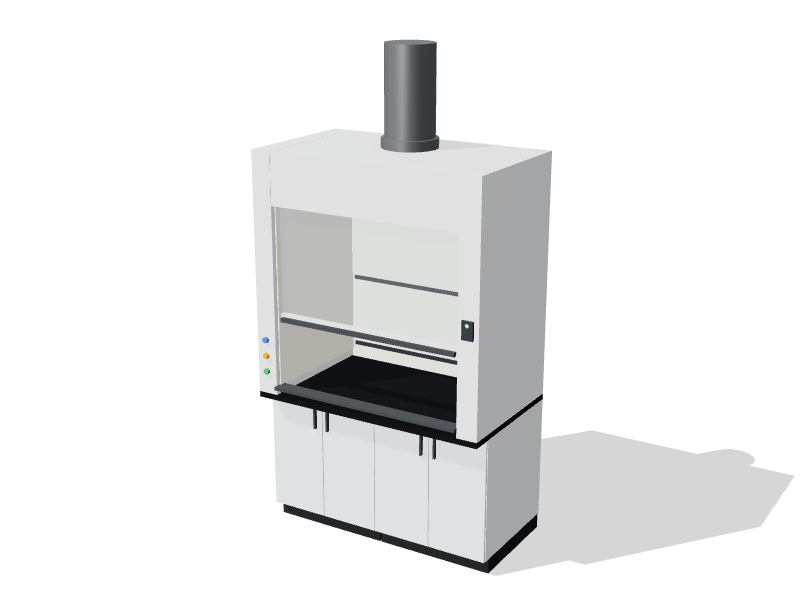
A well-designed, certified fume hood can still expose the person using it. Much of the difference between a hood that protects and one that leaks is made at the face, by the user. The habits below are simple, and they are the ones that matter most.
Keep the sash at or below the design height
Every certified hood is tested at a particular sash height. It is usually marked with a label or arrow on the side post and enforced by a sash stop. Commonly it is about 460 mm (18 in) above the work surface.
- Work at or below the marked height. Above it, the face velocity of a bypass hood falls below its tested value. On a VAV hood, the controls may be unable to deliver enough air, and the monitor should alarm.
- Lower the sash further whenever you can. Keep it as low as the task allows, with the lower rail between your face and the work. The glass is your splash and fragment shield.
- Raise it fully only to load or set up apparatus, with nothing hazardous running. Then bring it back down.
- Close it when you walk away. A closed sash protects others in the room. On VAV systems it also cuts exhaust and saves energy.
If a task cannot be done at the marked height, raise it with your supervisor or EHS office as a setup or equipment problem. It is not a reason to work with the sash up.
Where and how to work
Inside the hood
- Work at least 150 mm (6 in) behind the sash plane. Many labs mark this line with tape on the work surface. Contaminants released close to the face are the most likely to escape.
- Keep your head outside the hood. Never lean in to look at something. Lower the sash and look through the glass instead.
- Move slowly. Fast arm movements and quick steps away from the hood drag air out with them.
- Stand square to the hood. Your body creates a wake that pulls air toward you. Standing directly in front and working within easy reach keeps it predictable.
Keep the airflow paths clear
- Raise large equipment on blocks or a stand, about 50 mm (2 in) off the work surface, so air can pass beneath it.
- Leave space at the back. Do not push equipment or bottles against the rear panel. Blocking the lower slot changes airflow across the whole hood; see baffles and slot adjustment.
- Keep the airfoil gap open. Do not lay bench liner, paper towels or cords across the airfoil sill.
- Do not store chemicals in the hood. A hood full of bottles has disturbed airflow and extra fuel for a fire. Return containers to proper storage, such as a ventilated corrosives cabinet, after use.
- Keep loose paper and light items out. They can be drawn into the duct.
Watch the room as well as the hood
- Foot traffic. Avoid walking close behind someone working at a hood. Good layouts keep main aisles away from hood faces.
- Doors. A door swinging open near a hood can pull air out of it. Keep lab doors closed.
- Fans and diffusers. Portable fans have no place near a fume hood. Report supply diffusers that blow toward the face.
- Neighbouring hoods. When two hoods face each other across a narrow aisle, users at both disturb each other's airflow. Coordinate who works when for high-hazard tasks.
Before you start, and when the alarm sounds
Before you start
- Check the airflow monitor. It should show normal operation with no alarm.
- Check the certification label. Is it current?
- Hold a light tissue strip at the bottom edge of the sash. It should be drawn gently inward. This is a quick indicator, not a test.
- Confirm the sash moves freely and the stop engages.
- Make sure the services you need are available and controlled from outside the hood.
If the alarm sounds
- Stop any operation that generates vapour and bring it to a safe state, if you can do so quickly.
- Lower the sash fully.
- Do not silence the alarm and carry on.
- Report it to the lab supervisor or facilities, and post a "do not use" sign until the hood is checked.
Your lab supervisor or EHS office sets the specific procedure for your building; post it beside the hoods. Airflow monitors and alarms explains what the different alarm types mean.
Checklist for lab managers
- Design sash height marked on every hood and confirmed at certification
- Sash stops fitted and working
- A 150 mm (6 in) work line on each work surface
- Monitors working, with users trained on what alarms mean
- No chemical storage in hoods, and enough storage nearby
- Hood training in lab onboarding, refreshed regularly
- Spot checks of sash positions at the end of the day