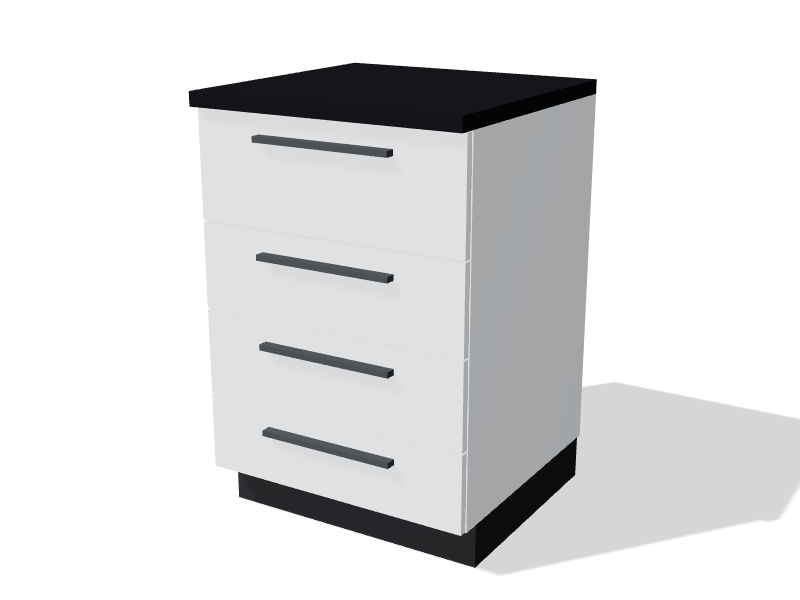
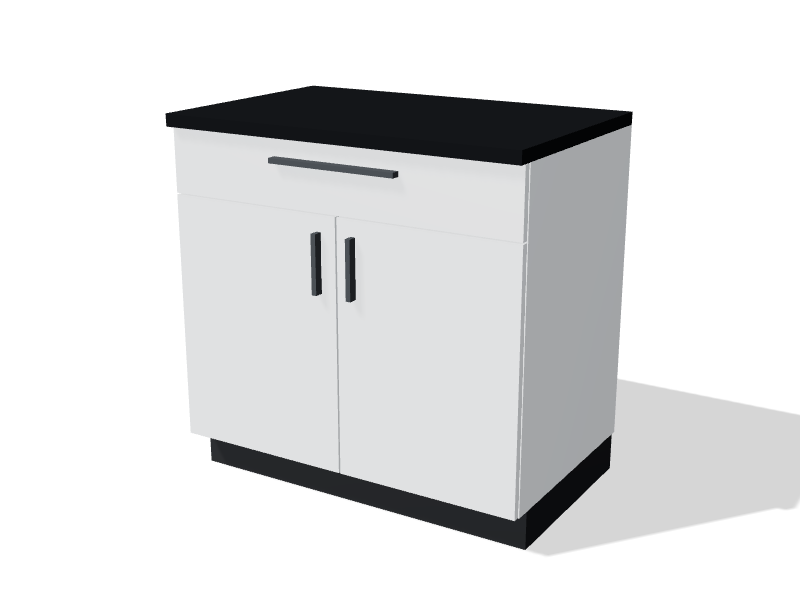
Drawers hold the small things people reach for all day: pipette tips, spatulas, tubing, labels, gloves, slides and small glassware. Shelves behind doors suit bulky items. Almost every bench run needs both, and the balance you choose decides how much time people spend hunting for things for as long as the casework lasts.
Drawers or doors: choosing the mix
A drawer brings its contents to you. You see everything from above, and nothing hides at the back. A shelf behind a door holds more volume for less money, but the back half of each shelf collects forgotten items unless someone kneels down to dig.
A practical starting point for a research or analytical lab:
- Put a drawer cabinet at each person's main work position, within a step of where they stand or sit.
- Use drawer-over-door combination units for general runs. One shallow drawer above a shelved cupboard covers most needs at a modest cost.
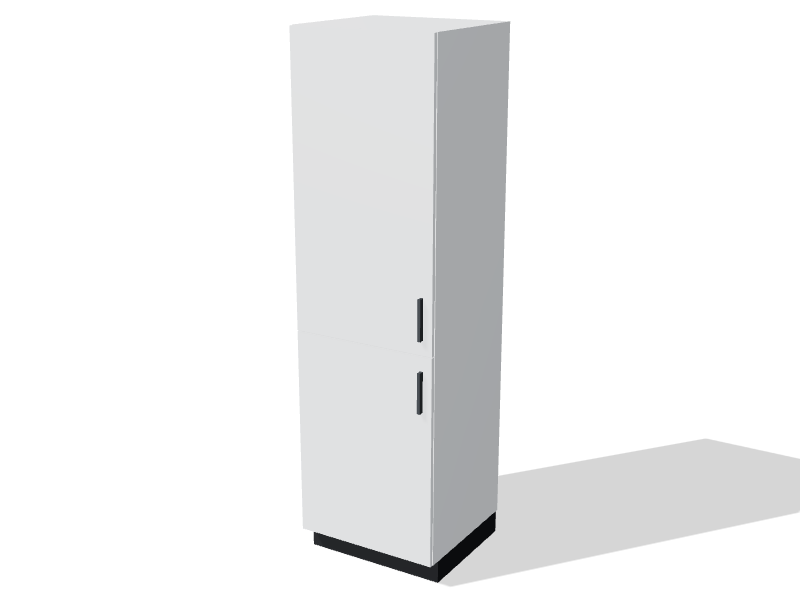
- Reserve full door cabinets for bulky consumables, waste containers, small equipment and boxed stock.
- Keep hazardous liquids out of ordinary drawers and cupboards. Flammables, corrosives and oxidizers belong in dedicated cabinets organized by compatible groups.
Teaching labs work differently. Banks of small lockable drawers, one per student or per lab section, keep each person's kit together and make check-in and check-out at the end of term much simpler than shared cupboards.
Drawer heights and what fits in them
In a standing-height bench around 900 mm (35½ in) tall, the toe kick and worktop take part of the height. That leaves roughly 750 mm (29½ in) of cabinet front to divide among drawers. A four-drawer base usually splits this into graduated heights, shallow at the top and deep at the bottom, so heavy loads sit low.
| Drawer front height | Typical contents |
|---|---|
| 75 to 100 mm (3 to 4 in) | Pens, labels, spatulas, slides, small hand tools |
| About 150 mm (6 in) | Pipette tip boxes, tube racks, gloves, filter papers |
| 200 to 250 mm (8 to 10 in) | Small glassware, boxed consumables, coiled tubing |
| 300 mm (12 in) and deeper | Large glassware, bottles in trays, bulk packs, files |
Interior depth is always less than the front height, often by 25 mm (1 in) or more once you allow for the drawer bottom and the rail above. Measure the tallest item you plan to store against the interior dimension, not the front.
Slides, hardware and drawer interiors
The parts you cannot see at the showroom are the parts that fail first. Look at these closely:
- Extension. Full-extension slides bring the back of the drawer clear of the cabinet front. Three-quarter slides leave the rear quarter under the worktop, where things get lost. For any drawer deeper than about 150 mm (6 in), full extension is worth specifying.
- Load rating and cycle life. Ask for the rated load per drawer and for the results of the drawer load and cycle tests described in SEFA 8. Request results for the construction you are buying, not a generic brochure claim.
- Stops and removal. Drawers need positive stops so they cannot be pulled out by accident, yet should lift out deliberately for cleaning and spill clean-up.
- Latches in seismic regions. In coastal British Columbia, the Ottawa Valley and parts of Quebec, earthquake shaking can throw drawers open and spill their contents. Latches that need a deliberate action to release help, alongside proper seismic restraint of the cabinets themselves.
- Locks. Keyed-alike locks within a room and master keying by department keep key rings manageable. A drawer lock deters casual borrowing but is not secure storage. Controlled substances follow their own security rules.
- Pulls. Wire pulls are easy to grip with gloves and suit people with limited hand strength. Recessed pulls avoid snagging lab coats in narrow aisles. Choose one style and use it throughout.
- Interiors. Removable plastic tray inserts and adjustable dividers can be taken to a sink and washed. In wet or corrosive rooms, drawer bodies made of solid phenolic avoid the rust that eventually shows on chipped painted steel.
Drawers in mobile and adaptable casework
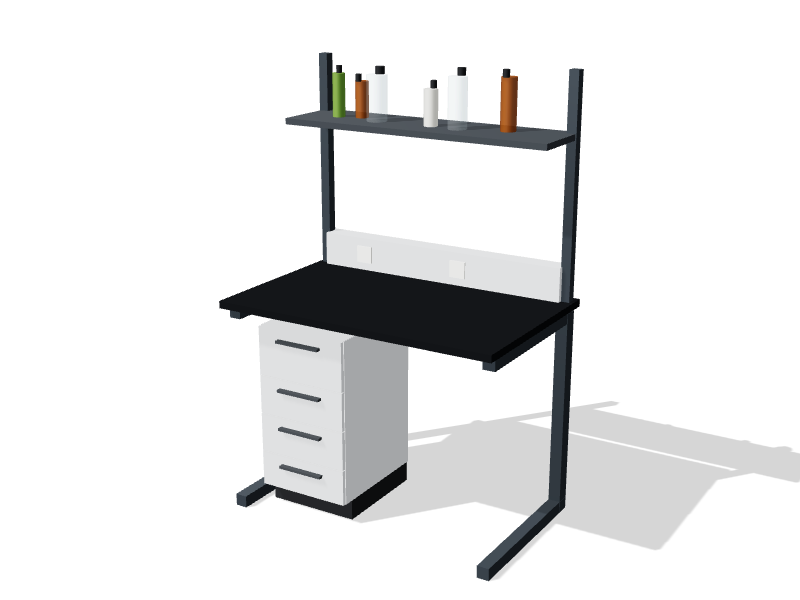
Drawers do not have to sit on the floor. Suspended drawer units hang from the frame of an adaptable C-frame bench. They leave the floor clear for cleaning and for rolling in instruments, and they move when the bench is reconfigured. Mobile pedestals on locking casters can follow a researcher between benches. Tall mobile pedestals should allow only one drawer open at a time so the unit cannot tip forward.
If your lab expects frequent change, compare these options in the guide to fixed, mobile and adaptable casework. Fixed four-drawer bases cost less per drawer, but suspended units are far easier to reorganize later.
Drawer cabinets also appear under fume hoods. If a standard drawer base sits under a hood, treat it as storage for tools and consumables only. Chemical storage under a hood should go in a cabinet built for that purpose.
Planning tips
- List what will live in drawers before choosing configurations, and measure the tallest and longest items.
- Plan at least one drawer cabinet per main work position, then fill the rest of the run with combination and door units.
- Keep the same drawer arrangement at every station of the same type, so people find things without searching.
- Specify full-extension slides, positive stops, and latches where seismic risk calls for them.
- Ask for SEFA 8 drawer test results and the slide maker's load rating.
- Leave space under at least one position for a mobile pedestal or a knee space if seated work is likely.
You can place drawer, combination and door bases side by side and compare runs in the lab planner.