Stainless steel casework costs more than painted steel or phenolic, weighs more, and shows every fingerprint. It is still the right answer in a specific set of rooms: those that are washed down, steam-cleaned, disinfected hard or held to strict cleanliness standards. Outside those rooms, it is often an expensive way to solve a problem you do not have.
Where stainless pays off
Stainless is a sound choice when a room needs a surface that survives water, heat and repeated cleaning without a coating that can fail. Typical examples:
- Cleanrooms and GMP areas, where surfaces must be smooth, non-shedding and able to take aggressive disinfectants. See cleanroom furniture and stainless steel.
- Pharmacy compounding rooms, which combine cleanroom practice with frequent disinfection.
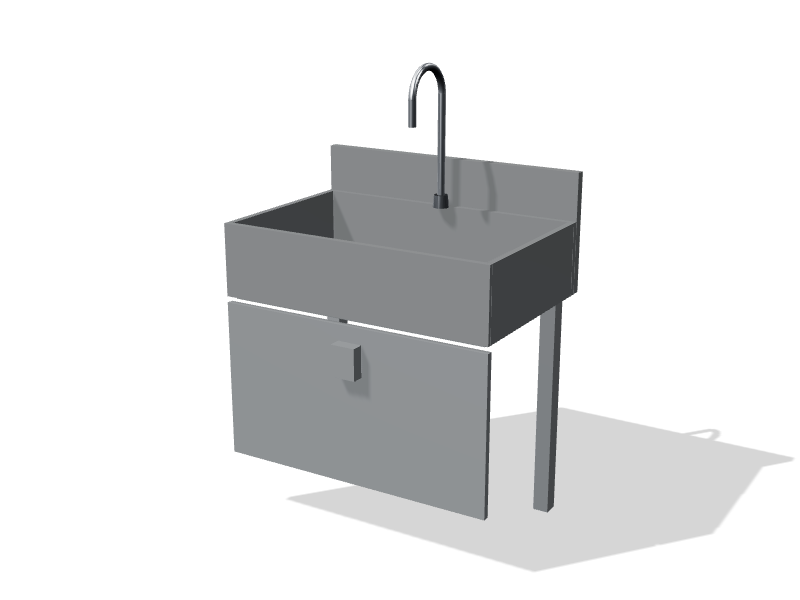
- Animal facilities, cage wash and sterile processing, with hot water, steam and high humidity.
- Food and dairy testing, where food-industry hygiene expectations carry into the lab. See the food testing lab layout.
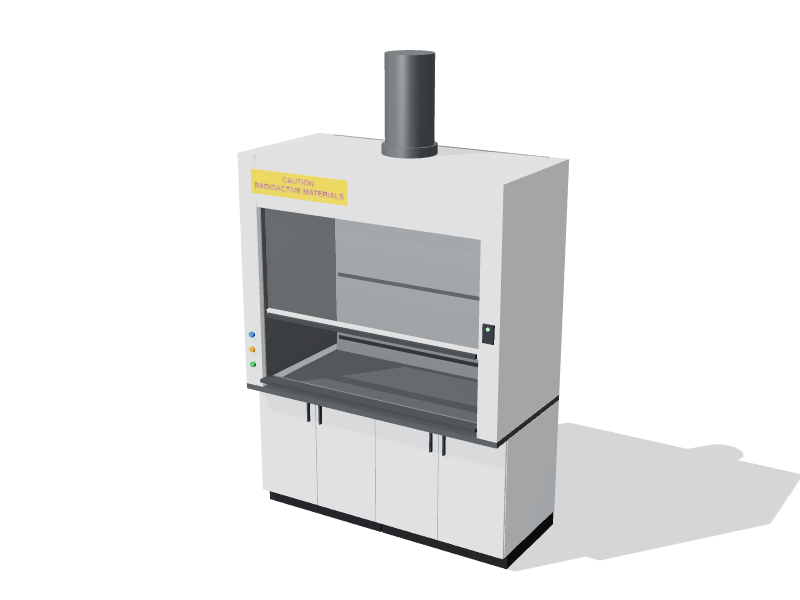
- Radioisotope work, where a seamless, non-porous surface makes decontamination practical. Radioisotope hoods typically use a coved stainless work surface for this reason.
A quick way to judge the need is to ask how the room will be cleaned. If it is hosed down, steam-cleaned, or cleaned and disinfected against a written, audited procedure, stainless steel or solid phenolic is usually justified. If surfaces are wiped with a damp cloth and a mild detergent, painted steel will normally do the job for a fraction of the cost, and the savings can go toward better worktops or services.
Stainless is a weaker choice in general chemistry rooms with acid vapour, especially hydrochloric acid. Chlorides attack the thin passive layer that protects stainless, and in that air a painted steel or phenolic cabinet may outlast a grade 304 stainless one.
Grade 304 or grade 316
| Grade | What it is | Good for | Watch for |
|---|---|---|---|
| 304 | Chromium-nickel austenitic stainless, the common general-purpose grade | Most casework, shelving and tables in clean, dry or wash-down rooms | Pitting from chlorides, bleach left to dry, salt |
| 316 | Similar alloy with added molybdenum for better chloride resistance | Worktops, sinks and surfaces that see chlorides, saline, bleach or coastal air | Costs more; still not immune to heavy chloride exposure |
Many projects use 304 for cabinets and 316 for worktops and sinks, because the top takes direct contact while the cabinet mostly sees splashes and cleaning.
Construction details that matter
The grade is only half the specification. How the casework is built decides whether it is easy to keep clean.
- Welded or fastened. Fully welded and ground seams leave no crevices. Fastened assemblies cost less but create joints where liquid and dirt collect.
- Surface finish. A brushed finish, often called No. 4, is common for casework. Electropolished surfaces are smoother and easier to clean, and are frequently specified for cleanroom furniture.
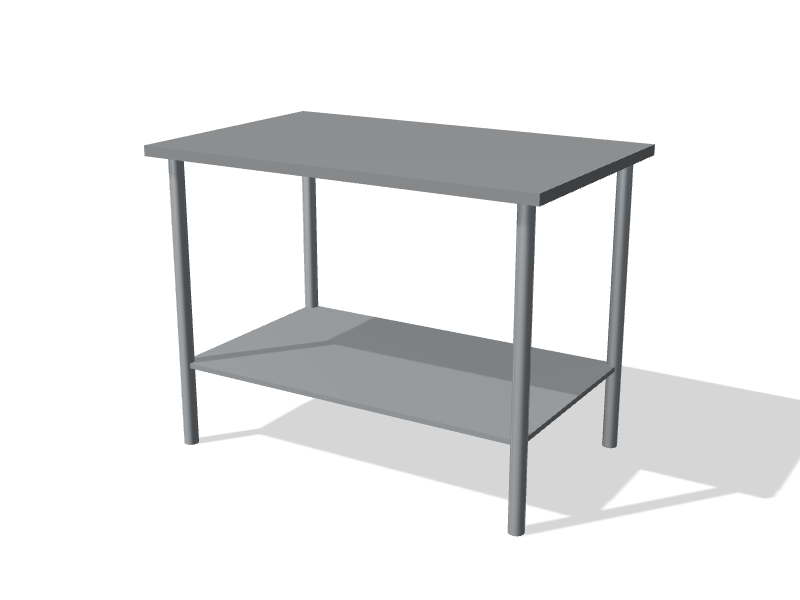
- Open, wipeable forms. In cleanrooms, tables on legs with open undersides, rounded corners and no horizontal ledges are easier to clean than closed cabinets on a plinth.
- Coved worktops. An integral coved backsplash and a raised edge keep spills on the surface and leave no square corner to clean. See the coved work surface entry.
- Sound deadening. Undercoating on worktops and doors reduces the drum-like noise of thin sheet.
- Passivation after fabrication. Grinding and welding can leave free iron on the surface. Passivation restores the protective layer; ask whether it is done.
Thickness is usually given in gauge. Casework commonly uses 16 or 18 gauge sheet, roughly 1.5 or 1.2 mm, with heavier material or reinforcement for worktops and load points.
Limits and care
Stainless steel is corrosion-resistant, not corrosion-proof. Bleach and other chloride disinfectants can pit it if left to dry, so rinse after use. Steel wool, carbon-steel tools and grinding dust from nearby work leave iron particles that rust and make the stainless look as if it is failing. Hot strong acids and some concentrated mineral acids attack it outright. It dents under heavy impact, and scratches show on a brushed finish.
Agree a cleaning procedure with the people who actually clean the room, including which products to use and when to rinse. Cleaning and caring for lab surfaces covers the basics.
Questions to ask before you specify stainless
- Which cleaning and disinfecting products will be used, and how often? Do any contain chlorides?
- Does the room see acid vapour, salt air or heavy chloride exposure that points to 316, or to another material altogether?
- Which parts need welded construction, and where are fastened assemblies acceptable?
- What surface finish is offered, and is the casework passivated after fabrication?
- Are hinges, slides, pulls and fasteners also stainless, and of what grade?
- Will the floor be wet-cleaned? If so, do cabinets stand on legs or on a sealed base?
- For a cleanroom or GMP room, has the quality or validation team approved the finish and construction?
If you are weighing stainless against phenolic for a specific room, a consultation can help compare the options.