Wall cabinets put storage above the bench without taking floor space or worktop. In a lab they mostly hold glassware, consumables, small equipment and documents. The main decisions are glass or solid doors, the mounting height, and what not to put inside.
Compared with open shelving, closed wall cabinets keep dust off clean glassware and consumables, protect contents from splashes, and make a room look orderly even when the contents are not. They can be locked. They also keep stored items clear of the stands, clamps and tubing on the bench below.
They do less well for items needed constantly. Opening a door every few minutes slows work, and doors left open become a hazard. For working reagents in daily use, open reagent shelving is often more practical.
Glass doors or solid doors
| Factor | Glass doors | Solid doors |
|---|---|---|
| Finding things | Contents visible without opening | Must open the door or rely on labels |
| Appearance | Shows clutter | Hides clutter |
| Light-sensitive contents | Poor choice | Good choice |
| Breakage | Framed tempered glass reduces risk | No glass to break |
| Cleaning | Glass needs regular cleaning | Wipe-clean panel |
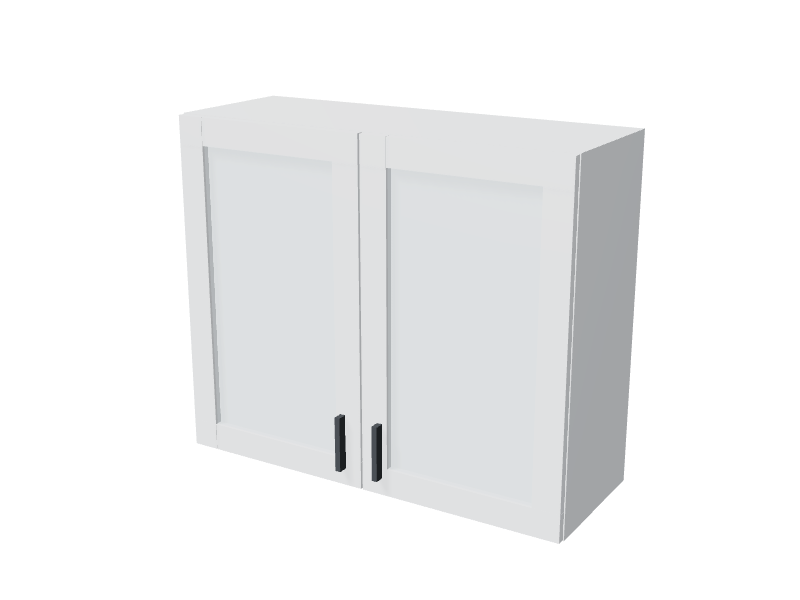
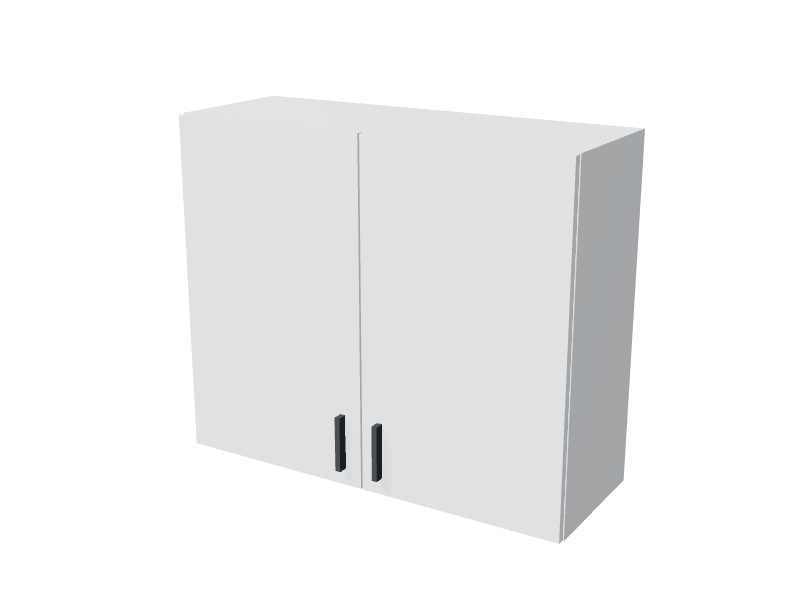
A glass-door wall cabinet suits glassware and consumables that people need to find quickly, and helps new users learn where things live. A solid-door wall cabinet suits light-sensitive materials, documents, spare parts and anything that looks untidy on display. Many labs use glass doors on the main working run and solid doors in storage areas or above write-up space.
Specify framed tempered safety glass rather than plain glass. Frameless doors look clean but leave glass edges exposed.
Hinged doors give full access to the interior but swing into head space when open. Sliding doors do not project, which helps in tight aisles and above benches where people lean in, but only half the cabinet is open at a time. Self-closing or soft-close hinges reduce the chance of a door being left open at head height.
Sizes and mounting
Typical lab wall cabinets are about 300 to 330 mm (12 to 13 in) deep, so they do not crowd the head of someone standing at a 750 mm (30 in) bench. Heights of around 750 to 900 mm (30 to 36 in) are common, and widths match the base cabinet modules, such as 600, 900 and 1200 mm (24, 36 and 48 in), so cabinets line up with the run below.
Mount the bottom of the cabinet roughly 450 to 600 mm (18 to 24 in) above the worktop. On a standing-height bench, that puts it about 1350 to 1500 mm (53 to 59 in) above the floor. Lower than that, it gets in the way of apparatus and heads; higher, and the top shelf moves out of reach. The bench dimensions guide puts these figures in context.
Wall cabinets loaded with glassware are heavy. Stud walls need blocking or backing plates at the right height, installed before the drywall goes up. Masonry needs suitable anchors. In seismic regions, cabinets need anchorage designed for the location and door latches that keep contents inside during shaking; the engineer of record specifies the anchorage.
Inside the cabinet, adjustable shelves let the lab match spacing to what it actually stores, and shelf clips that lock in place stop a shelf tipping when a heavy item sits near its front edge. A raised lip on each shelf helps in seismic regions. If the cabinet will be locked, decide early whether locks are keyed alike across the room or keyed individually, because changing that later means replacing cylinders.
What not to store in wall cabinets
General wall cabinets are not chemical storage cabinets. Keep these out:
- Flammable liquids. Store them in a flammable liquids cabinet built for that purpose, within the quantity limits of the fire code.
- Corrosives. Acid and base vapour corrodes hinges and shelves, and a leaking bottle drips onto the bench and the person below. Store corrosives low, in a corrosives cabinet.
- Heavy items and large liquid containers. Keep them at or below bench height.
- Anything that needs ventilation or temperature control.
Glassware, plasticware, consumables, manuals, small tools and boxed spares are the best use of wall cabinet space. Put the heaviest of these on the lowest shelf.
Alternatives to consider
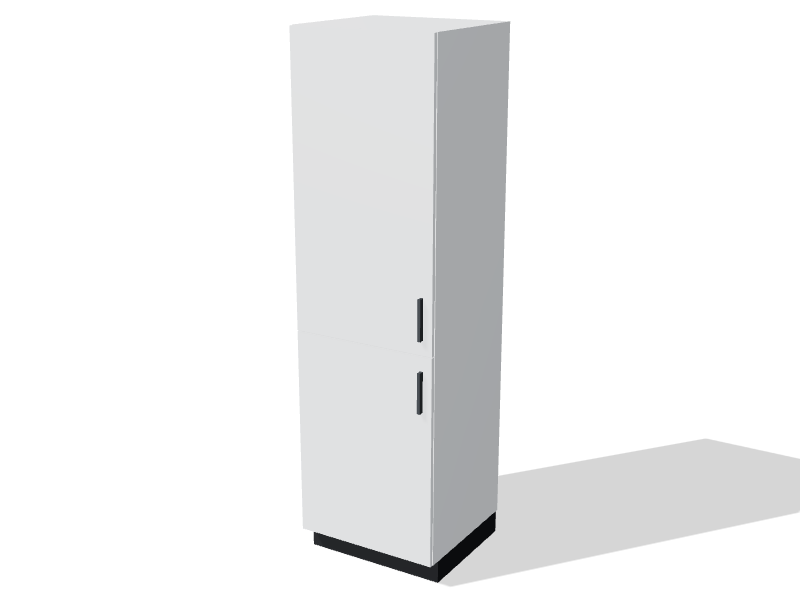
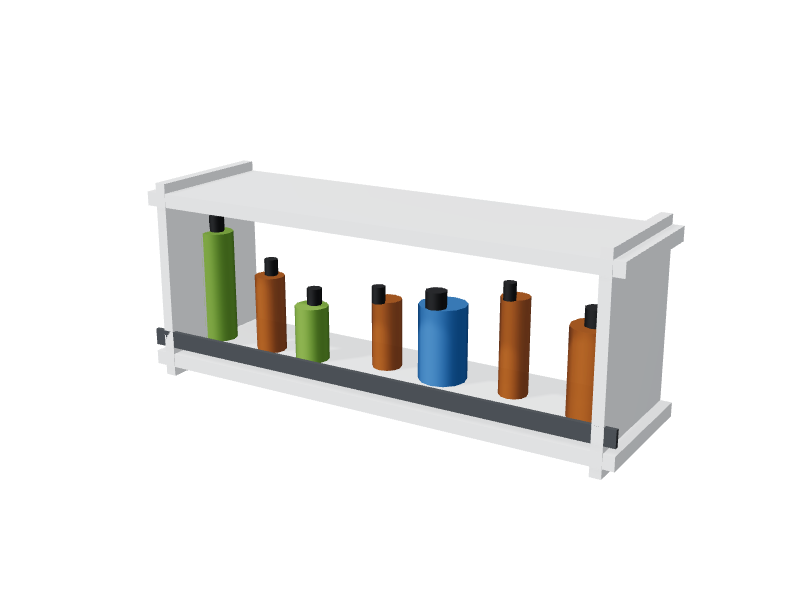
Wall cabinets are not the only vertical storage option. A tall storage cabinet holds bulk consumables with every shelf reachable from the floor. Open reagent shelves suit working stock. Well-planned base cabinet drawers often hold more small items than wall cabinets and keep them at a safer height; see drawer configurations for lab storage.
Planning tips
- Decide what each cabinet will hold before choosing glass or solid doors.
- Line up wall cabinet widths with the base cabinets below.
- Show wall blocking on the architectural drawings early.
- Check the mounting height against the tallest bench setup and the shortest regular user.
- Leave space above sinks for drying racks, and keep wall cabinets clear of fume hoods and their ductwork.