Most labs keep solvents on hand: ethanol, acetone, hexane, toluene, methanol and many more. A flammable storage cabinet is the standard way to hold working quantities of these liquids in the room where they are used. Done properly, it limits how much fuel is exposed in a fire and lets a lab keep more solvent on site than it could on open shelves.
What the cabinet does, and what it does not
A flammable cabinet is an insulated box. In a fire, it slows the rise in temperature inside so that the containers do not boil, rupture and feed the fire while people are evacuating. NFPA 30 describes the performance in terms of a standard 10-minute fire exposure, during which the inside of the cabinet must stay below 163 °C (325 °F).
It is not a fireproof vault. It does not ventilate fumes, it does not make dispensing safe, and it will not contain a large spill inside it for long. It also does nothing if the doors are propped open.
The cabinet is for flammable liquids, meaning liquids with a flash point below 37.8 °C (100 °F), and for combustible liquids with higher flash points. Oxidizers, corrosives, compressed gases and water-reactive materials do not belong in it.
Construction details to check
NFPA 30 sets out a construction method for metal cabinets, and most lab cabinets follow it:
- Double walls of steel at least 1.0 mm (18 gauge) thick, with a 38 mm (1½ in) air space between them.
- Riveted, welded or otherwise tight joints.
- Doors with a three-point latch.
- A liquid-tight sill raised at least 50 mm (2 in) above the cabinet floor, so a leak stays inside.
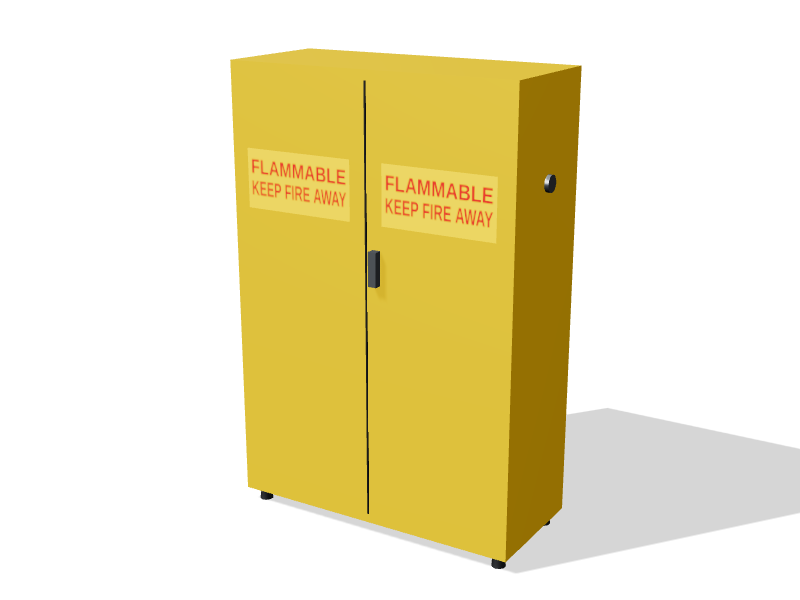
- Conspicuous marking with the words FLAMMABLE and KEEP FIRE AWAY.
Beyond the construction method, look for these features:
- Self-closing doors. Many fire codes require doors that close and latch on their own, and they are good practice everywhere. A self-closing door only works if nobody wedges it open, so check closers during routine inspections.
- Vent openings with flame arresters and bungs. The bungs stay in unless the cabinet is deliberately vented.
- Grounding lug for bonding and grounding when liquids are transferred from metal containers nearby.
- Adjustable shelves with a lip that act as shallow spill trays.
- Third-party listing. Ask for proof that the model is listed or approved by a recognized testing organization, for example to UL 1275 or the applicable ULC standard. The documentation matters more than a label on the brochure.
In Canada, the National Fire Code as adopted by your province sets its own rules for cabinet construction, quantities and location, and it is the code your fire inspector applies.
Sizes and where to put them
| Cabinet type | Typical capacity | Usual location |
|---|---|---|
| Benchtop | 15 to 45 L (4 to 12 US gal) | On a worktop near the point of use |
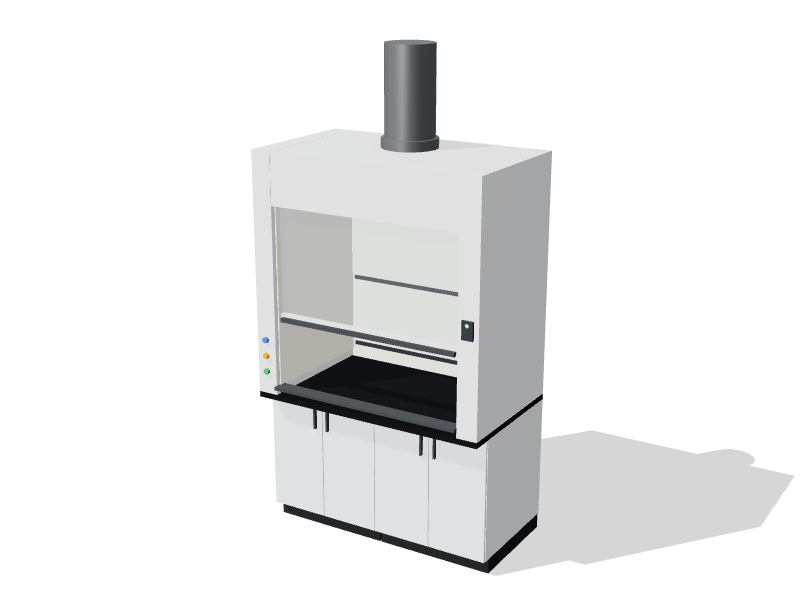
| Under-counter or under-hood | about 80 to 115 L (22 to 30 US gal) | Below a worktop or a fume hood |
| Floor-standing | 115 to 170 L (30 to 45 US gal) | Against a wall, clear of exits |
| Tall | 230 to 340 L (60 to 90 US gal) | Solvent stores and prep rooms |
Under-hood flammable cabinets are popular because they put solvents next to the hood where they are used. See the guide to base cabinets under fume hoods for the trade-offs. A full-height unit such as our 45-gallon flammable cabinet suits a room that holds a larger working stock.
Placement rules that apply in almost every lab:
- Keep cabinets out of exits, corridors and the path to the door. Fire codes restrict storage in means of egress.
- Keep them away from ignition sources such as hot plates, ovens and electrical panels.
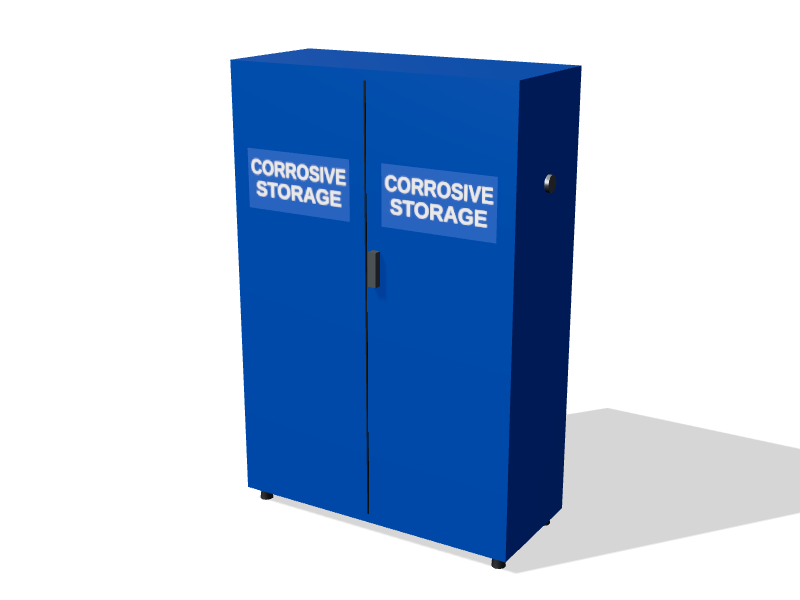
- Separate them from oxidizer and corrosive cabinets. Use different walls, or at least put other casework between them.
- Put a suitable fire extinguisher nearby, within the travel distance your fire code sets.
Cabinets also change how much you may store. NFPA 45 sets maximum quantities of flammable and combustible liquids per lab unit, based on the unit's fire hazard class, with higher allowances for liquids kept in approved cabinets and safety cans. Codes also cap how much one cabinet may hold (NFPA 30 limits a single cabinet to 460 L, or 120 US gal) and how many cabinets may share one fire area. Keep bulk stock in a central chemical store and hold only working quantities in each lab.
Venting: usually leave the bungs in
NFPA 30 does not require flammable cabinets to be vented for fire protection. An unvented cabinet with its bungs in place performs as tested. A poorly vented cabinet can perform worse, because a duct can carry heat into the cabinet or carry fire out of it.
Sometimes your EHS team will want venting to control smell or toxic vapours. In that case, follow the cabinet maker's instructions, use rigid duct with fire resistance comparable to the cabinet, draw air from the lower vent opening (most solvent vapours are heavier than air), and exhaust outdoors. Some vented hood bases connect to the hood exhaust instead. Either arrangement needs acceptance from the authority having jurisdiction.
Checklist
- Inventory flammable and combustible liquids by class and volume for each room, then size cabinet capacity with some margin.
- Confirm the National Fire Code limits for your occupancy before deciding how many cabinets each lab gets.
- Ask for listing documentation for the exact model.
- Specify self-closing, three-point-latching doors.
- Keep vent bungs in place unless venting has been designed and approved.
- Keep cabinets out of exit paths and away from heat sources, oxidizers and corrosives.
- Store refrigerated flammables in a refrigerator designed for flammable materials, never a domestic unit.
- Never dispense or decant inside the cabinet, and keep containers capped.
Plan cabinet locations alongside hoods and exits in the lab planner.