Chemical segregation means storing chemicals so that incompatible ones cannot meet if a container breaks, leaks or is caught in a fire. It is one of the cheapest safety measures in a lab, but it has to be planned into the furniture. A room with one flammable cabinet and a wall of open shelves cannot be segregated properly no matter how careful the people are.
Why alphabetical order fails
Many stockrooms still shelve chemicals from A to Z. It is easy to find things, and it is risky. Alphabetical order puts sodium cyanide in the same section as sulfuric acid; if they mix, the result is toxic hydrogen cyanide gas. It can also place an oxidizer such as potassium permanganate a shelf away from a solvent such as propanol.
The rule is simple: sort first by hazard group, then alphabetically within each group. Each group goes in its own cabinet, compartment or tray, and incompatible groups are kept apart by distance or a physical barrier.
The main compatibility groups
| Group | Examples | Keep away from | Typical storage |
|---|---|---|---|
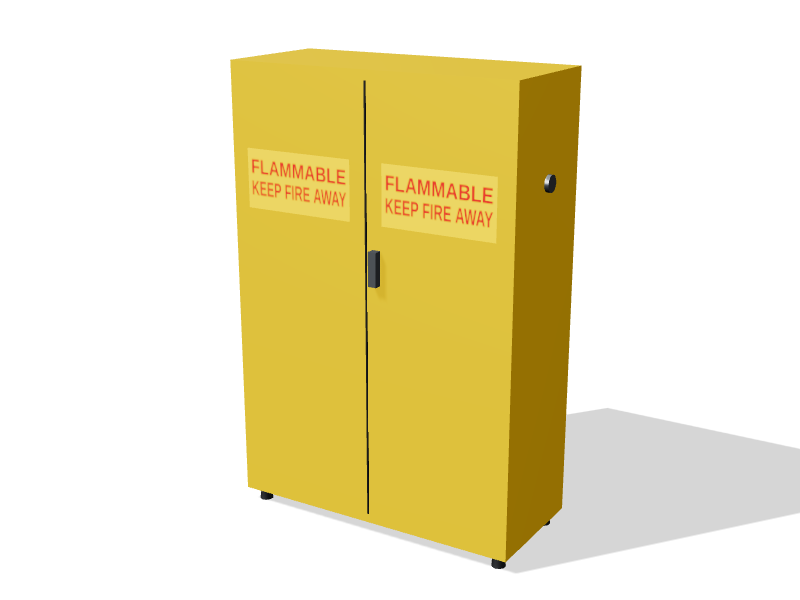
| Flammable liquids | Ethanol, acetone, hexane, toluene | Oxidizers, oxidizing acids, heat | Flammable cabinet |
| Oxidizers | Nitrates, permanganates, peroxides, hypochlorites | Flammables, organics, reducing agents | Separate cabinet or tray on non-combustible shelving |
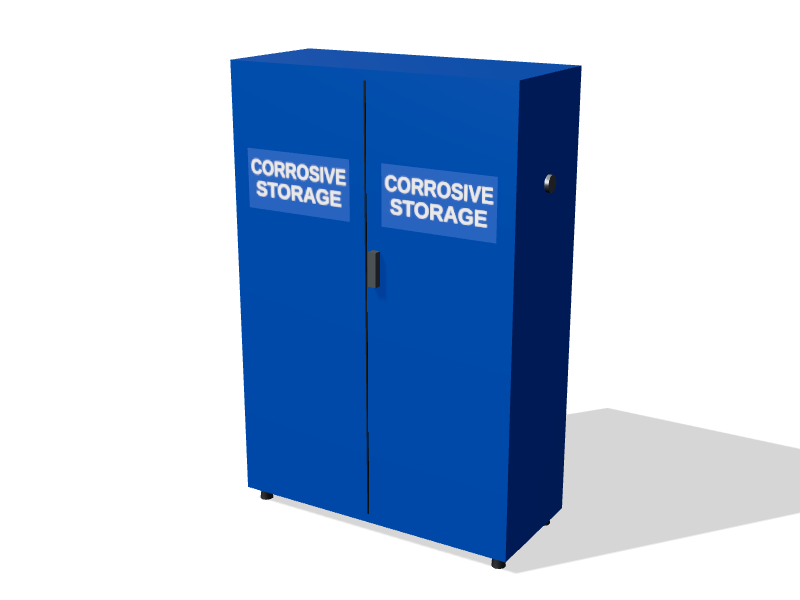
| Acids | Hydrochloric, sulfuric; nitric kept apart from other acids | Bases, cyanides, sulfides, reactive metals | Corrosive cabinet with separated trays |
| Bases | Sodium hydroxide, ammonia solution, amines | Acids | Separate corrosive cabinet or compartment |
| Water-reactives | Sodium, potassium, lithium aluminum hydride | Water and aqueous solutions | Dry, closed cabinet away from sinks |
| Toxics | Cyanides, heavy metal salts, potent compounds | Acids (for cyanides and sulfides) | Closed, often locked, cabinet |
Some chemicals need extra handling beyond their group:
- Peroxide formers such as diethyl ether, tetrahydrofuran and dioxane can form explosive peroxides as they age. Date each container on receipt and on opening, and test or dispose of it on the schedule your EHS program sets.
- Pyrophorics ignite in air. Store them under an inert atmosphere or liquid, as the supplier specifies, in small quantities.
- Compressed gas cylinders should be secured upright with chains or straps. Oxidizing gases such as oxygen should be stored away from flammable gases such as hydrogen; codes commonly call for a set distance or a fire-rated barrier between them.
- Organic acids such as glacial acetic acid are combustible, so many labs store them with flammables rather than with nitric acid.
The safety data sheet is the primary source for each chemical. Under WHMIS 2015 in Canada, section 7 of the SDS covers handling and storage, and section 10 lists incompatible materials. When two sources disagree, follow the stricter one.
Turning groups into furniture
Once you know which groups each lab holds and roughly how much of each, the storage plan becomes a furniture list:
- Count the groups present in each room. Most chemistry labs need at least a flammable cabinet, an acid cabinet and a base cabinet, plus closed storage for oxidizers and toxics.
- Estimate the working quantity of each group. Size flammable cabinets and corrosive cabinets to fit, with some spare capacity.
- Decide where each cabinet goes. Flammable and corrosive cabinets belong on different walls, or at least separated by other casework, and none of them should sit in an exit path.
- Use trays for minor separations inside one cabinet, for example oxidizing acids apart from mineral acids. Trays do not replace separate cabinets for strongly incompatible groups.
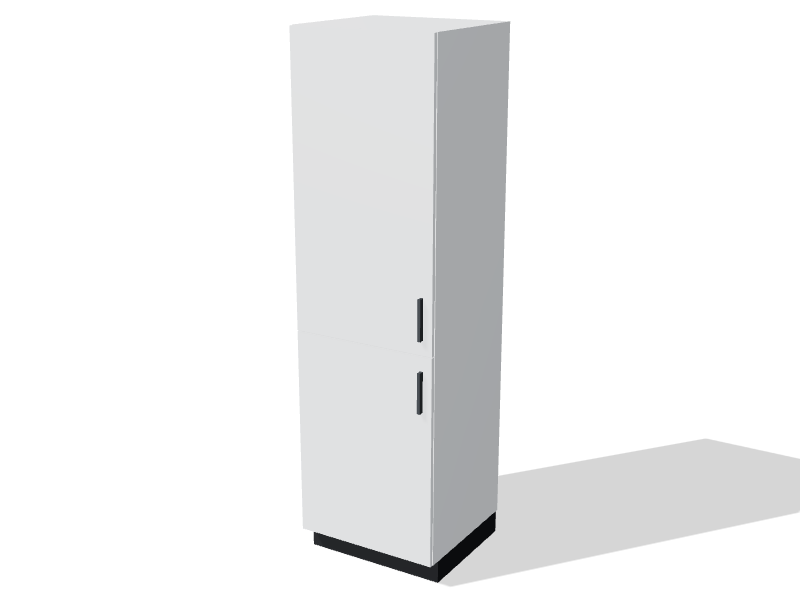
- Assign closed, lockable storage, such as a tall storage cabinet, to toxics, solids and anything that should not be on open display.
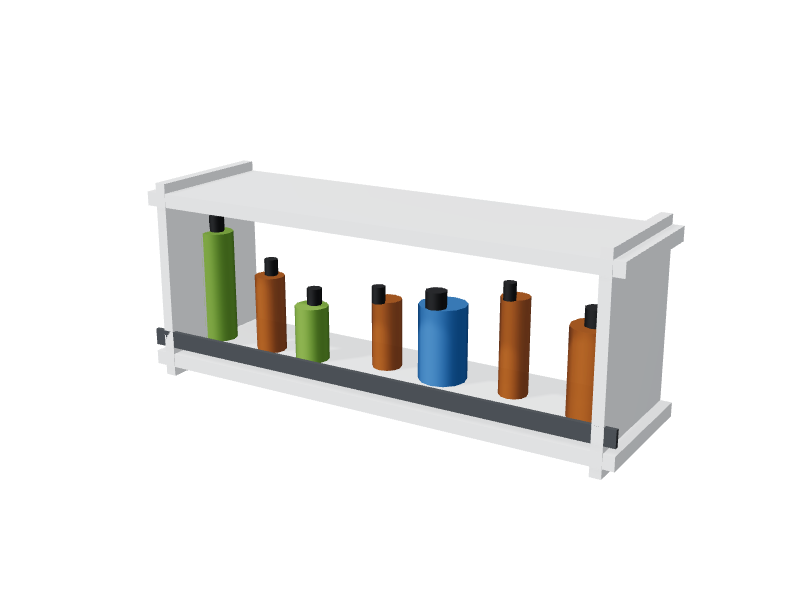
Open shelving has a place, but a limited one. Reagent shelves above benches suit small containers of low-hazard reagents in daily use. Shelves need a lip or rail so bottles cannot slide off, and corrosive or toxic liquids should never sit above eye level. See the reagent shelf entry for typical shelf construction.
Two habits undermine any plan. First, fume hoods become storage. Bottles in a hood block airflow, add fuel to any fire and clutter the work zone. Second, floors become storage. Containers on the floor get kicked, and they sit exactly where spills spread.
Chemicals that need refrigeration add another layer. Flammables need a refrigerator designed for flammable materials storage, and incompatible groups need separate secondary containers inside it.
Keeping the system working
Segregation decays quickly without simple routines:
- Label each cabinet and shelf with its group, and put the same label scheme on every floor of the building.
- Run a chemical inventory that records location, quantity and receipt date. It makes audits, ordering and emergency response easier.
- Be careful with colour-coded labels and caps from chemical suppliers. Different suppliers use different schemes, and mixing schemes in one stockroom causes errors.
- Buy the smallest practical quantities. Less stock means fewer containers to segregate and less to dispose of.
- Audit storage at least once a year, and dispose of expired, unlabelled and unwanted chemicals through your EHS program.
Checklist
- List the hazard groups and approximate quantities for each lab before the layout is fixed.
- Provide a separate cabinet or compartment for each group that needs one.
- Keep flammable and corrosive cabinets apart and out of exit routes.
- Limit open shelving to small, compatible, low-hazard containers.
- Plan secured storage for gas cylinders, with oxidizing and flammable gases apart.
- Agree on labelling and inventory before move-in, not after.
Your EHS officer owns the final storage rules. To test cabinet positions against the rest of the room, use the lab planner.