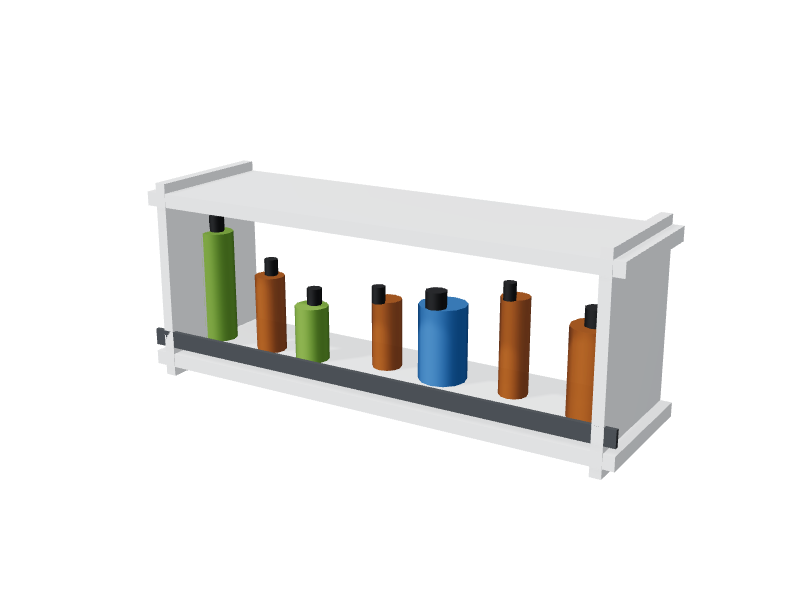
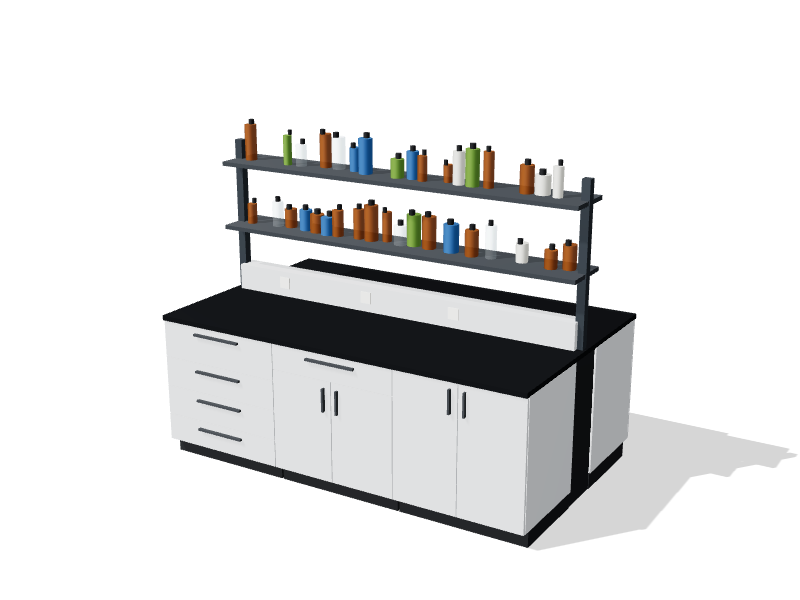
Reagent shelves are the open shelves above a lab bench, mounted on the wall or on uprights down the centre of an island. They keep the day's working chemicals within reach and off the worktop. Used well, they make a bench efficient. Used as general storage, they become one of the more common chemical safety problems in a lab.
A reagent shelf holds small containers in regular use at that bench: the buffers, indicators, standards and solid reagents a person reaches for several times a day. Everything else, from bulk stock to rarely used chemicals, belongs in proper storage cabinets or a chemical storeroom.
Treat the shelf as the working quantity for one bench. When it fills up, the question to ask is which items should go back to storage, not where to fit another shelf.
What belongs overhead and what does not
| Suitable for reagent shelves | Keep off reagent shelves |
|---|---|
| Small bottles of reagents in daily use | Corrosive liquids, which belong below eye level, ideally in a corrosives cabinet |
| Aqueous buffers and solutions in small volumes | Large or heavy containers, such as 2.5 L or 4 L bottles |
| Dry solids in small, well-closed containers | Flammable liquids beyond what the day's work needs |
| Indicator and stain bottles | Incompatible chemicals placed side by side |
| Labelled wash bottles and small tools | Highly toxic chemicals that need locked storage |
Many institutional chemical safety programs give the same basic rule: no corrosive liquids and no large containers above eye level, and the heaviest items on the lowest shelf. A bottle that slips from above head height spills toward the face and eyes.
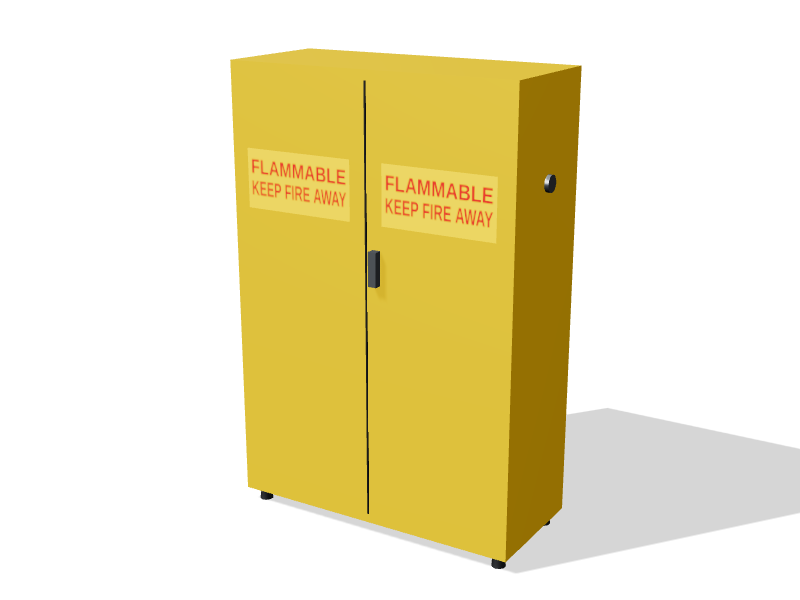
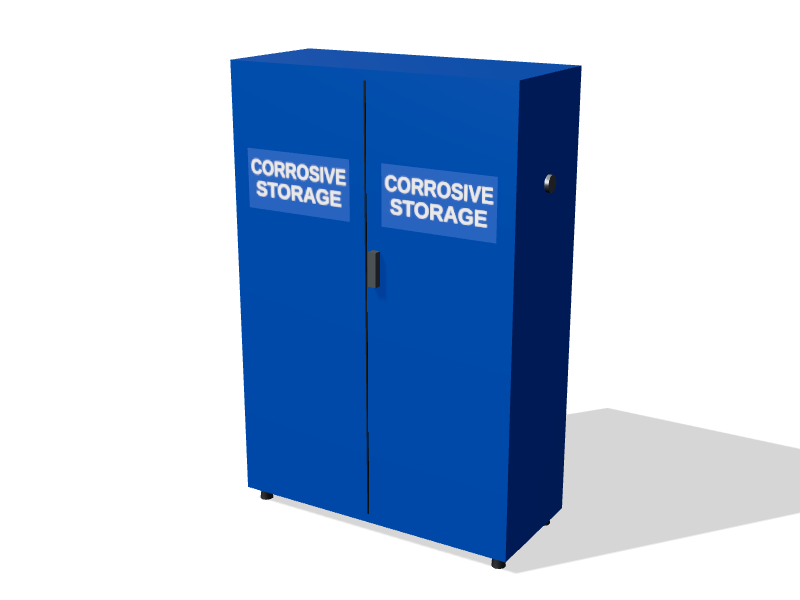
Flammable liquids beyond the working quantity go in a flammable liquids cabinet, and acids and bases in a corrosives cabinet. The chemical segregation guide explains how to group what remains on the shelf.
Location along the bench matters too. Avoid shelves directly above sinks, where splashes reach the bottles and a falling bottle lands in the bowl or breaks against it. Avoid them above hot plates and heating mantles, where rising heat warms the containers overhead. Directly beside a fume hood, keep shelves short so users are not tempted to reach across the sash opening while working.
Dimensions and construction
Reagent shelves are shallow, typically about 200 to 300 mm (8 to 12 in) deep. A shelf that holds one or two rows of bottles is enough; deeper shelves invite users to reach over the front bottles to get the ones behind.
Height matters more than depth:
- The lowest shelf needs enough clearance above the worktop for bottles, stirrers and small setups, commonly about 450 mm (18 in) or more.
- The top shelf should be within easy reach of the shortest regular user without a step stool. If people need to climb, the shelf is too high for working stock.
- Shelves on adjustable uprights let the lab change spacing as the work changes.
Common materials include painted steel, phenolic and stainless steel. Each shelf should have a raised front lip or a rail so bottles cannot be nudged off. On double-sided island shelving, a centre stop prevents a bottle pushed from one side from falling off the other, onto someone working opposite.
In seismic regions of Canada, shelving needs to be anchored and its contents restrained with lips, rails, bars or straps. The National Building Code of Canada and your engineer of record set the anchorage requirements, and your EHS officer may set rules for what the shelves hold.
Lighting, sightlines and sprinklers
Overhead shelves cast shadows on the worktop. If shelves run the full length of a bench, plan under-shelf task lighting or position ceiling lights so the work surface stays evenly lit.
Shelves also block sightlines. In teaching labs, where an instructor needs to see every student, shelving on islands is often kept low, limited to one tier or left out. Wall-mounted shelves and wall cabinets can take the storage instead.
Keep the top of shelving clear of stored items to maintain the clearance below sprinkler deflectors that fire codes require, commonly about 450 mm (18 in).
Housekeeping
- Label each shelf with the hazard group it holds, and keep groups apart.
- Use secondary containment trays for bottles of liquid.
- Date containers when opened and review shelves on a fixed schedule.
- Return items to storage at the end of a project.
- Do not move overflow into the fume hood; a hood is not a storage cabinet.
Checklist
- Shelf depth about 200 to 300 mm, with lips or rails on every shelf.
- Lowest shelf high enough for bench setups; top shelf within reach.
- Centre stops on double-sided island shelves.
- Anchorage and content restraint confirmed for your seismic zone.
- Lighting checked for shadows on the worktop.
- A written list of what may be stored overhead at each bench.