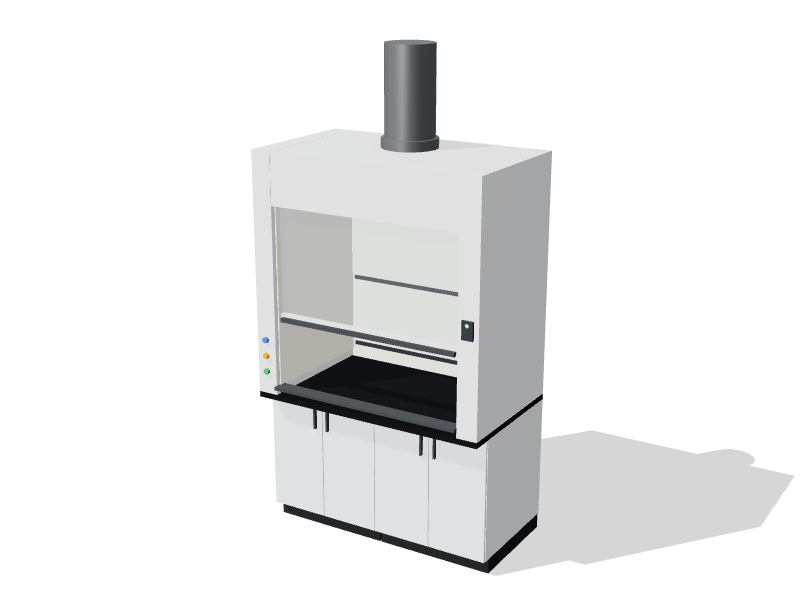
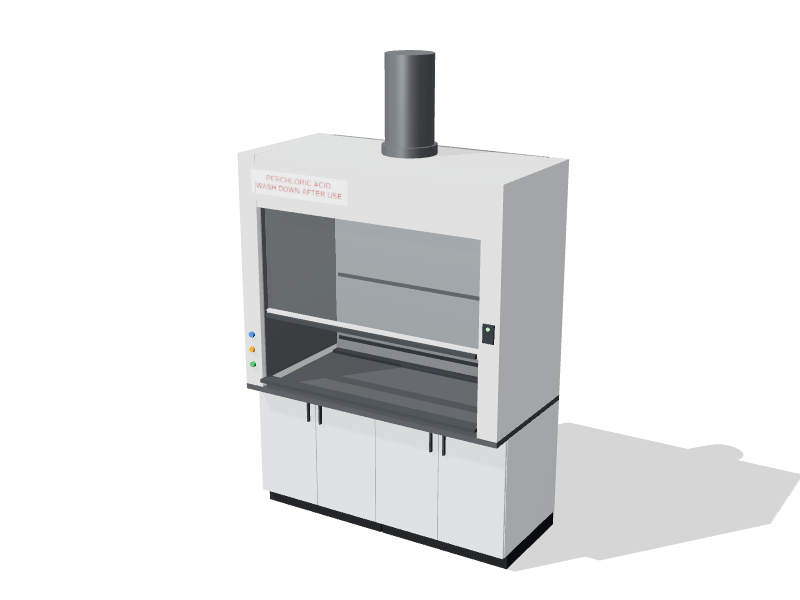
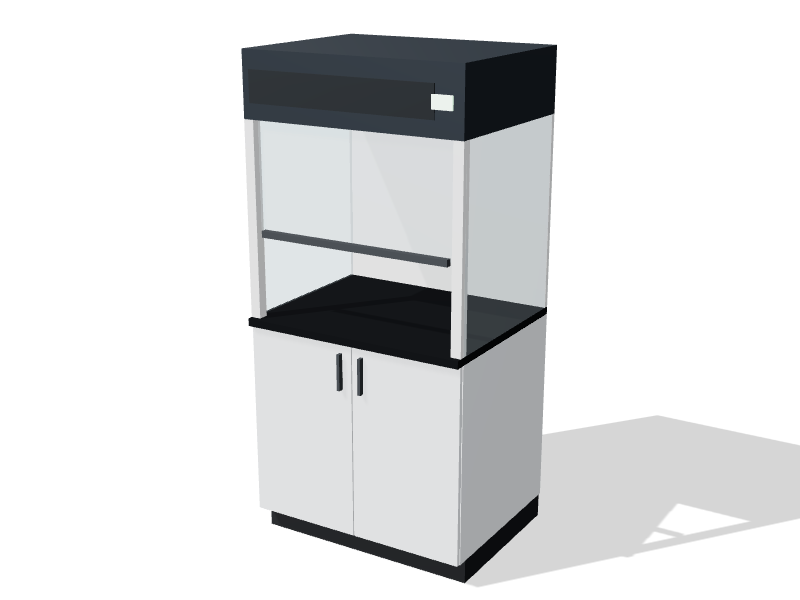
A fume hood has few moving parts, which makes it easy to ignore until something fails. Most failures give warning first: a sash that starts to creep, a fan belt that squeals, a monitor reading that drifts lower each month. Regular checks catch those signs early. The work is shared between the people who use the hood every day, the lab staff who look after the room, the facilities team who run the exhaust system and the certifier who tests the hood each year. The checklist below divides it that way so each group knows its part.
User and lab staff checks
Every day: the user
Before starting work:
- The airflow monitor shows normal flow and no alarm.
- The sash moves freely, stays where it is placed and the glass is intact.
- The baffle slots at the back and bottom of the hood are not blocked by bottles, equipment or paper.
- Large equipment sits on blocks or a stand so air can flow underneath it.
During and after work:
- Apparatus stays at least 150 mm (6 in) behind the sash.
- Spills are cleaned up straight away with the right absorbent.
- Containers are capped and returned to storage, not left in the hood.
- The sash is closed when the user walks away.
Weekly to monthly: lab staff
- Clear out containers that have accumulated in the hood. A hood is a workspace, not a cabinet.
- Clean the work surface, sill and both sides of the sash glass with cleaners suited to the surfaces; the guide to cleaning lab surfaces covers what each material tolerates.
- Run water into the cup sink so the trap stays filled, and check the drain flows freely.
- Look for leaks at service valves, and replace cracked or hardened tubing and loose hose clamps.
- Check electrical cords, plugs and receptacles for damage or chemical attack.
- Confirm the hood light works. A dim hood leads people to raise the sash to see.
- Open the base cabinets. Look for spills in trays, corrosion on shelves, missing vent bungs and incompatible chemicals stored together.
Facilities and certifier checks
Quarterly to twice a year: facilities
| Component | What to check |
|---|---|
| Exhaust fan | Belt tension and wear, bearings, vibration, motor current, wheel corrosion |
| VAV valve and controller | Response to sash movement, actuator operation, sash sensor accuracy |
| Sash mechanism | Cables, pulleys, counterweights, guides; replace frayed cables before they fail |
| Visible ductwork | Corrosion, condensate stains, leaking joints, damaged supports |
| Roof stack | Physical condition, drain, nothing blocking discharge |
| Monitor and alarm | Quick function check between annual calibrations |
Exhaust maintenance shuts hoods down. Before any fan is stopped, tell the users of every hood it serves, have them close sashes and secure chemicals, and tag the hoods out of service until the fan is back on and flow is confirmed. Work near roof stacks only with the affected fans off or with the protection your EHS office specifies.
Every year: certification
The annual certification visit measures face velocity, checks containment with smoke, calibrates the airflow monitor and updates the label on the hood. Book it on a fixed cycle so no hood drifts past its due date, and clear the hoods beforehand so the certifier can test them in a realistic state. The guide to commissioning and annual certification explains the full scope, and our certification service can take it on.
The yearly visit is also a good time for a closer look at items that need tools or access panels: baffle fastenings and adjustment (see baffles and slot adjustment), the condition of the liner behind the baffles and the seals around the light panel.
Special hoods and record keeping
Special hoods
- Perchloric acid hoods: run the washdown after each use, or as often as your procedure requires. Have facilities confirm periodically that the spray nozzles are clear and the drain trough empties freely, because perchlorate deposits must never be allowed to build up. See the perchloric acid hood guide.
- Ductless filtered hoods: track filter saturation with the hood's sensor or the supplier's test method, keep a log of chemicals used, and replace filters on schedule with the correct type for those chemicals.
- Radioisotope hoods: follow the contamination survey and record-keeping requirements in your CNSC licence.
Keep a simple record
For each hood, keep its ID and location, its certification dates and results, monitor settings, repairs, alarm events and, where relevant, filter changes or washdown logs. Report problems as they happen instead of saving them for the annual visit. A sash that drops or a monitor that alarms needs fixing this week, not at next year's certification.
Quick checklist to post on the hood
- Monitor normal before starting.
- Sash at or below the marked working height.
- Baffle slots clear; large items raised on blocks.
- Work 150 mm (6 in) inside the sash.
- No stored chemicals in the hood.
- Sash closed when you leave.
- Problems reported to the lab manager the same day.