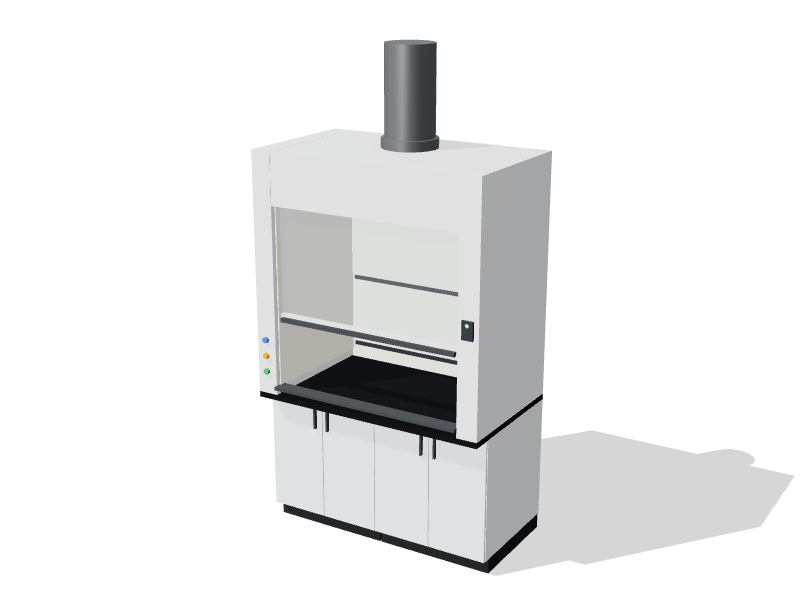
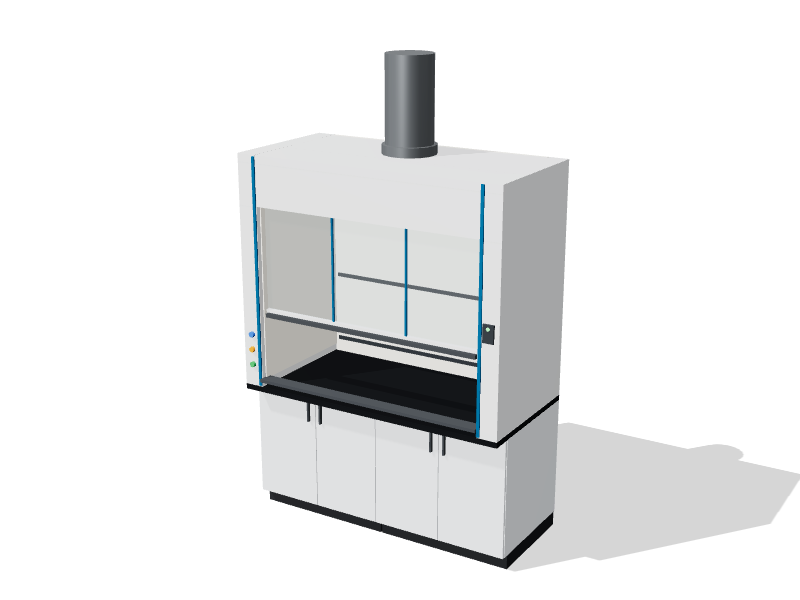
A fume hood is tested at three points in its life. The manufacturer proves the design in a controlled test room. The hood is commissioned once it is installed and the building's air systems are balanced. Then it is recertified at regular intervals, at least once a year in most programs, to show it still performs. ANSI/ASHRAE 110 supplies the test methods, called as manufactured (AM), as installed (AI) and as used (AU). The pass criteria come from ANSI/AIHA Z9.5, CSA Z316.5 and your organization's own hood program.
Before the hood arrives: the as-manufactured test
Containment starts with the design. Before you order, ask the supplier for an ASHRAE 110 as-manufactured test report for the model, width and sash configuration you are buying, run at the face velocity you plan to operate at. A report for a different size, a different sash or a higher face velocity tells you little about your hood.
Many organizations adopt the Z9.5 approach, which sets a tighter tracer gas limit for the as-manufactured test than for the as-installed test, since a factory test room is calmer than a real lab. The ASHRAE 110 guide explains how the tracer gas, smoke and velocity tests work.
Commissioning: the as-installed test
Commissioning proves that the hood, the exhaust system and the room work together. A typical sequence:
- Balance the air systems. The mechanical contractor's balancing team sets exhaust and supply volumes and confirms the lab runs negative to the corridor.
- Inspect the hood. Sash travel and counterbalance, sash stops, baffle settings, airfoil sill, lights, service fixtures, cup sink drain and base cabinet vents.
- Measure face velocity. Take readings across a grid of points over the opening at the design sash height, typically about 300 mm (12 in) apart. Record the average and every individual reading, since one low corner can matter more than a good average.
- Run smoke tests. Release smoke along the sill, the side walls, the work surface and the sash, then use a larger smoke source inside the hood. Look for any smoke that escapes or rolls forward.
- Run the tracer gas test. A tracer gas is released inside the hood at a set rate while a detector at the breathing zone of a mannequin standing at the opening records any escape. Tests are run at several positions across the opening, then repeated while the sash is moved.
- Test VAV response. On variable-volume hoods, confirm the controller reaches its setpoint quickly and steadily when the sash is raised and lowered.
- Calibrate the monitor. Match the airflow monitor to the measured face velocity, set the alarm points and prove that the alarm trips and resets.
- Label and record. Fix a certification label to the hood and hand over a report.
Run the as-installed tests with the room in normal operation: doors working, supply air on, other hoods running. A test in an empty, still room can hide the cross drafts that matter in daily use.
Annual certification
After commissioning, routine testing confirms that nothing has drifted. Z9.5 calls for testing at least annually, and many Canadian institutions build their programs around CSA Z316.5. A typical annual visit covers the following.
| Item | What the certifier checks |
|---|---|
| Face velocity | Grid traverse at the certified sash height, compared with the design range and last year's result |
| Smoke visualization | Flow at the sill, sides and baffles, and any reverse flow at the opening |
| Monitor and alarm | Calibration, alarm trip point, mute reset, high-sash alarm |
| Sash | Smooth travel, stops, cables, glass, labels marking the working height |
| General condition | Baffles, liner, work surface, light, services, signs of corrosion |
Full tracer gas testing is usually reserved for commissioning and for specific triggers: user complaints, unexplained alarms, renovations nearby, changes to the HVAC system or a change in the work done in the hood. Some organizations also schedule periodic as-used tests with real apparatus in place.
When a hood fails
- Tag the hood out of service and tell the users. Stop hazardous work and close the sash with chemicals secured inside or removed.
- Diagnose methodically. Low flow usually comes from the exhaust system (belts, dampers, controls). Poor containment with good flow points to the room (diffusers, doors) or the hood setup (blocked baffles, clutter, damaged parts).
- Fix, retest and record. Do not return the hood to service on the strength of the repair alone.
Recertify a hood whenever it is moved, modified or repaired, and whenever the supply or exhaust system serving the room is rebalanced.
Records and responsibilities
Decide who owns the hood program: often EHS sets the criteria and keeps the records, while facilities runs the exhaust system and repairs. Keep an inventory with each hood's ID, location, type, certified sash height, test history and repairs. Ask any certifier for current calibration certificates for their instruments and a description of their technicians' training.
Checklist for a certification contract
- Scope: which tests on which hoods, at which sash heights, including VAV response.
- Instruments with current calibration certificates.
- A report per hood with readings, alarm settings and a photo of the label.
- A clear process and turnaround for reporting failed hoods.
- Coordination with users so hoods are cleared and accessible on the day.
Our fume hood certification service covers commissioning tests and annual recertification. The glossary explains containment and tracer gas testing in plain terms.