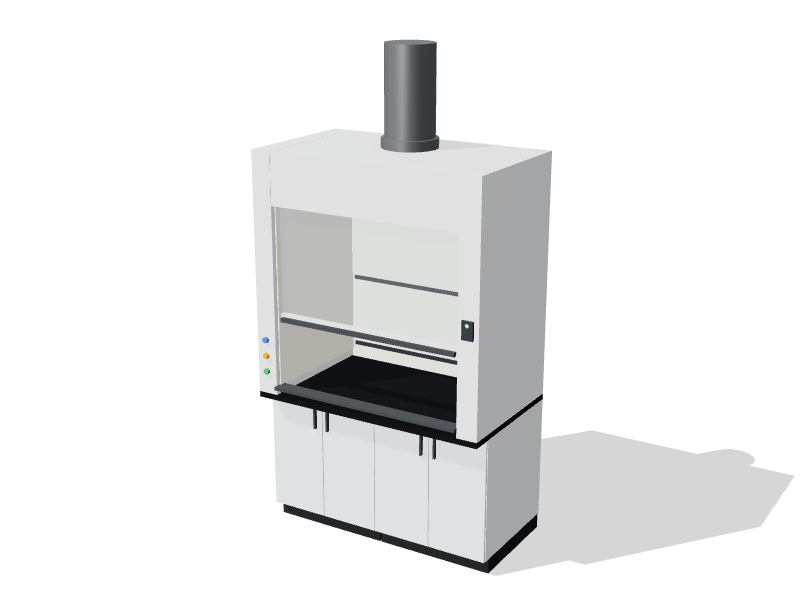
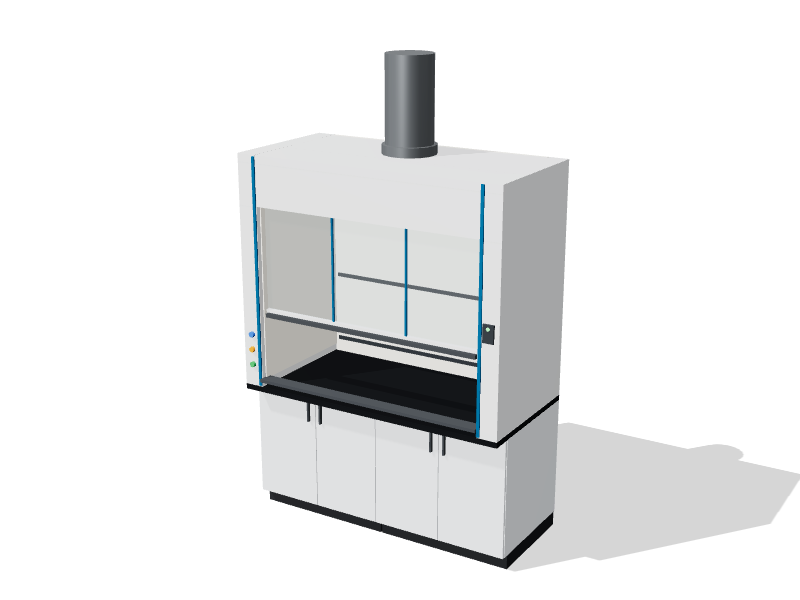
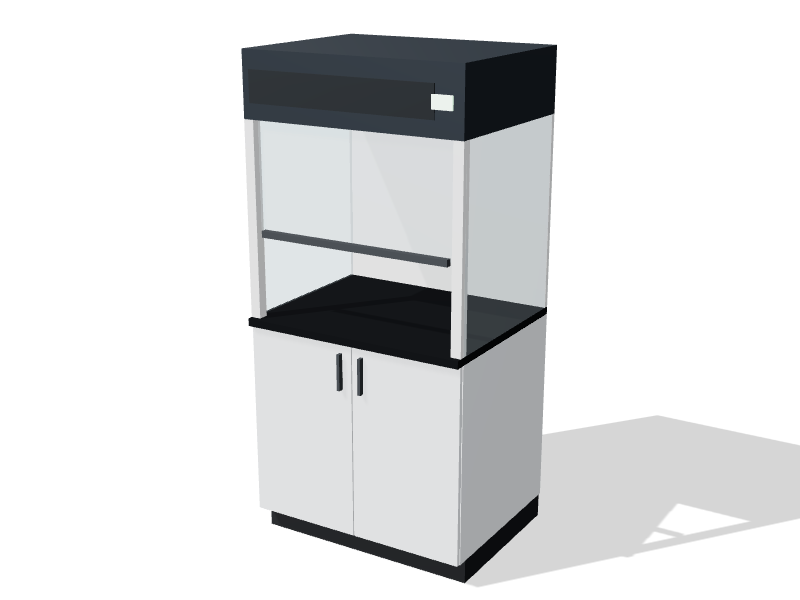
Most fume hood failures are not equipment failures. A hood that tests well in the factory can perform poorly because of where it was put, what it was bought for or how people use it from day to day. The mistakes below come up again and again across research, teaching and industrial labs. Nearly all of them are cheap to avoid and expensive to live with.
Mistakes in planning and purchasing
Putting the hood in the traffic
A hood beside the entry door or at the end of a main aisle is disturbed every time someone walks past or the door opens. Locate hoods away from doors and circulation routes, as described in where to place fume hoods.
Letting supply air blow at the hood
Ceiling diffusers are often laid out on a regular grid long before anyone checks where the hoods go. A diffuser jet crossing the sash plane can undo a good hood. Coordinate the two drawings early; the guide to cross drafts and supply air explains what to check.
Buying on price and width alone
Two hoods of the same width can differ widely in containment and in the air they need. Ask for an ASHRAE 110 as-manufactured test report for the exact model, size and sash you are buying, at the face velocity you will run.
Treating a ductless hood as general purpose
A filtered hood suits low quantities of known chemicals that its filters can capture. It is the wrong choice for unknown or changing chemistry, large volumes or substances its filters cannot retain. Read the ductless fume hood guide before choosing one.
Using a standard hood for hot perchloric acid
Heated perchloric acid can leave perchlorate deposits in ducts and fans that become shock-sensitive. That work needs a dedicated perchloric acid hood with a washdown system.
Forgetting the exhaust system
Adding a hood means adding exhaust and makeup air. Check fan capacity, duct material and stack design before the hood is ordered, not after it arrives.
Skipping the as-installed test
A factory test does not prove the hood works in your room. Commission every new or relocated hood with tests run under normal room conditions.
Mistakes in daily use
| Mistake | Why it matters | Fix |
|---|---|---|
| Working with the sash fully raised | Larger opening, often a lower face velocity than certified, less of a physical shield | Keep the sash at or below the marked working height; use a sash stop where certified |
| Storing bottles and equipment in the hood | Blocks the baffle slots, disrupts airflow and adds fuel to any fire | Store chemicals in proper cabinets; keep only what the current task needs |
| Working at the front edge | Vapour released near the opening escapes easily | Keep sources at least 150 mm (6 in) behind the sash |
| Large equipment flat on the work surface | Blocks the lower slot and creates dead zones | Raise it on blocks about 50 mm (2 in) high so air passes underneath |
| Leaning in with head inside the sash plane | Puts the breathing zone inside the contaminated space | Lower the sash and work through the opening |
| Silencing alarms and carrying on | Removes the only warning of lost airflow | Stop work, close up, report the alarm |
Other habits that cause trouble:
- Fast arm movements and rapid sash moves: quick motions pull air out of the hood. Move steadily and slowly at the opening.
- Evaporating waste in the hood: letting solvent waste evaporate is not an acceptable disposal method in most jurisdictions. Collect it for proper disposal.
- Removing sash panels or propping the sash: panels and sash positions are part of how the hood was tested. Removing them changes its performance.
- Unlabelled overnight work: a reaction left running needs a sign with the chemicals, the hazards and a contact name, so whoever responds at 3 a.m. knows what they are facing.
Mistakes in managing a hood program
- Letting certification lapse: a label two years out of date tells users nothing. Schedule recertification on a fixed cycle.
- Not training users to read the monitor: people cannot act on an alarm they do not understand.
- Energy savings without EHS: turning hoods off at night or lowering face velocity can leave stored chemicals unventilated. Agree any setback with EHS first.
- Abandoning hoods in place: an unused hood keeps exhausting conditioned air. Decommission it properly or put it back into use.
- Modifying hoods without retesting: drilling the liner, adding a shelf across the back or fitting a different sash changes airflow. Retest after any modification.
A quick self-audit
Walk through your lab and answer these for each hood.
- Is it away from the door and out of the main aisle?
- Is the certification label current, and does the monitor read normal?
- Is the sash at or below the marked height right now?
- Can you see the baffle slots, or are they hidden behind bottles?
- Are large items raised on blocks?
- Do users know what the alarm means and who to call?
- Is anything in the hood that should be in a storage cabinet?
If more than one answer worries you, start with the daily-use fixes; they cost nothing. Our certification service can help with the rest.