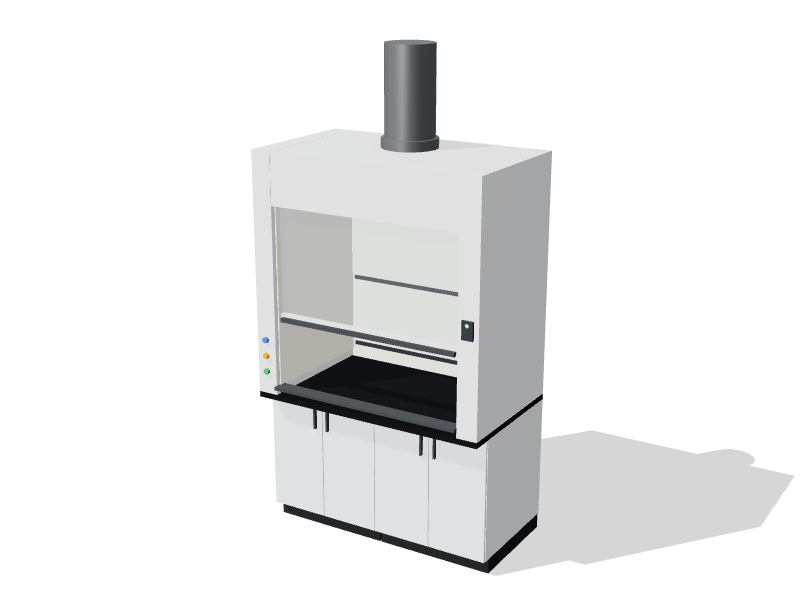
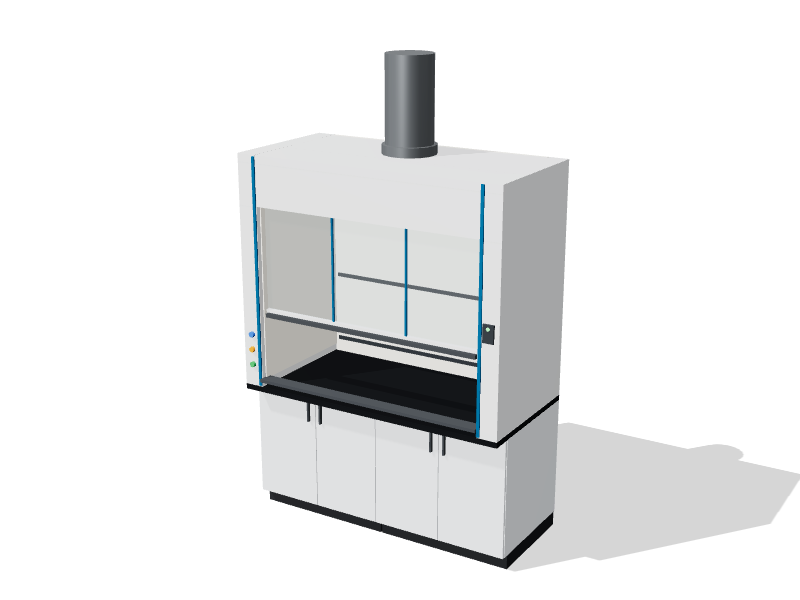
A fume hood can lose airflow without anyone at the sash noticing. A fan belt snaps, a damper sticks, a VAV controller fails, or someone on the roof switches off the wrong fan. The airflow monitor is the user's only continuous evidence that the hood is working between annual certifications. ANSI/AIHA Z9.5 and NFPA 45 both expect every hood to have a device that shows whether airflow is adequate, and CSA Z316.5 addresses the same need for hoods in Canada.
How monitors sense airflow
Monitors do not measure containment directly. They measure something that tracks airflow and translate it into a reading or a status light. The main approaches are compared below.
| Sensor type | What it measures | Strengths | Limits |
|---|---|---|---|
| Sidewall velocity sensor | Air speed through a small port in the hood side wall, correlated to face velocity | Reads directly in m/s (or fpm); common on bypass and constant-volume hoods | Must be calibrated against a measured face velocity; dust and condensate in the port affect it |
| Differential pressure | Static pressure in the hood or duct relative to the room | Robust and simple | Indirect; does not track sash position the way face velocity does |
| Exhaust flow plus sash position | Duct airflow from the VAV valve, combined with a sash position sensor | Calculates face velocity on VAV hoods; also drives the controller | Accuracy depends on the sash sensor and valve calibration |
| Mechanical indicator | A ribbon, vane or tell-tale that moves with airflow | Cheap, needs no power, useful as a backup | No alarm and no number; not a substitute for a monitor |
On a VAV hood the monitor and the controller are often the same device. It reads sash position, sets the exhaust valve to hold the target face velocity, and alarms if the valve cannot keep up.
Setting up alarms
An alarm should get attention, mean something, and stop the user from carrying on as if nothing happened.
- Low-flow alarm: audible and visual. Set the trip point during certification, relative to the measured face velocity at the certified sash height. It needs enough margin to avoid nuisance alarms and must trip well before containment becomes doubtful. Agree the value with EHS.
- Mute with automatic reset: users need to silence a beeping monitor while they close up their work. The mute should time out and re-sound if the problem persists, and the visual alarm should stay on.
- High-sash alarm: where a hood is certified at a restricted working height with a sash stop, a sash position switch can warn when someone raises the sash above it.
- Emergency purge: many VAV controllers include a purge button that drives the exhaust to maximum during a spill inside the hood.
- Remote alarm: connect monitors to the building automation system so facilities staff see failures, and so trend data can reveal patterns such as alarms that recur at the same time each day.
Nuisance alarms are a safety problem, not an annoyance. A monitor that beeps for no clear reason gets muted, unplugged or taped over, and then it protects nobody. Trace the cause, which may be a drifting sensor, a poorly set trip point or a real but intermittent problem such as a cross draft from a door.
Calibration and testing
A monitor is only as good as its last calibration. The certifier should:
- Measure face velocity with a calibrated instrument across a grid at the certified sash height.
- Adjust the monitor so its display matches the measured average.
- Set the low-flow and high-sash alarm points and record them.
- Prove the alarm trips, typically by reducing exhaust flow or simulating a fault, and confirm it resets.
- Note the calibration date and settings on the hood label.
Recalibrate after baffle adjustments, after HVAC rebalancing, after a sensor is replaced and after the hood is moved. On hoods used heavily with acids, inspect the sensor port for corrosion or deposits. See commissioning and annual certification for the full test scope.
Teaching users to trust it
Users need three habits:
- Look before you start. Check that the monitor shows normal flow before opening containers.
- Know what normal looks like. A numeric display lets users notice a reading that is lower than usual, even before it alarms.
- Know what to do on alarm. Stop work, close containers if it is safe, lower the sash, and report the problem. Do not mute the alarm and carry on.
Post a short card on the hood with the normal reading, the alarm meaning and who to call. Pair it with training on sash height and safe working habits.
Checklist for specifying a monitor
- Display shows face velocity as a number in m/s or fpm, not just a status light.
- Audible alarm is clearly louder than the lab's background noise.
- Mute times out automatically and the visual alarm stays on.
- High-sash alarm available where the hood is certified at a restricted height.
- Outputs for the building automation system.
- Compatible with the VAV controller and exhaust valve, if the hood is VAV.
- Mounted on the hood front at eye level, where the user sees it while working.
- Behaviour on power loss is defined and alarms locally.
Our fume hood certification service includes monitor calibration and alarm checks as part of each visit.