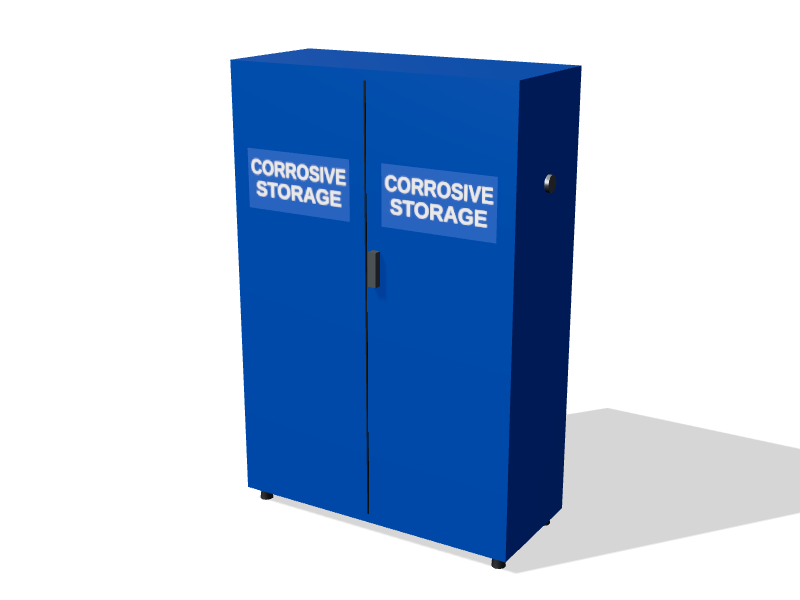
What it's for
A corrosives cabinet gives acids and bases a dedicated home, away from flammable solvents, metal shelving and general storage. Concentrated hydrochloric, nitric, sulfuric and phosphoric acids, sodium hydroxide solutions and ammonia attack ordinary steel, hinges and fasteners over time. A purpose-built cabinet contains the corrosion, the fumes and the drips.
Construction and features
The interior is epoxy coated and the shelves carry polyethylene trays, so drips and small spills collect in a removable, chemically resistant tray rather than reaching the cabinet body. Trays lift out to be cleaned or neutralized, and they make a leak easy to spot.
When comparing corrosive storage cabinets, look for:
- Hinges, latches and shelf hardware that are coated or plastic rather than bare steel.
- A liquid-tight bottom that holds a spill inside the cabinet.
- Vent connections, so the cabinet can be exhausted if your hazard assessment calls for it.
Corrosive vapour builds up in a closed cabinet and eventually attacks even coated metal, which is why many labs connect acid storage to the exhaust system. Whether that is needed depends on what you store and how much.
Sizes and options
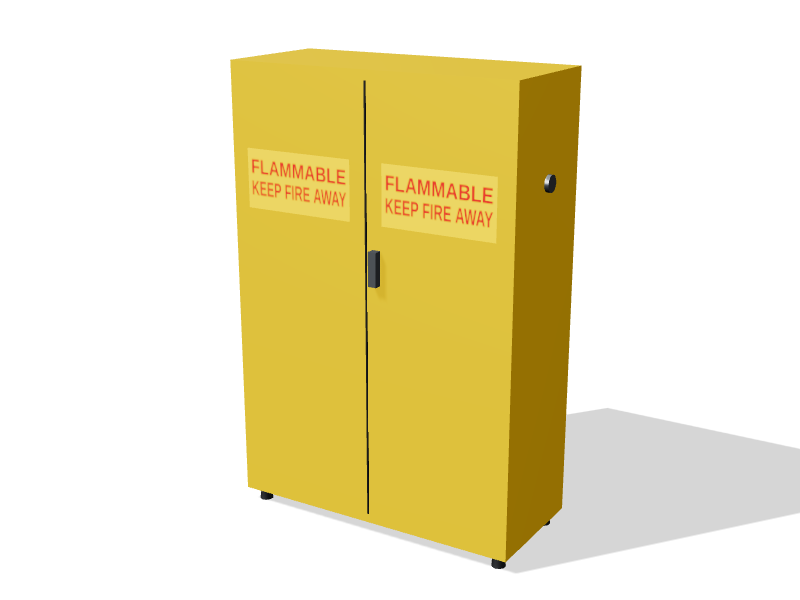
One size: 1090 mm (43 in) wide, 460 mm (18 in) deep and 1650 mm (65 in) high, holding up to 30 US gal (about 114 L) of corrosives in their containers. It shares the footprint of the flammable liquids cabinet, which simplifies room planning, but the two must not stand together. There are no finish options.
Where it fits
Acid storage matters most where digestions and titrations happen daily: a mining and geochemistry assay lab running acid digestions, an environmental testing lab preserving and digesting water and soil samples, and a water treatment plant lab holding acids and caustic for process control tests.
Planning notes
- Separate acids from bases with separate cabinets or at least separate trays. Keep oxidizing acids such as nitric and perchloric away from organic acids such as acetic acid. The chemical segregation guide sets out common groupings.
- Put this cabinet on a different wall from the flammable cabinet, or separate the two with other casework.
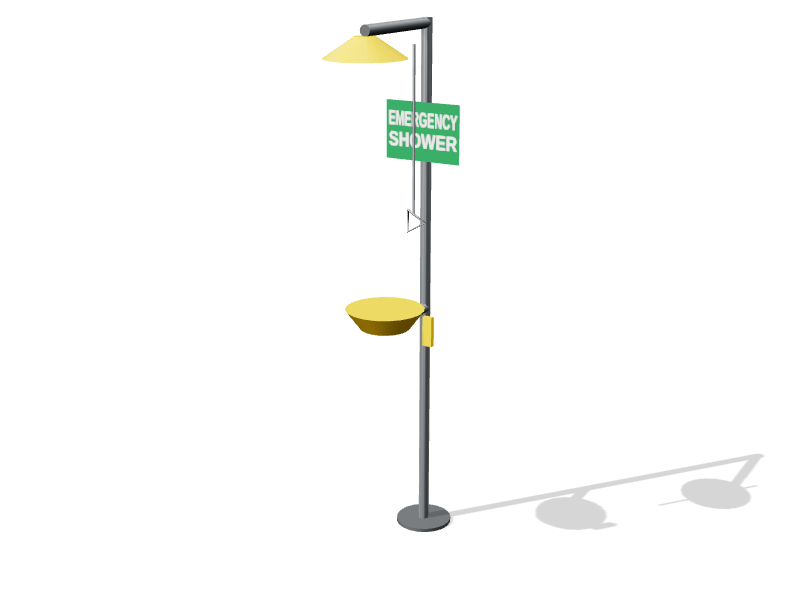
- Place an emergency shower and eyewash within about 10 seconds' travel of where corrosives are stored and poured.
- Keep large bottles on the lowest shelf and never store corrosives above shoulder height.
- Check the trays during routine inspections. Liquid in a tray means a container is leaking or was put back wet.
All sizes
| Code | Width | Depth × height | From |
|---|---|---|---|
| SC-CR30-1090 | 1,090 mm (43 in) | 460 × 1650 mm | $2,290 |