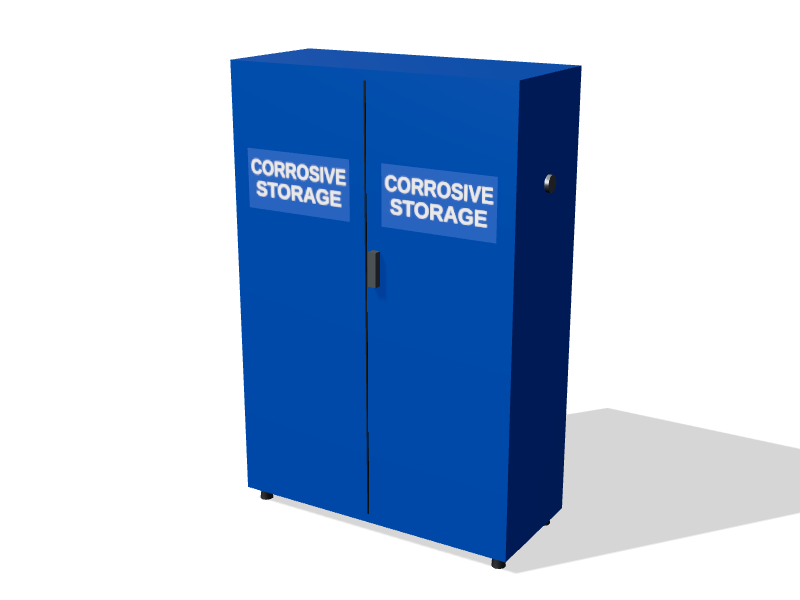
Acids and bases are hard on everything around them. Fumes from hydrochloric, nitric and acetic acid rust steel shelves, seize hinges and corrode nearby instruments and service fittings. A dedicated corrosive cabinet keeps these chemicals contained, separated from incompatible materials, and stored low enough that nobody has to lift a bottle of concentrated acid down from above their head.
Why corrosives need their own cabinet
A corrosive damages skin, eyes and materials on contact. In storage, three problems drive the cabinet choice:
- Vapour attack. Even closed bottles release some vapour over time. In an ordinary steel cupboard, that vapour slowly destroys shelf supports, hinges and paint.
- Incompatibility. Acids react with bases, cyanides, sulfides and reactive metals. Oxidizing acids such as nitric acid can react with organic materials and solvents.
- Handling risk. Splashes happen when people reach up or pull containers off crowded shelves. Low, well-organized storage reduces that risk.
Unlike flammable cabinets, corrosive cabinets have no single construction standard comparable to the rules in NFPA 30. That puts more of the judgement on the buyer and the EHS team, so read the construction details carefully.
Construction options
| Construction | Strengths | Watch for |
|---|---|---|
| All-polyethylene or polypropylene | No metal to corrode; suits hydrochloric and hydrofluoric acid | Not fire resistant; check shelf load ratings |
| Steel with epoxy-coated interior and plastic trays | Robust, matches other casework, fits under hoods | Chipped coating will rust; hinges need checking |
| Steel cabinet with a full plastic liner | Steel exterior with a non-metallic inside | Liner joints and fixings must be sealed |
| Solid phenolic | Good resistance to moisture and many acids | Confirm compatibility with strong oxidizing acids |
Whatever the material, look for removable plastic trays on every shelf, a leak-tight sill, non-metallic shelf supports or corrosion-resistant ones, hinges in stainless steel or plastic, and clear CORROSIVE marking. Each tray should hold at least the contents of the largest bottle on it. Our corrosives cabinet uses polyethylene trays and an epoxy-coated interior, a common combination for general acid and base storage.
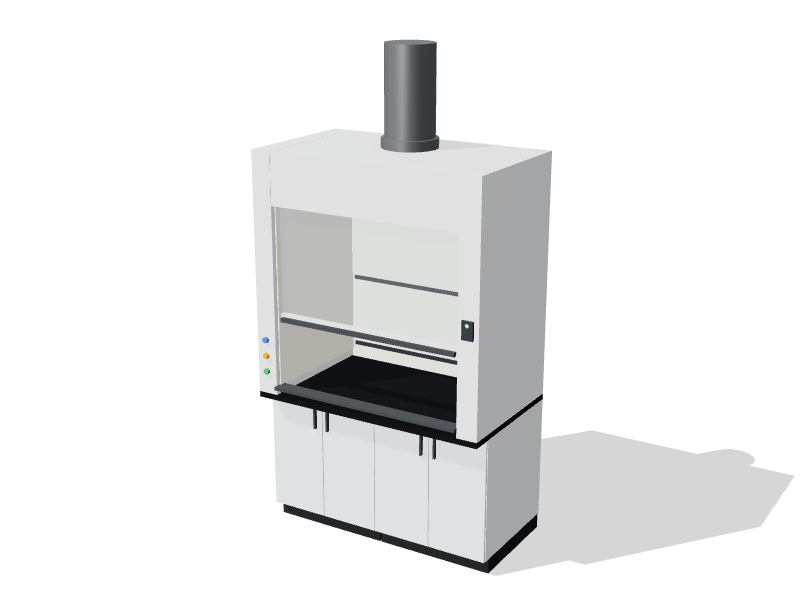
Many labs place acid cabinets under fume hoods, where acids are usually poured. The guide to base cabinets under fume hoods covers how these units connect to the hood.
To vent or not
Corrosive cabinets are often vented, unlike flammable cabinets. A small, steady exhaust flow keeps vapour from building up and attacking the cabinet and everything near it. Typical arrangements:
- Under-hood acid cabinets vented through a short duct into the fume hood's exhaust path. The connection is small and should not upset the hood's airflow; confirm the detail with the hood maker.
- Freestanding cabinets connected to the building exhaust system with corrosion-resistant duct, such as PVC or polypropylene.
If venting is not possible, keep caps tight, wipe bottle exteriors after use, and inspect hinges and shelf supports regularly. Rust on the hardware is an early sign that vapour is escaping.
Separating corrosives inside the cabinet
"Acids" is not one compatible group. Most labs need at least two cabinets or two separated compartments: one for acids and one for bases. Within the acid side, use separate trays for the groups below.
- Mineral acids such as hydrochloric, sulfuric and phosphoric acid. Keep them away from bases, cyanides, sulfides and reactive metals.
- Oxidizing acids such as nitric and chromic acid. Keep them in their own tray, away from organic acids, solvents and other combustible material.
- Organic acids such as acetic and formic acid. Glacial acetic acid is combustible, so many labs store it with flammables rather than next to nitric acid.
- Bases such as sodium hydroxide, potassium hydroxide and ammonia solution. Store them in a separate cabinet or a fully separated compartment.
- Hydrofluoric acid. Store it in its own polyethylene container and tray. Many programs keep calcium gluconate gel nearby as part of their HF procedure.
- Perchloric acid. Store it in glass or ceramic secondary containment, away from organic acids, solvents, wood and paper. Many institutions keep it in a cabinet of its own.
The wider rules for building these groups into a storage plan are in chemical segregation and compatible storage.
Placement and the area around the cabinet
- Put large containers on the lowest shelf. Never store corrosive liquids above eye level.
- Place the cabinet near where acids are used, but not beside the flammable cabinet. Use another wall, or put other casework between them.
- Make sure an eyewash and shower are within the required travel time. Strong acids and caustics call for units close to the hazard; see emergency showers and eyewashes.
- Choose worktops that suit the work. Epoxy resin resists a wide range of acids and is common in acid-handling areas.
- Provide bottle carriers for moving acids between storage and the hood.
Questions to ask your supplier
- What is the interior made of, and how are joints and fixings protected from vapour?
- Are the shelves and trays removable, and what load can each shelf carry?
- Can the cabinet be vented, what size is the vent connection, and what duct material do you recommend?
- Are acids and bases separated by compartments, or do we need two cabinets?
- Are hinges, latches and shelf supports non-metallic or stainless?
- Does the cabinet fit under our chosen hood width and depth?
Your EHS officer should sign off the final storage groups and venting arrangement.