What it's for
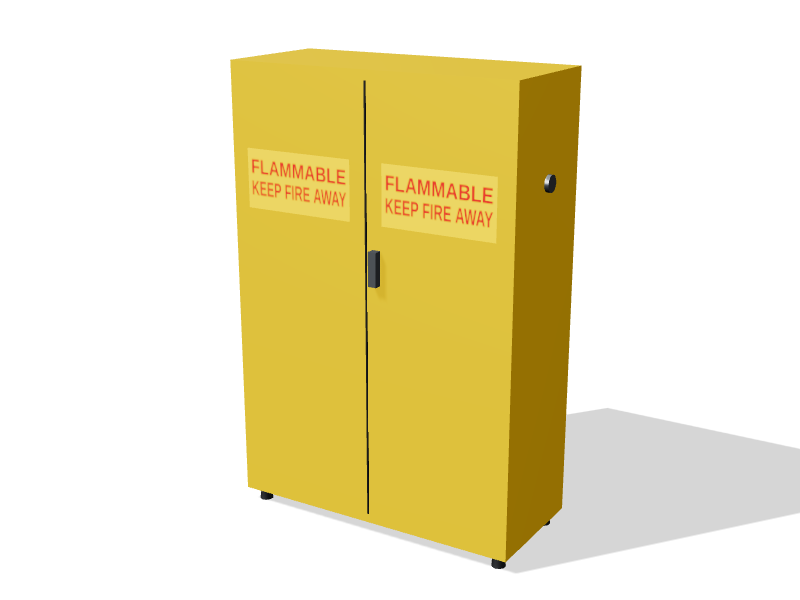
A flammable liquids cabinet stores solvents, fuels and other flammable liquids inside the lab, in one place, protected from a fire for a period and separated from ignition sources and incompatible chemicals. It lets a lab keep the solvents it uses this week close at hand while staying within the quantity limits that fire codes set for each room.
Construction and features
The cabinet is built of double-wall steel with an insulating air space between the skins, which slows heat reaching the containers inside during a fire. Self-closing doors shut and latch on their own, so the cabinet is not left standing open. A leak-proof sill at the bottom keeps spills inside the cabinet instead of letting them run across the floor.
The cabinet is designed for flammable liquid storage under NFPA 30. Ask for the manufacturer's documentation and any listing or approval the model carries, and confirm with your fire official that it meets the National Fire Code of Canada for your occupancy. Other features to check on any flammable cabinet:
- A multi-point latch that holds the doors closed under heat.
- Vent openings fitted with flame arresters and sealing bungs.
- A grounding connection for bonding containers.
- Clear hazard labelling on the doors.
Sizes and options
One size: 1090 mm (43 in) wide, 460 mm (18 in) deep and 1650 mm (65 in) high, holding up to 45 US gal (about 170 L) of flammable liquids in their containers. There are no finish or worktop options.
Where it fits
Any lab that uses solvents in quantity needs at least one. An organic synthesis lab stores chromatography and reaction solvents, a petroleum and fuels testing lab holds fuel samples and reference fuels, and a cannabis testing lab keeps extraction solvents and HPLC mobile phases.
Planning notes
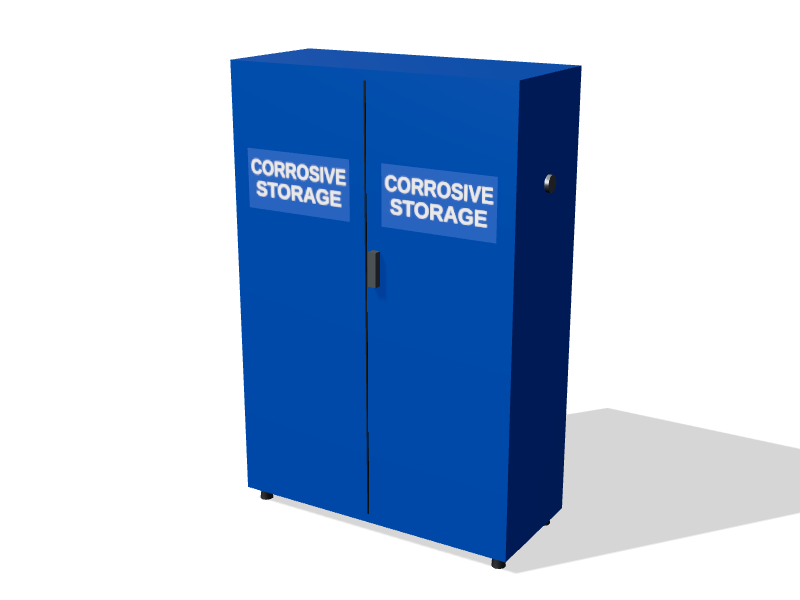
- Place it away from exits, ignition sources and heat, and well apart from the corrosives cabinet. Solvents and acids should not share a cabinet or stand side by side.
- NFPA 30 does not require cabinets to be vented. If the cabinet is vented, the duct should run to outdoors in a way that does not compromise the cabinet in a fire; if it is not vented, keep the bungs in place.
- Fire codes limit how much flammable liquid a lab may hold and how many cabinets can be grouped in one area. Check the limits for your room before adding a second cabinet; see flammable storage cabinets.
- Bond and ground metal containers when dispensing, and do not dispense inside the cabinet.
- Store closed containers only, and never put oxidizers in with solvents.
All sizes
| Code | Width | Depth × height | From |
|---|---|---|---|
| SC-FL45-1090 | 1,090 mm (43 in) | 460 × 1650 mm | $2,480 |