Epoxy resin and phenolic resin are the two most common worktops in modern labs. Both resist a wide range of chemicals, both are non-porous, and both last for decades with reasonable care. They differ in how they are made, and that drives the differences in heat tolerance, weight, impact behaviour and how sinks and edges are handled.
How each one is made
An epoxy resin worktop is cast. Epoxy resin is mixed with inert fillers, poured into molds and cured into a solid slab that is the same material all the way through. Because it is cast, features such as raised marine edges, drip grooves and integral sinks can be molded in. Because it is homogeneous, a surface scratch exposes more of the same material rather than a different core.
A phenolic resin worktop is laminated. Layers of kraft paper are saturated with phenolic resin and pressed under heat and high pressure into a dense panel, with a chemical-resistant surface layer on top. It is cut and machined like a panel product, so edges, cutouts and grooves are routed rather than molded.
The glossary entries for epoxy resin and phenolic resin give short definitions of both materials.
Side by side
| Property | Epoxy resin | Phenolic resin |
|---|---|---|
| Typical thickness | 25 mm (1 in), sometimes 19 mm (¾ in) | 19 or 25 mm (¾ or 1 in) |
| Weight | Heavy | Noticeably lighter |
| Chemical resistance | Excellent across most lab chemicals, including many strong acids | Very good for most lab chemicals; weaker with some concentrated oxidizing acids |
| Heat | High tolerance for hot glassware and hot plates | Moderate; sustained direct heat can mark or blister the surface |
| Impact | Hard and rigid; can chip or crack under a sharp blow | Tougher; resists chipping |
| Moisture | Unaffected | Unaffected |
| Edges and sinks | Molded marine edges; integral or bonded epoxy sinks | Routed edges and drip grooves; sinks mounted below |
| Repair | Minor scratches can often be sanded and refinished | Surface damage is harder to hide; deep damage exposes the core |
Exact chemical and heat figures vary by manufacturer and formulation. Ask each supplier for its resistance chart and the test method behind it.
Which labs suit which top
Where epoxy is the better call
Epoxy resin suits rooms with aggressive chemistry and heat. Typical cases include acid digestions, inorganic and analytical wet chemistry, assay sample preparation, and benches where hot glassware is set down often. It is a common choice for fume hood work surfaces, where a dished surface with a raised rim holds spills inside the hood. Its weight and rigidity also make it a stable surface for heavy instruments, provided the casework below is built to carry it.
The downsides are weight, which affects installation, delivery and support, and brittleness. A heavy object dropped on an edge can chip it, and long pieces need continuous, level support to avoid cracking.
Where phenolic is the better call
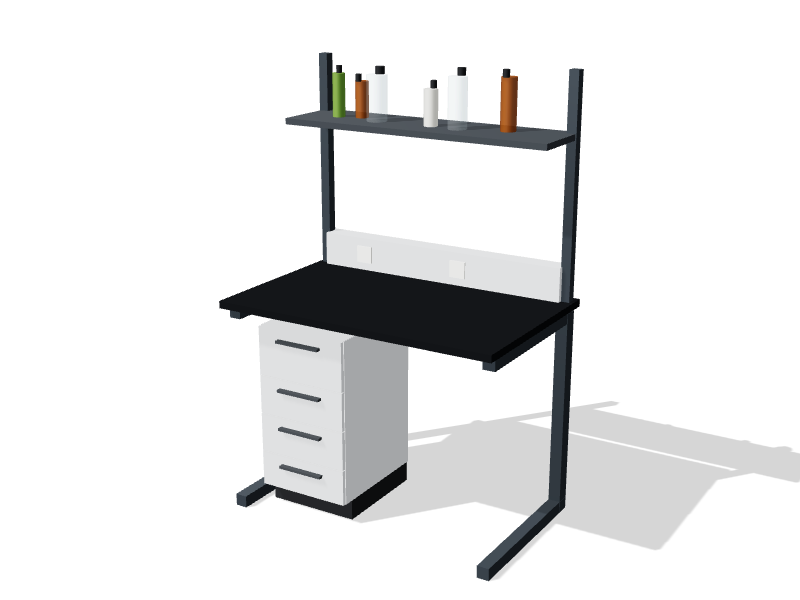
Phenolic resin suits biology, cell culture, molecular biology, teaching labs and instrument rooms, where the chemistry is less aggressive and knocks are frequent. Its lower weight makes it the usual top for mobile tables and adaptable frames such as the C-frame bench, and it machines easily for cutouts and service fixtures. It also stands up well to routine disinfectant cleaning.
The main limits are direct heat and a few strong oxidizing acids at high concentration. Hot plates should sit on a heat-resistant pad or a dedicated surface.
Seams, sinks and backsplashes
Long runs need joints. Epoxy pieces are bonded with a matching epoxy cement into tight seams. Phenolic joints are usually butt joints sealed with a chemical-resistant sealant, and they show unevenness in the support below more readily. With either material, keep joints away from sinks and from the spot where most liquid is handled.
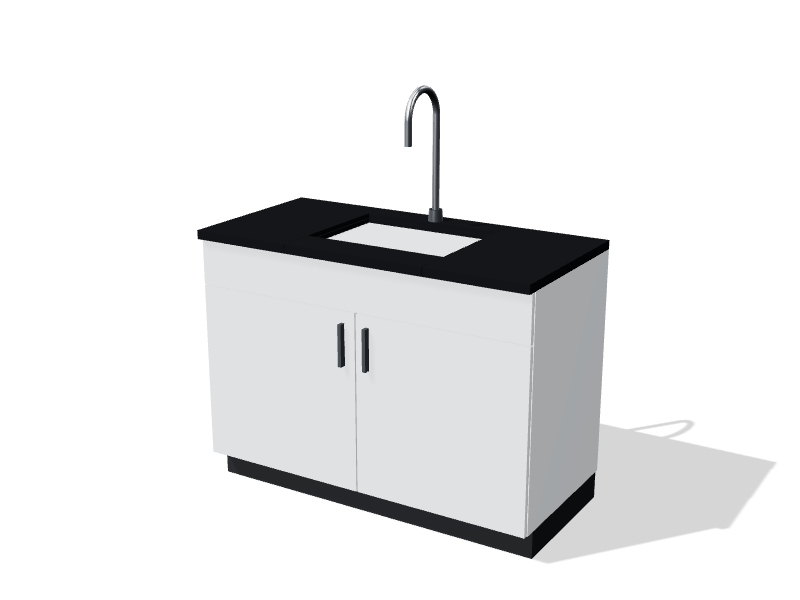
Sinks behave differently with each top. Epoxy tops pair naturally with epoxy sinks that are bonded in or dropped in. Phenolic tops normally take an undermount sink, often epoxy or stainless, with the cut edge sealed. Check how the sink base supports the weight of the sink instead of relying on the worktop alone. More detail is in lab sinks, cup sinks and drainage.
Backsplashes can be integral, bonded or applied. A coved or tightly sealed joint at the wall is easier to keep clean than a square corner finished with a bead of caulk.
Questions to ask
- Can we see the chemical resistance chart, and which test method and exposure time does it use?
- Can you supply samples so we can spot-test our own reagents at our concentrations?
- What heat exposure is the top rated for, and under what test conditions?
- How are seams made, and where will they fall on our layout?
- How are sinks mounted and supported?
- What does the warranty exclude, such as cracks from impact or thermal shock?
For a broader method that also covers stainless steel, laminate and polypropylene, read choosing a lab worktop.