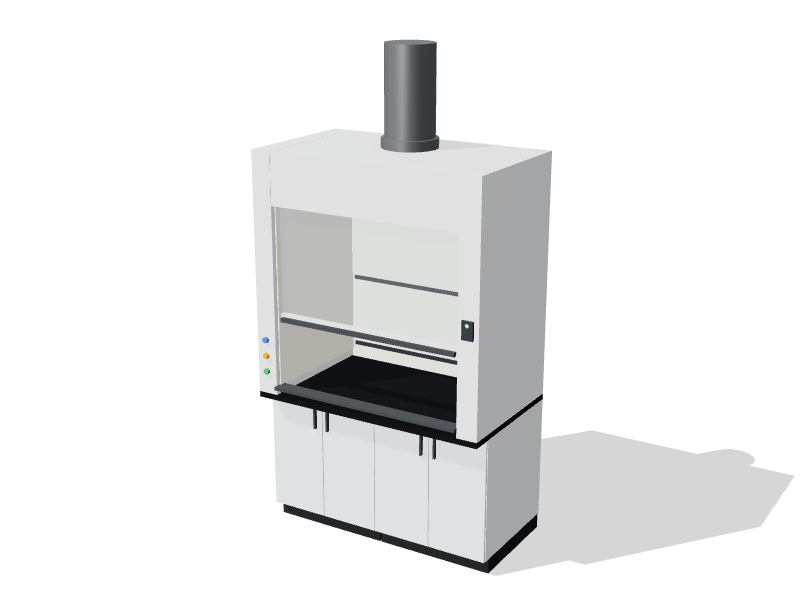
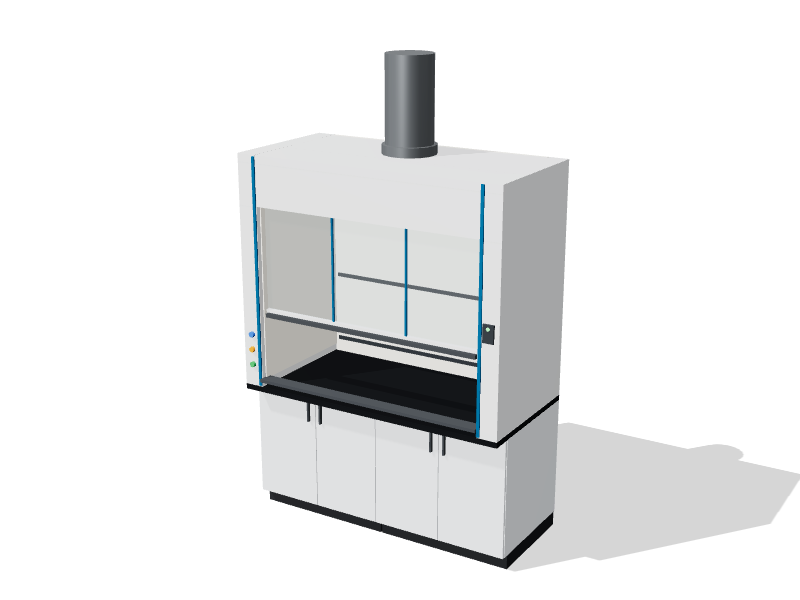
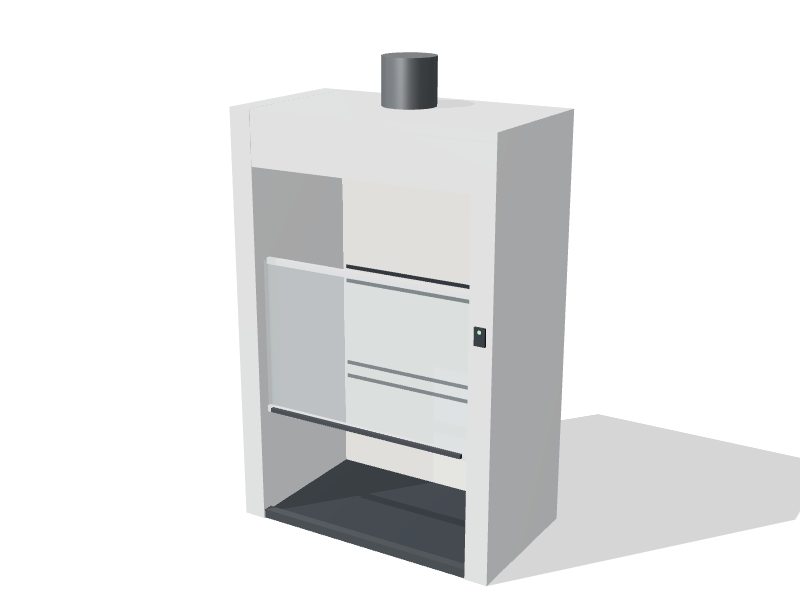
The sash is the movable glazed front of a fume hood. It controls the size of the face opening, which sets how much air the hood needs, and it is the user's physical shield against splashes and flying fragments. Sash design affects safety, energy use and how easily people can set up their work.
The three sash types
Vertical
A vertical, or rising, sash is a framed glass panel that slides up and down in tracks at the sides of the hood. Counterweights or a spring mechanism balance it so it stays where it is put.
Strengths:
- Simple and familiar to users.
- Full-width access, and the sash can be raised all the way for loading apparatus.
- At a sensible height, the lower rail sits between the user's face and the work.
Weaknesses:
- The working opening is the full hood width times the sash height, so air demand is high.
- Users tend to leave it higher than the work needs.
Most vertical sashes have a sash stop at the design working height, commonly about 460 mm (18 in) above the work surface, with a release that lets the user raise it fully for setup. Tall hoods may use a multi-panel vertical sash, where two or more panels telescope past each other to reduce the height needed above the hood.
Horizontal
A horizontal sash has two or more overlapping glass panels that slide sideways in tracks, like a patio door. The user works through a gap between panels, with a panel in front of the torso as a shield.
Strengths:
- The working opening is smaller, so less exhaust is needed.
- A glass panel stays between the user's body and the work.
- The opening height is fixed, so it does not depend on users setting the sash correctly.
Weaknesses:
- Access is limited to the gap. Wide apparatus is awkward to assemble.
- Users sometimes remove panels or push them all to one side, defeating the design.
- Tall equipment must fit within the fixed opening height.
Combination
A combination sash puts horizontal sliding panels inside a frame that also moves vertically. For daily work, the frame stays down and the user works between the horizontal panels. For setup, the whole frame rises to give full-width, full-height access.
Strengths:
- The shielding and energy benefits of horizontal panels during routine work.
- Full access when it is needed.
- A common choice on high-performance hoods, where it helps hold down design exhaust volume.
Weaknesses:
- More parts, higher cost, and more to clean and maintain.
- On VAV hoods, the controls must sense both the vertical and horizontal openings, or rely on a velocity sensor. Ask how the supplier handles this.
Comparison
| Feature | Vertical | Horizontal | Combination |
|---|---|---|---|
| Working opening | Full width at stop height | Gap between panels | Gap between panels |
| Access for setup | Full | Limited | Full, with frame raised |
| Body shielding | Lower rail of the sash | Panel in front of user | Panel in front of user |
| Exhaust demand | Highest | Lower | Lower in daily use |
| Complexity | Low | Medium | Highest |
Glazing and hardware
- Glass. Laminated safety glass is common because it holds together if broken. Tempered glass is also used.
- Glass-etching chemistry. Hydrofluoric acid etches glass. Polycarbonate sashes resist it better, but they scratch more easily and soften with heat. Ask the supplier which glazing suits your chemistry.
- Counterbalance. Cables over pulleys with a counterweight are typical. A smooth sash with a low lift force is more likely to be lowered after use. Cables wear, so include them in maintenance inspections.
- Handles and the lower rail. An aerodynamic handle and a smooth bottom rail reduce turbulence at the face.
- Sensors and closers. VAV hoods need sash position or velocity sensing. Automatic closers that lower the sash when no one is present are an option on many hoods.
How to choose
- General chemistry with frequent setup changes: a vertical sash with a stop.
- Long-running processes with limited access needs, or a lab short on exhaust capacity: horizontal or combination.
- New builds and renovations aiming to cut exhaust: a combination sash, usually on a high-performance hood.
- Tall apparatus or carts: vertical or multi-panel sashes on a walk-in hood. See hoods for distillation and tall apparatus for the options in between.
Whatever the type, the sash only works if people use it well. Sash height and safe working habits covers the user side.
Questions to ask your supplier
- What is the design sash height, and is there a stop with an override?
- Can horizontal panels be removed for cleaning, and can they be secured so users cannot take them out?
- What lift force does the sash need, and how is it balanced?
- What glazing is standard, and what alternatives exist for hydrofluoric acid work?
- On a VAV hood with a combination sash, how is the opening measured?