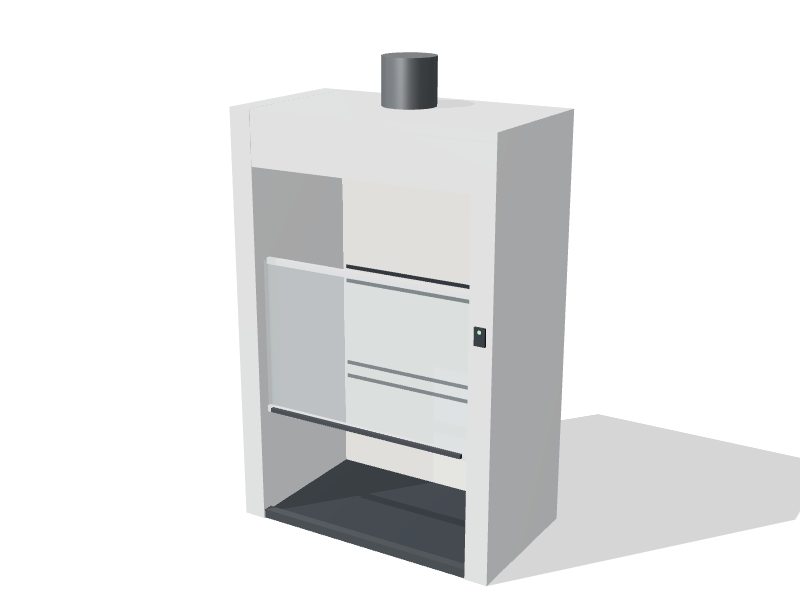
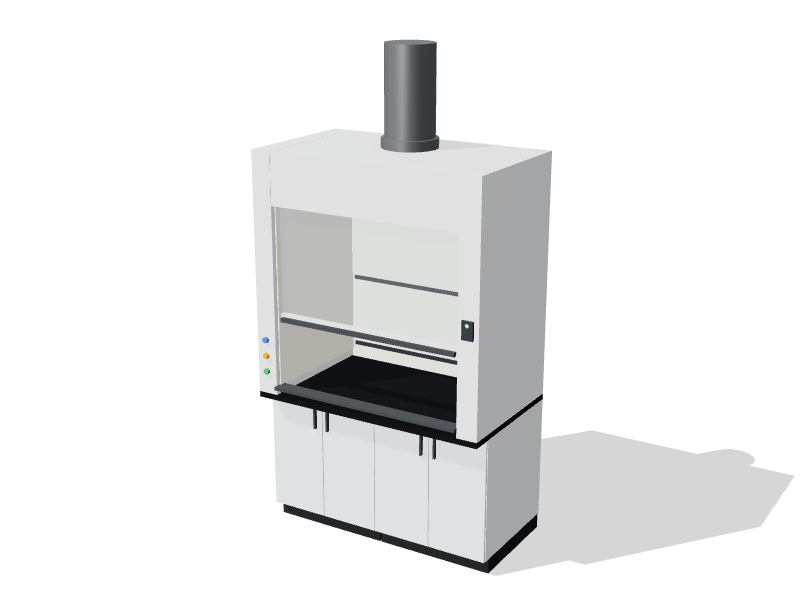
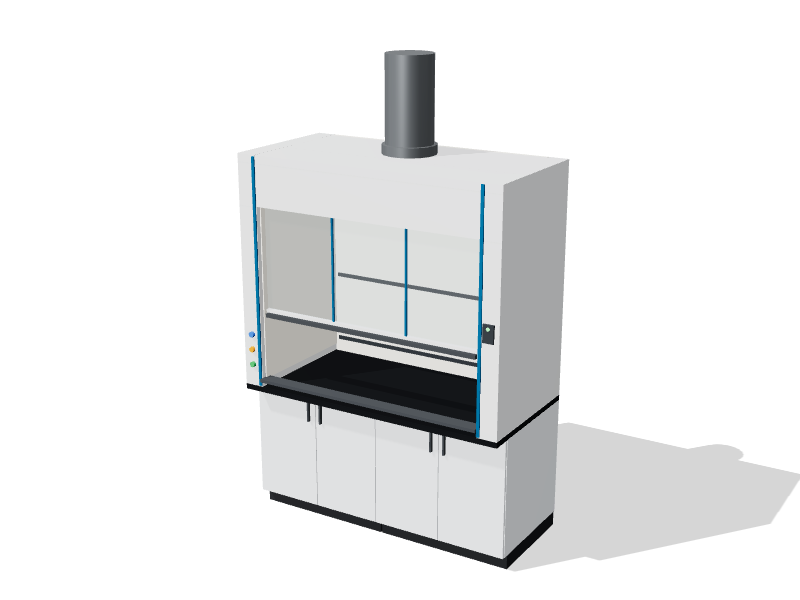
A standard benchtop hood leaves a little over 1 m (about 4 ft) of interior height above the work surface. That suits flasks, stirrer hotplates and a rotary evaporator. It does not suit a fractionating column with a condenser and receiver stacked on top, a jacketed reactor with an overhead stirrer, or equipment wheeled in on a cart. Forcing tall apparatus into a standard hood leads to glassware jammed against the ceiling of the hood, sashes left fully open because the setup will not fit any other way, and hoses and cords crossing the opening.
Three ways to gain height
There are three common approaches, and the right one depends on how tall the apparatus is and how it gets into the hood.
| Option | How it gains height | Suits | Watch for |
|---|---|---|---|
| Benchtop hood with a taller interior | A taller superstructure on standard bases | Modest columns and reflux setups | Full sash opening is large; exhaust rises if it stays open |
| Distillation hood | Work surface set low, often near knee height, on a low base | Glass columns, fractional and vacuum distillation | Users reach down to the work surface; plan stools or platforms carefully |
| Walk-in hood | Sits on the floor, so the floor is the work surface | Reactors on frames, carts, drums, pilot equipment | Large exhaust volumes; spill containment at floor level |
A distillation hood typically keeps its overall height close to that of a benchtop model but drops the work surface, so tall glassware fits without needing a much taller room. A walk-in fume hood goes further and is usually the only option for equipment that arrives on wheels. The walk-in hood guide covers that type in detail.
Before choosing, check the room. A typical walk-in hood stands roughly 2.7 m (9 ft) tall before its duct collar, so it needs a ceiling height of about 3 m (10 ft) or more plus space above for the duct. Distillation hoods also need clear height above them for the exhaust connection.
Sash choices for tall openings
A tall opening raises two problems at once: the user needs access at different heights, and a large open sash exhausts a great deal of air. Sash design solves both.
- Two-tier vertical sash: the opening is split into upper and lower sections that move separately, so you can open only the part you need to reach.
- Horizontal sliding panels: panels slide sideways within a vertical frame, the arrangement often called a combination sash. You reach in through a gap between panels while the rest of the opening stays closed.
- Working height: decide in advance which sash position counts as the working position, test the hood at that position and mark it.
Ask how the as-manufactured test was run for the exact configuration you are buying and which sash positions it covered. A tall hood tested only with the sash in its smallest position tells you little about loading equipment with the sash wide open. The guide to sash types compares the options in more depth.
Rigging tall apparatus safely
A tall setup is a top-heavy structure full of hot liquid and glass. Rig it as you would any load.
- Support: clamp apparatus to a support frame of rods (often called a lattice) anchored to the hood structure, never to the baffles, the sash or the service piping. Check the frame's load rating for heavy setups.
- Clamping: support columns and condensers at more than one point and keep them plumb. Use clamps sized for the glassware.
- Clearance: keep the apparatus at least 150 mm (6 in) behind the sash and clear of the baffle slots. Leave space above for hoses and clamps without touching the hood ceiling or light panel.
- Cooling water: clamp hoses at both ends. For long runs, a recirculating chiller or a flow switch that cuts heating when water stops avoids both floods and dry boiling.
- Heating: use heating mantles or baths with independent over-temperature cut-outs, especially for runs left overnight.
- Vacuum work: inspect glassware for stars and cracks before every vacuum distillation. Keep the sash down as a shield and use additional shielding where the risk assessment calls for it.
- Services at the right height: gas, water and vacuum outlets placed for a standard bench may be out of reach or awkwardly low in a distillation or walk-in hood. Plan service heights with the hood, as described in fume hood services and fixtures.
- Signage: post a sign for any unattended run with the chemicals, conditions, hazards and a contact name.
Walk-in hoods: specific cautions
A walk-in hood is a hood, not a room. Set up the equipment with the exhaust running, step out, and close the sash before starting the operation. Nobody should stand inside while hazardous material is open or a reaction is running.
Plan the floor carefully. It should resist the chemicals in use and contain spills, typically with a raised lip, a recess or a dished floor pan. If carts or drums roll in, a low ramp avoids a trip edge. Lighting needs to reach the full height of the apparatus. Large openings mean large exhaust volumes, so the makeup air needs extra care to avoid cross drafts.
Planning questions
- What is the tallest setup, including clamps, hoses and room above to assemble it?
- Does equipment arrive on a cart, a frame or by hand?
- Does anyone need access to the top and bottom of the apparatus at the same time?
- Will runs continue overnight or unattended?
- What is the ceiling height, and where will the duct go?
- Which sash position will be the certified working height?
These hoods are often a feature of organic synthesis and kilo labs, where scale-up work outgrows bench hoods quickly.