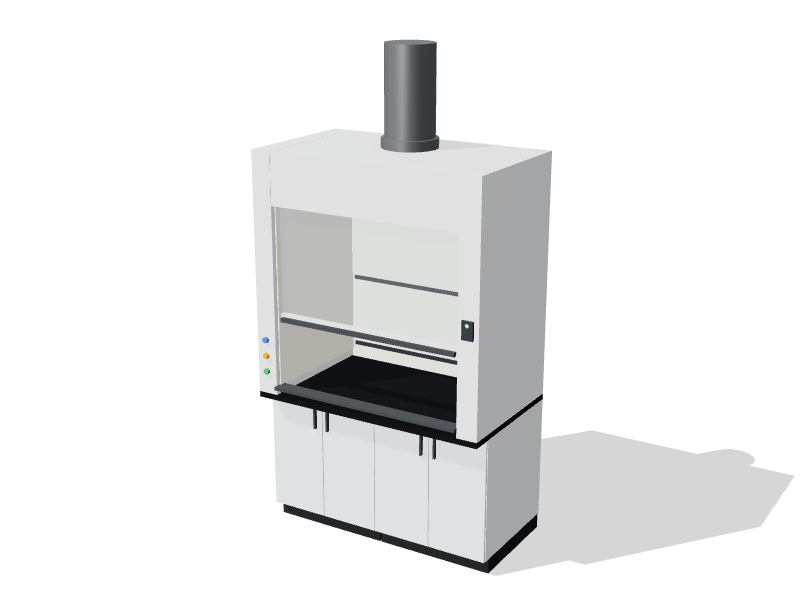
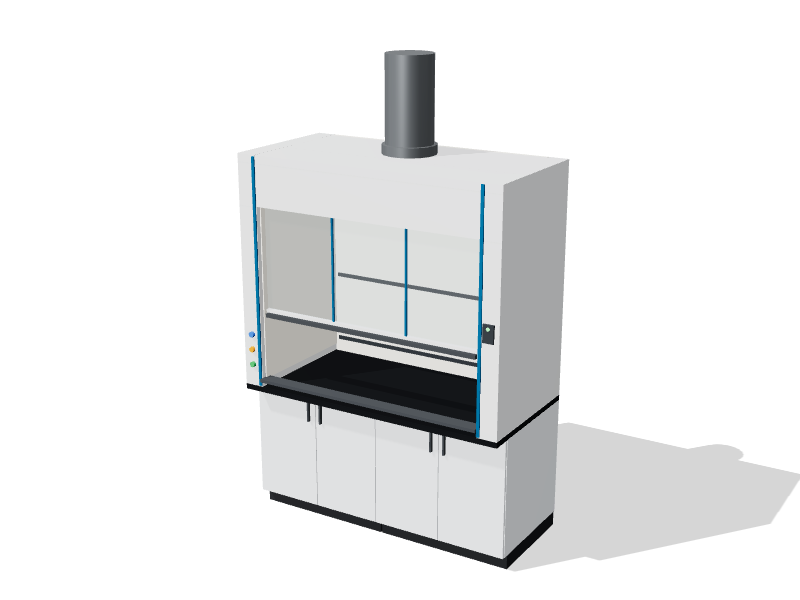
Fume hoods often stay in service for decades, long after the chemistry, the building systems and the standards around them have changed. Some older hoods still contain well and need only a few parts and a new monitor. Others were never good performers, or have corroded beyond economical repair. The decision should rest on evidence about the hood, its exhaust system and the work it needs to support, not on its age alone.
Start with an assessment
Gather four kinds of information before talking about options.
Performance in the room
A current as-installed or as-used containment test shows how the hood performs where it stands today. A hood that contains well at its working sash height is a candidate for upgrades. One that leaks at the sill or edges needs a closer look at why.
Physical condition
Inspect the liner for cracks, delamination or corrosion, the work surface for damage, and the sash for worn cables, cracked glass and failed counterweights. Note whether the hood has an airfoil sill, adjustable baffles and a working light, and whether service valves still shut off cleanly.
The exhaust system
Check the fan, ducts, stack and controls. A new hood on a corroded duct and a tired fan is not an improvement. If the building's exhaust or supply cannot respond to variable flow, some upgrades are off the table.
Hazardous materials
Older hoods and their surroundings can contain surprises. Liners, work surfaces and panels in older hoods were sometimes made of asbestos-cement board. Ducts that served perchloric acid work may hold explosive perchlorate deposits. Old drain traps can hold mercury. Have EHS or a qualified consultant survey and test before anyone cuts, drills or dismantles anything.
Retrofits that commonly make sense
| Upgrade | What it addresses | Notes |
|---|---|---|
| Airflow monitor | No indicator, or an old one nobody trusts | Calibrate at installation and at each annual certification |
| Airfoil sill and new baffles | Turbulence at the sill, uneven flow across the opening | Retest containment afterward |
| Sash repairs | Dropping or creeping sash, broken glass, missing stops | Safety-critical; do not defer |
| Bypass-to-VAV conversion | Constant high exhaust regardless of sash position | Needs a VAV valve, sash sensing, controls and a supply system that can follow |
| Sash closers or sash stops | Sashes left open | Agree any restricted working height with EHS |
| LED lighting and new service valves | Dim work zone, leaking or seized valves | Simple and low-risk |
A bypass-to-VAV conversion is the retrofit with the biggest effect on energy use, and the one most often done badly. Blocking the bypass grille without adding controls raises face velocity sharply at low sash heights and upsets the room balance. A proper conversion adds an exhaust valve or variable-speed fan control, sash position sensing, a monitor and supply air that tracks the exhaust. The guide to bypass, CAV and VAV hoods explains how each control type behaves.
Every retrofit that touches airflow should end with an as-installed containment test and a fresh certification label.
When replacement is the better call
Replacement usually wins when one or more of these is true:
- The hood still fails containment after baffles, sash and exhaust flow have been corrected, which points to its basic design.
- The liner or structure is corroded or delaminated, and repair would mean rebuilding the hood.
- Hazardous materials make any repair as disruptive and costly as removal.
- The work has changed and now needs a special hood, such as a perchloric acid hood with washdown or a radioisotope hood with a seamless stainless liner.
- The building needs to free up exhaust capacity. Replacing a standard hood with a high-performance low-flow hood can reduce the air needed for the same sash opening, subject to testing and EHS acceptance.
- The hood sits in a poor location, and the lab is being reorganized anyway.
When choosing a replacement liner, match it to the chemistry. The guide to choosing a fume hood liner compares the common options.
Planning the work
- Downtime: decide where the hood's work goes while it is out of service, and for how long.
- Decontamination: EHS should clear the hood, ducts and drains before trades start. Old perchloric ducts and suspect materials need specialist handling. Our relocation and decommissioning service covers this stage.
- Air balance: a replacement hood with a different exhaust volume changes the room balance. Include rebalancing of exhaust and supply in the scope.
- Building controls: confirm that new VAV controllers and monitors can connect to the building automation system.
- Timing: if a larger lab renovation is coming, combining the work avoids opening ceilings and ducts twice.
Questions to answer before you decide
- What did the most recent containment test show, and at what sash height?
- Is the exhaust fan and ductwork in good condition and suitable for the proposed flow?
- Has the hood and its ductwork been surveyed for hazardous materials?
- Will the hood suit the lab's work for at least the next decade?
- How long can the lab manage without it?
- What will the change do to energy use and to the building's exhaust capacity?
If the answers point in different directions, a consultation can help weigh repair against replacement for your specific hoods.