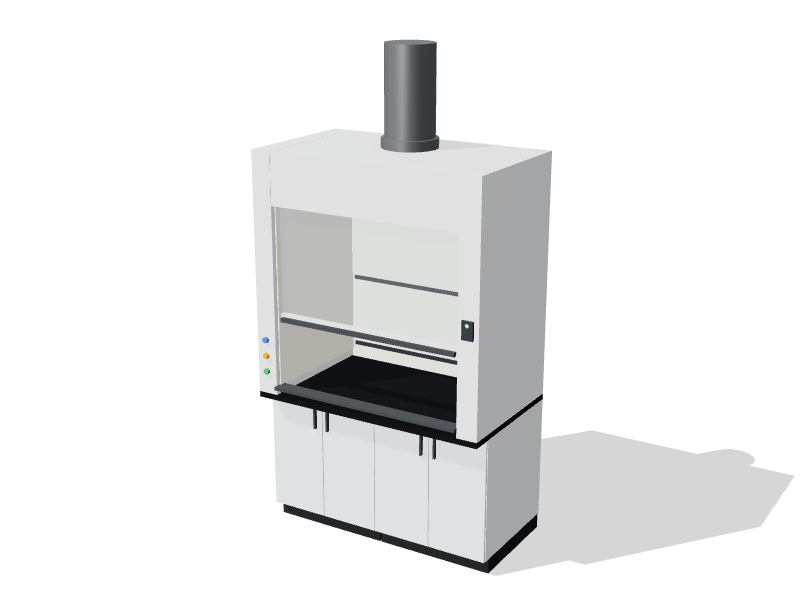
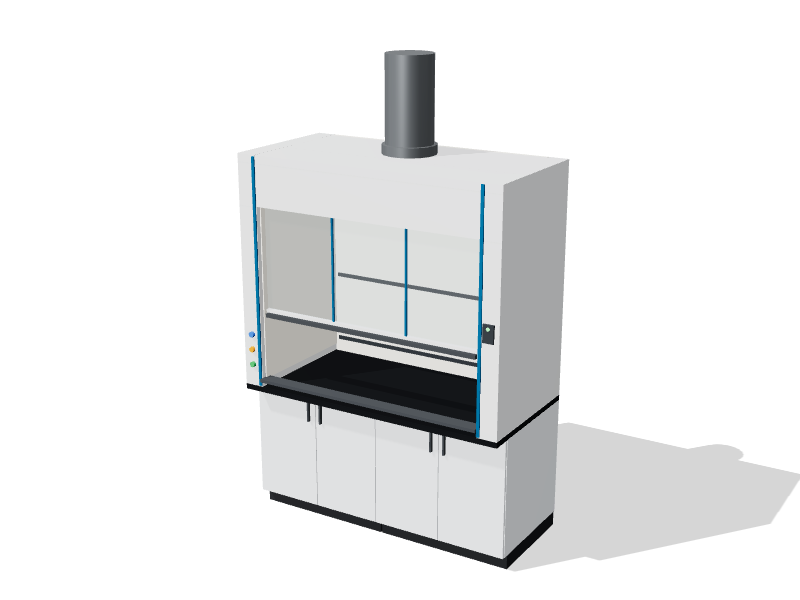
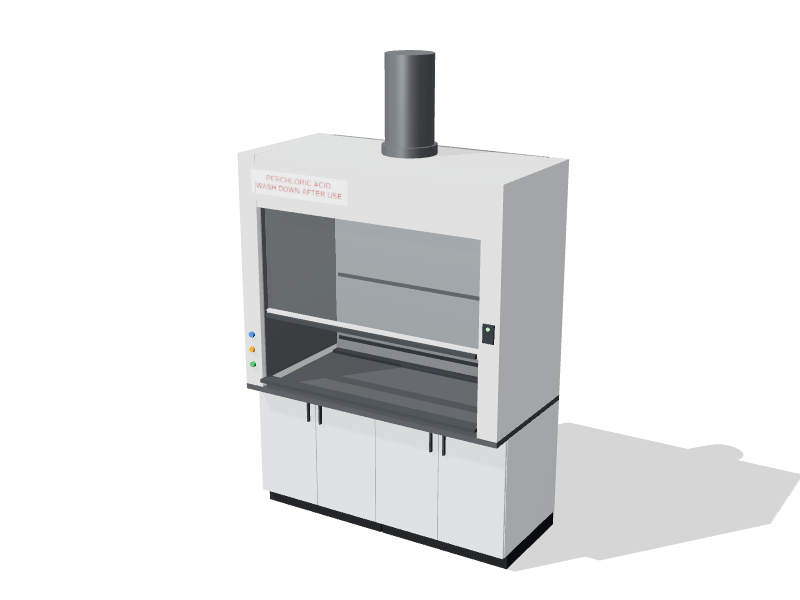
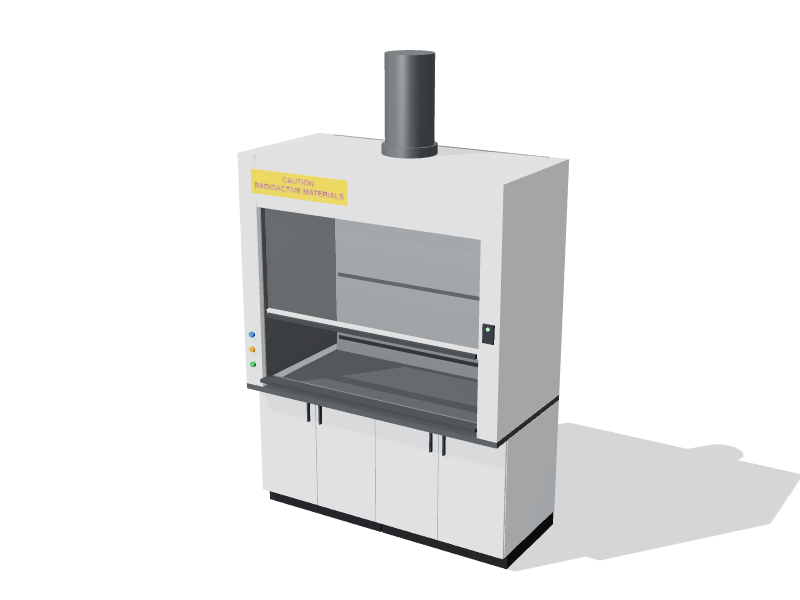
The liner is the inside skin of a fume hood: the side walls, back wall, ceiling and baffles that the chemistry touches. Choose it for what will happen inside the hood. The wrong liner corrodes, stains, softens or cracks, and damaged surfaces trap residue that is hard to clean. The right one lasts the life of the hood with routine care.
The work surface is a separate choice, usually a dished epoxy resin slab with a raised rim. See choosing a lab worktop for that decision.
Start with the chemistry and the heat
Before comparing materials, list what the hood will be exposed to:
- Acids, especially hydrochloric, nitric, sulfuric, hydrofluoric and perchloric, with their concentrations and temperatures.
- Bases and oxidizers.
- Solvents, including chlorinated and aromatic solvents.
- Heat: hot plates, heating mantles, burners, digestion blocks or small furnaces, and how close they sit to the walls.
- Radioactive or biological material that will need decontamination.
- Cleaning agents used routinely, including bleach and other disinfectants.
Combinations matter. A material that handles an acid at room temperature may fail with the same acid heated. Check the list against the supplier's chemical resistance data rather than general claims.
Common liner materials
FRP
Fibreglass-reinforced polyester (FRP) panels with a smooth gel-coat face are the most common general-purpose liner. FRP resists a broad range of acids, bases and solvents at typical lab concentrations, is light, and is economical. Hydrofluoric acid can attack the glass reinforcement, so ask before using FRP for HF work, and keep strong heat sources away from the walls. See FRP hood liner.
Stainless steel
Stainless liners, often type 316, tolerate heat well, are non-porous and are easy to decontaminate. Welded, coved stainless is standard for perchloric acid and radioisotope hoods. Stainless is attacked by hydrochloric acid, hydrofluoric acid and other chlorides, and it pits where chloride residues, including some bleach-based cleaners, are left standing. See stainless hood liner.
PVC and polypropylene
Solid thermoplastic liners with welded seams handle strong mineral acids well, including hydrofluoric acid and acid digestion fumes. They are common in trace metals work, where metal surfaces could contaminate samples. Their heat tolerance is limited, so keep hot plates and burners at a distance and follow the supplier's temperature limits. They are also combustible, so review fire performance data with your fire safety advisor. See PVC hood liner.
Other materials
- Coated steel: economical for light-duty work, but the coating is the only protection. Once it is scratched, the steel corrodes.
- Phenolic and composite resin panels: good chemical resistance and moderate heat tolerance, used by some manufacturers as a general-purpose liner.
- Cement-based composite panels: good heat resistance, and the modern replacement for old asbestos-cement liners. If an older hood may have an asbestos-cement liner, have it assessed before any cutting, drilling or removal.
Comparison
| Liner | Acids | Solvents | Heat | Typical use |
|---|---|---|---|---|
| FRP | Good for most; check HF | Good | Moderate | General chemistry |
| Stainless 316 | Good with nitric; poor with HCl, HF, chlorides | Very good | Very good | Perchloric acid, radioisotopes, heat |
| PVC or polypropylene | Very good, including HF | Limited; many attack PVC | Limited | Acid digestion, trace metals |
| Phenolic composite | Good | Good | Moderate to good | General chemistry with some heat |
Treat the table as a starting point. Concentration, temperature and how long a residue sits on the surface all change the answer.
Match the rest of the hood
- Baffles should be the same material as the liner, or one with equal resistance. See baffles and slot adjustment.
- Fasteners, sash tracks and fittings inside the chamber need matching resistance. Stainless fasteners in an acid hood are often the first thing to corrode.
- Ductwork must suit the same chemistry; exhaust ducts, fans and stacks covers duct materials.
- Seams and corners affect cleaning. Welded, coved corners are easier to decontaminate than caulked joints, and sealants need their own resistance check.
Questions to ask your supplier
- What is the liner material, thickness and resin or alloy grade?
- Can you provide chemical resistance data for our chemical list, at our temperatures?
- What fire performance data is available for the liner?
- What are the baffles, fasteners and sash tracks made of?
- Are seams welded, caulked or coved, and with what sealant?
- Which cleaning agents do you recommend, and which should we avoid?
If the chemistry is mixed or unusual, a short review with the supplier and your EHS office before ordering costs far less than a replacement liner. Book a consultation if you would like help with the choice.