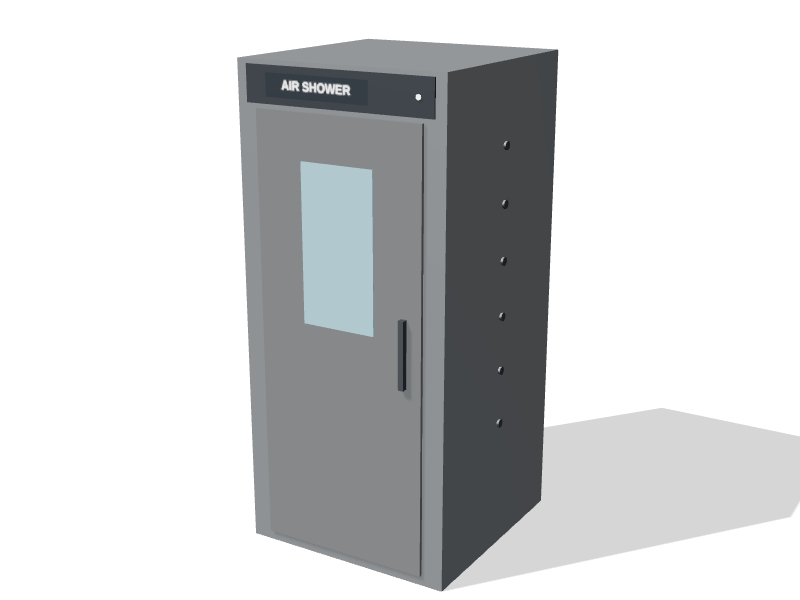
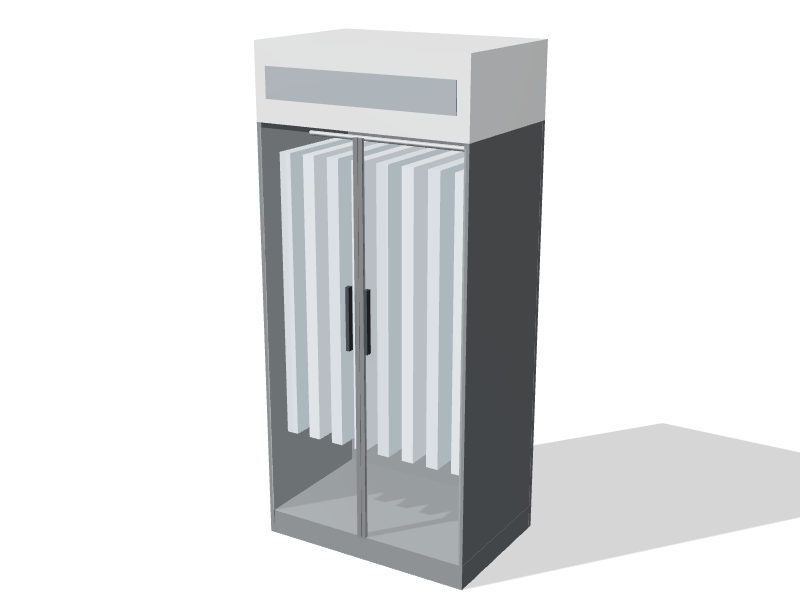
An air shower is an enclosed chamber at the entrance to a cleanroom. A person steps in, the doors lock, and nozzles in the walls blow high-velocity filtered air over their garments for a short timed cycle to dislodge loose particles. When the cycle ends, the inner door unlocks. Air showers are common in some industries and almost absent in others, and the reasons tell you whether one belongs in your plan.
How an air shower works
A fan draws air from the chamber through a prefilter, pushes it through a HEPA filter, and delivers it through adjustable nozzles on the side walls and sometimes the ceiling. The person turns slowly with arms raised so the jets reach every side. Air returns through low grilles and is filtered again. The cycle usually lasts tens of seconds, set on a timer, and often starts automatically when the entry door closes.
The doors are interlocked, so the chamber also acts as a small airlock between the gowning area and the cleanroom. Variants include multi-person units, tunnel air showers for groups and shift changes, and larger units sized for carts.
What an air shower can and cannot do
An air shower removes loose particles sitting on the surface of garments: fibres, dust and debris picked up while gowning or walking through support areas. It cannot remove particles that people continuously shed from skin and hair, and it cannot clean a garment that is dirty or worn too long. Published evidence on how much air showers reduce room particle counts is mixed, and results depend heavily on nozzle design, cycle length and whether users actually turn and raise their arms.
Much of the value is behavioural. The timed pause marks the transition into a controlled area, slows people down and enforces one entry at a time. The interlocked doors protect the pressure cascade even when traffic is heavy.
An air shower never replaces a well-designed gowning sequence, clean garments or good habits. If those are weak, the shower will not fix them.
Where air showers earn their space
They are most useful where:
- The outside environment is dusty, such as entrances from manufacturing floors, warehouses or outdoors.
- Staff enter in coveralls over partial street clothing, as in many electronics and optics rooms. The electronics cleanroom overview shows a typical entry sequence.
- Traffic is high and a forced pause helps keep entries orderly.
- The product is sensitive to larger particles and fibres, such as optical surfaces or precision assemblies.
They are usually a poor use of space where:
- The cleanroom is small and the floor area would serve better as a proper anteroom, as in most pharmacy compounding cleanrooms.
- Entry involves sterile gowning for aseptic work. Sterile pharmaceutical facilities generally rely on staged changing rooms, airlocks and disinfection rather than air showers.
- Staff must exit quickly and often. Requiring people to cycle through the shower on the way out slows them down. Many sites use the shower for entry only and provide a separate exit route.
Design points to plan for
- Floor space. A single-person unit occupies roughly a square metre of floor plus door clearances. Check where it sits in the gowning room layout: it belongs after gowning, at the threshold of the clean area.
- Noise. High-velocity jets are loud. Ask for sound data and locate the unit away from quiet work areas.
- Interlocks and egress. The doors lock during the cycle. Provide an emergency stop and door release inside the chamber, release on fire alarm and power failure, and review the arrangement with the local fire official. The doors and interlocks guide covers the same principles.
- Construction. Stainless or powder-coated steel with a removable floor grille, smooth interior walls and no exposed fasteners. The interior must be cleaned on the same schedule as the gowning room.
- Maintenance. Plan access to the fan, prefilter and HEPA filter, and include the unit in the filter testing and replacement schedule.
- Power and controls. Confirm power supply, cycle time adjustment, and whether door and fault signals connect to the building automation system.
Questions to ask your supplier
- What nozzle velocity and cycle time does the unit deliver, and can both be adjusted?
- Which filter class is fitted, and can it be leak-tested in place?
- What sound level should we expect during a cycle?
- How do the interlocks behave on fire alarm, power failure and emergency stop?
- Is a separate exit route or bypass door available?
If you are weighing an air shower against a larger anteroom, a consultation can compare both layouts for your traffic and class.