What it's for
Cleanroom garments are only as clean as the place where they wait. Coveralls left on open hooks in a gowning room collect everything people shed while they change. A HEPA garment cabinet stores clean coveralls, hoods and boots in a small enclosure supplied with filtered air, so they stay clean until someone takes them out. It is most useful where garments are reused within a shift, or where packaged garments are opened and staged ahead of the next entry.
Construction and features
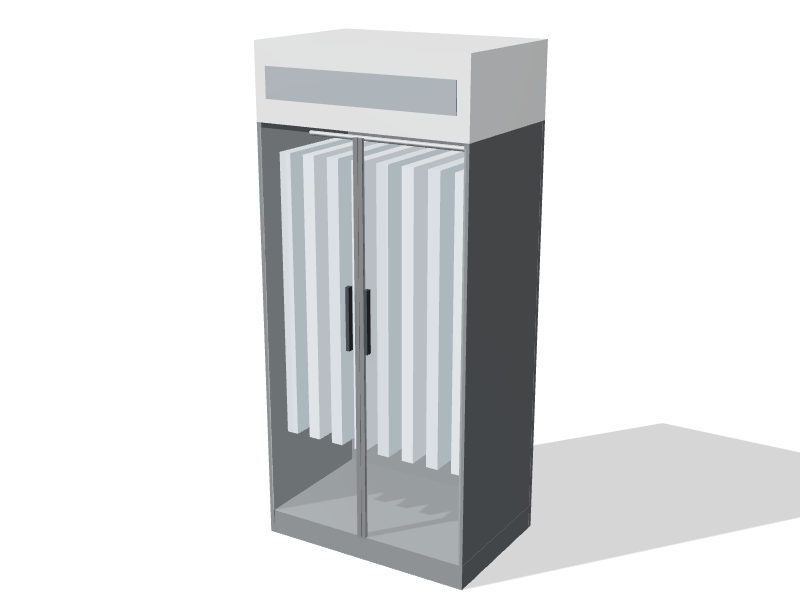
The cabinet is a tall stainless enclosure with glass doors and a fan module in the top. Air passes through a HEPA filter, flows down over the hanging garments and leaves near the base, so particles move away from the clothing rather than settling on it. Good-quality cabinets typically have:
- A stainless body with a smooth finish, rounded internal corners and no open seams.
- Glass doors, so staff can check stock without opening the cabinet and disturbing the downflow.
- A top-mounted fan with a prefilter and HEPA filter, plus a switch or speed control on the front.
- Stainless hanging rails, with perforated shelves for boots and goggles so air still passes through.
- Doors that close fully against gaskets, keeping gowning-room air out between uses.
Sizes and options
Where it fits
Garment cabinets are standard in the gowning rooms of electronics and semiconductor cleanrooms, where coveralls are often reused within a shift. They are also common in medical device assembly cleanrooms. In larger sterile manufacturing cleanroom suites, they stage fresh garments on the clean side of the line.
Planning notes
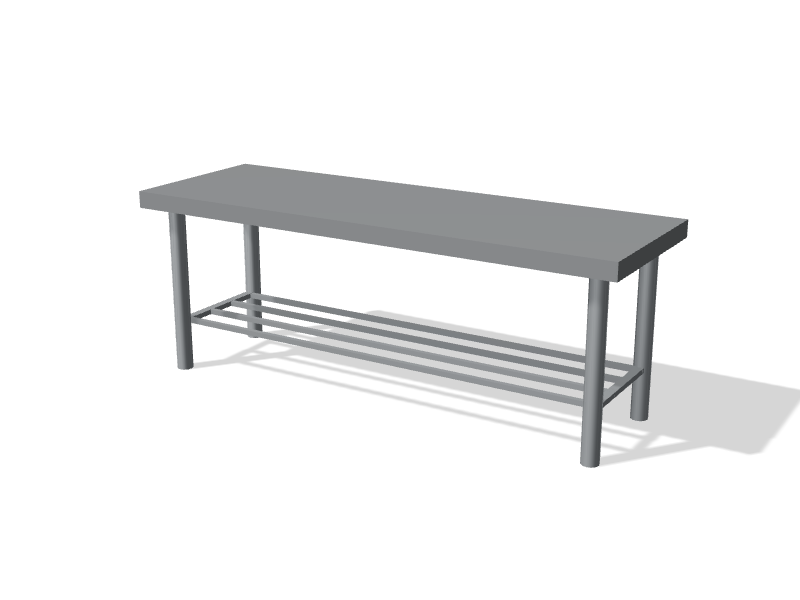
- Put it on the clean side of the gowning bench, close to where people finish gowning, so nobody has to cross back over the line to reach it.
- Keep used garments elsewhere. Garments coming off go into a hamper or bin on the exit route, never back into the clean cabinet.
- Leave clearance above the cabinet for air intake and filter changes. A cabinet jammed under a low bulkhead starves its fan.
- Plan power at the wall behind it, ideally a flush, sealed outlet rather than a surface box, with no cord lying on the floor. The guide to sealing penetrations covers outlet details.
- Do not overfill it. Tightly packed garments block the downflow and defeat the purpose.
- Add the prefilter and HEPA filter to the maintenance schedule. A cabinet running on a clogged filter looks like protection but provides little.
- Include the fan's heat in the cooling load for a small gowning room. The cabinet recirculates room air, so it does not change the room's pressure balance.
All sizes
| Code | Width | Depth × height | From |
|---|---|---|---|
| CR-GC-0900 | 900 mm (35½ in) | 600 × 2000 mm | $4,200 |
| CR-GC-1200 | 1,200 mm (47 in) | 600 × 2000 mm | $4,900 |