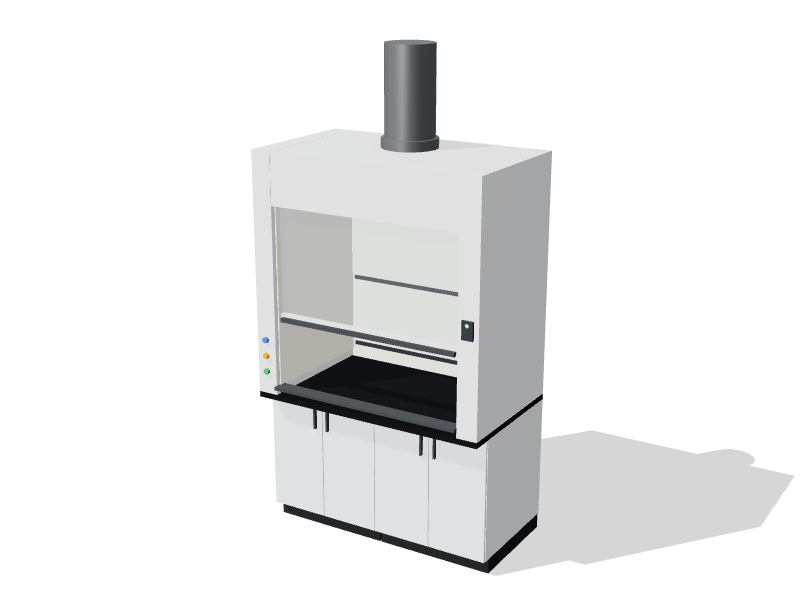
A benchtop fume hood does not sit on an ordinary bench. It stands on one or two base cabinets topped with its own work surface, and those bases have three jobs: carry the weight of the hood and everything in it, set the work surface at a height people can use, and store what users need close to the hood without creating a new hazard. The space under a hood is valuable, and it is easy to fill with the wrong things.
Structure, height and anchoring
The hood superstructure, a heavy work surface and the apparatus on it all bear on the bases. Hood bases are built with reinforced tops and are levelled and fastened to each other so the hood sits flat and the sash runs true. Confirm with the hood maker that the bases are rated for the hood you are buying, especially for wide hoods or heavy liners.
Hood work surfaces are commonly epoxy resin, dished with a raised edge so spills stay inside the hood. A cup sink, if specified, is cut into it.
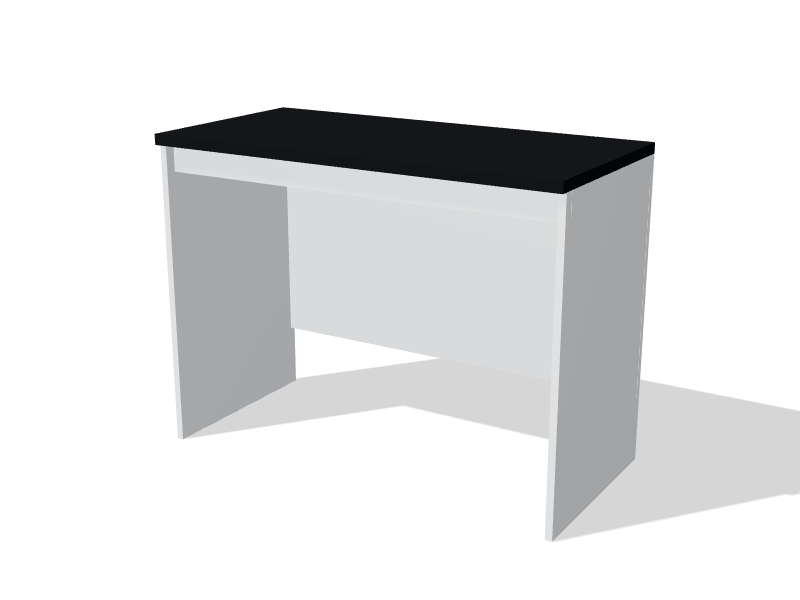
For standing work, the hood work surface usually lines up with the adjacent bench at about 900 mm (35½ in). For seated or barrier-free work, a lower base with knee space brings the work surface down and the sash controls and services within reach. The guide to accessible lab design covers reach ranges and knee clearance.
The bases fill the hood width. An 1800 mm (6 ft) hood, for example, might sit on two 900 mm (3 ft) bases, or on a 1200 mm (4 ft) storage base beside a 600 mm (2 ft) pump cabinet.
In seismic regions such as coastal British Columbia, anchor the bases to the floor and restrain the hood to the bases or the wall. A loaded hood that shifts in an earthquake can tear its duct connection. See seismic restraint in the glossary.
Choosing the base types
| Base type | Stores | Key features | Watch for |
|---|---|---|---|
| General storage | Glassware, tools, non-hazardous supplies | Doors or drawers, adjustable shelf | Not for chemicals that need rated or ventilated storage |
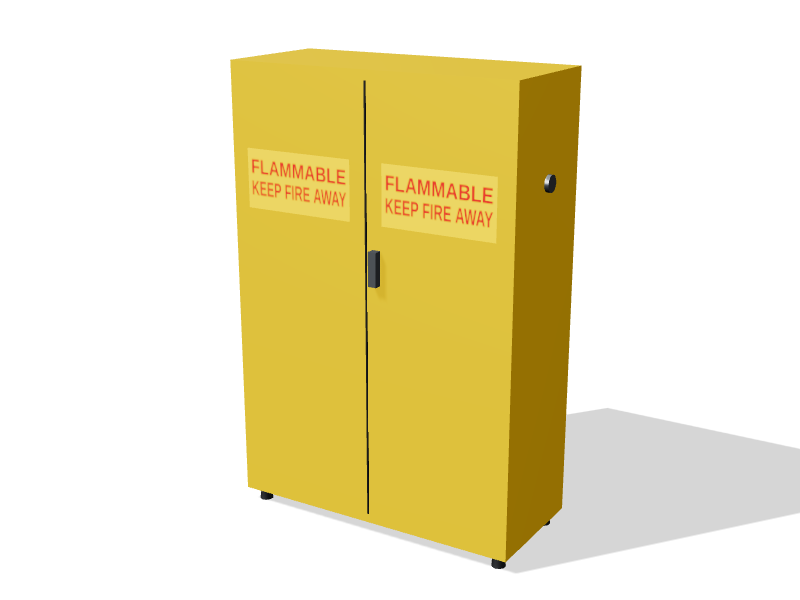
| Flammable liquid storage | Working quantities of flammable solvents | Double-wall steel, liquid-tight sill, vent openings with bungs, self-closing doors where required | Quantity limits under NFPA 30, NFPA 45 and the National Fire Code of Canada |
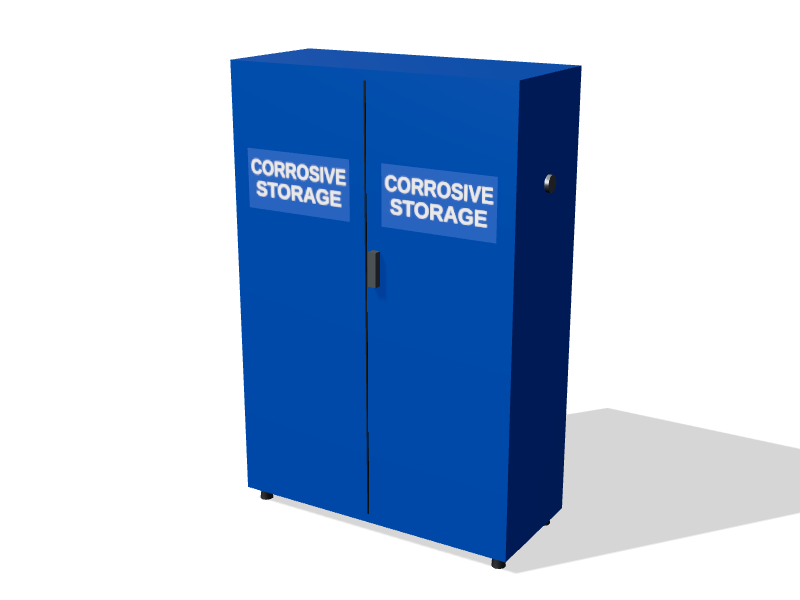
| Corrosive storage | Acids and bases | Corrosion-resistant lining or construction, removable spill trays, vent connection | Keep acids, bases and oxidizers apart |
| Vacuum pump | A vacuum pump serving the hood | Louvres or a vent connection for heat, a hose port into the hood | Heat build-up, noise and oil mist |
| Knee space | Nothing; a seated work position | Open front with a modesty panel | Service and drain routes must still reach the hood |
Under-hood storage cabinets hold less than freestanding ones because they are short. Bulk solvents and acids belong in full-height flammable liquid and corrosive storage cabinets elsewhere in the room, with only the day's working quantities kept under the hood.
For bases that will see acid fumes and frequent wet cleaning, consider construction that does not rust, such as solid phenolic, or a painted steel cabinet with a full corrosion-resistant liner.
Venting the cabinets
Venting rules differ by cabinet type, and the wrong choice can make things worse.
- Corrosive cabinets are commonly vented into the hood's exhaust through a short duct, so acid fumes are drawn away instead of corroding the cabinet hardware and leaking into the room. Check that the hood has a vent port designed for this.
- Flammable cabinets are a different case. NFPA 30 does not require venting for fire protection, and a poorly made vent connection can weaken the cabinet in a fire. If your EHS office decides a cabinet must be vented, for example because of odour or toxicity, follow the cabinet maker's instructions and connect it with metal duct designed for the job. Otherwise keep the bungs in place.
- Never connect a flammable cabinet and a corrosive cabinet to the same vent.
- Vacuum pump cabinets need ventilation for heat. The pump exhaust itself should discharge into the hood or to a dedicated exhaust, not into the cabinet.
Storage discipline under the hood
- Store only what is used at that hood, and label the cabinet doors with the hazard class.
- Segregate incompatible chemicals. The guide to chemical segregation sets out common groupings.
- Use secondary containment trays and keep containers capped.
- Under a perchloric acid hood, store no organic chemicals or combustible materials at all.
- Inspect cabinet floors for corrosion and leaks during routine hood checks.
Planning checklist
- Each base position assigned a type: storage, flammable, corrosive, pump or knee space.
- Base load rating confirmed against the hood weight and expected apparatus.
- Work surface height suits the users, including at least one seated position where needed.
- Vent connections shown on the drawings and agreed with EHS.
- Removable back panels or access for cup sink drains and service piping.
- Seismic anchoring detailed where the region requires it.
- Cabinet finish suited to the chemicals in use.
You can place hoods and their bases together in the lab planner to check widths and clearances before you request a quote.