Who uses it and what happens there
Molecular biology labs extract, amplify and analyze nucleic acids. Research groups, hospital and public health labs, forensic DNA units, and food and environmental testing labs all run PCR and qPCR, reverse transcription, sequencing library preparation and gel electrophoresis. A single PCR run can turn a few copies of a target sequence into billions. That is what makes the method so sensitive, and it is also what makes contamination the central planning problem.
Hazards and containment
The defining risk is carry-over: amplified product from earlier runs gets into new reactions and causes false positives. A single opened tube of amplified product can spread contamination to benches, pipettes and gloves that is hard to remove. Layout, workflow and dedicated equipment control it far better than any single device. Personal hazards are smaller but real. Clinical specimens may hold Risk Group 2 agents and need a biosafety cabinet for opening tubes and extraction. Extraction reagents containing guanidine salts must never be mixed with bleach, which can release toxic gas. Some gel stains are mutagenic, and UV lamps in workstations and transilluminators can burn eyes and skin.
Key equipment and casework
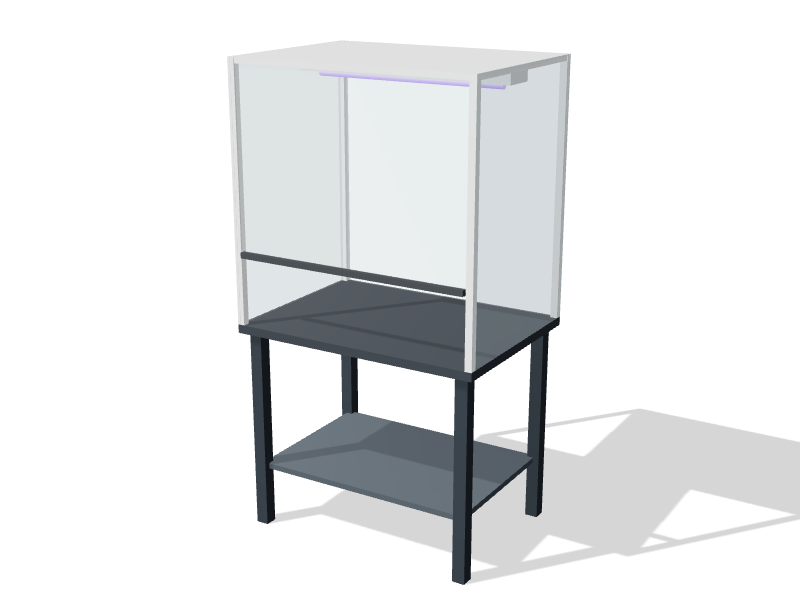
- PCR workstations with UV for master mix preparation and template addition. They protect the reaction, not the user.
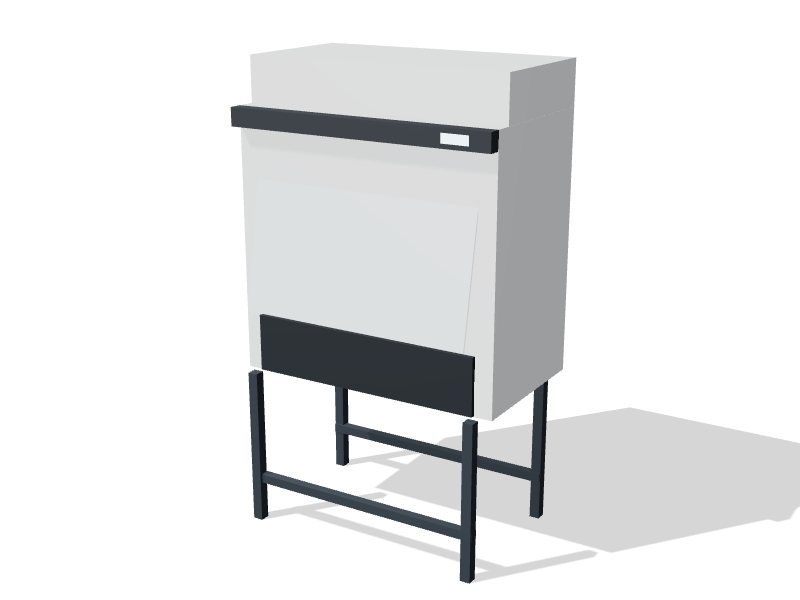
- A biosafety cabinet for sample handling and extraction when specimens may be infectious.
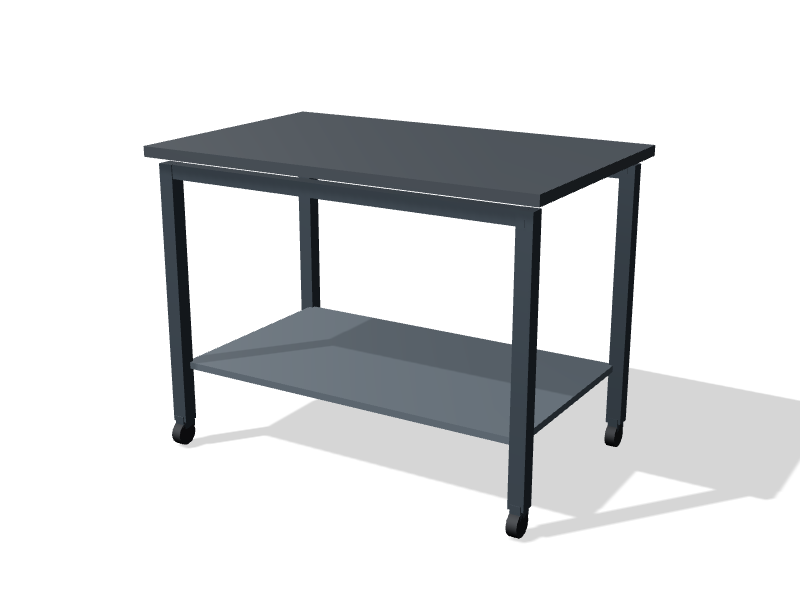
- Thermocyclers and qPCR instruments, often on a mobile table in the amplification area.
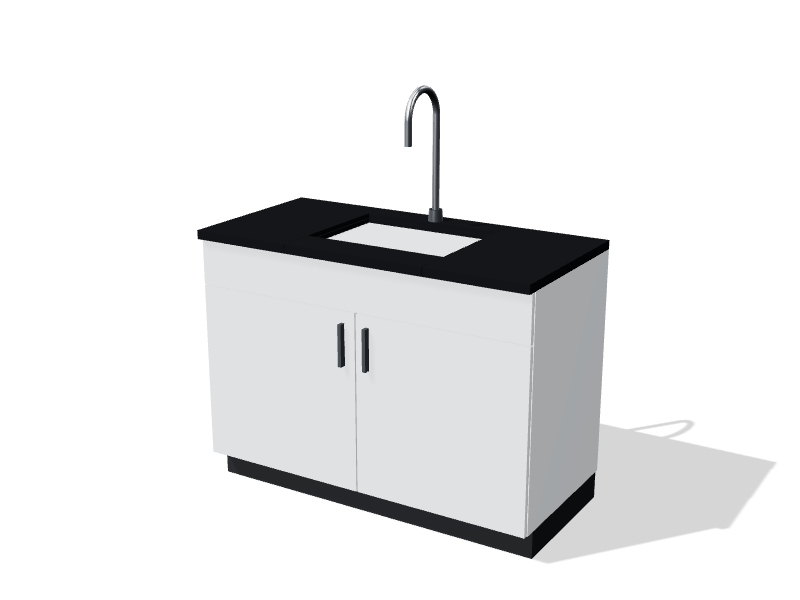
- Gel electrophoresis, a gel imager and a sink for cleanup in the post-amplification area.
- Separate refrigerators, freezers, pipettes, racks and lab coats for each zone.
- A hand-washing sink near the exit and an eyewash.
Layout principles
The best arrangement is separate rooms for reagent preparation, sample preparation, amplification and post-amplification analysis, with a one-way workflow from clean to dirty. Where the HVAC allows, the pre-amplification rooms run slightly positive and the post-amplification room slightly negative, so air does not carry amplicons back toward clean areas; see pressure differential.
When one room is all you have, put the pre- and post-amplification zones at opposite ends, give each its own equipment and coats, and keep an empty buffer between them. Reagent preparation sits in the cleanest corner, farthest from where amplified product is opened. Staff should not go from post-amplification work back to the clean zone on the same day without changing coats and gloves. Label every pipette, rack and storage box by zone so equipment never wanders. Our guide to clean benches and PCR workstations covers the equipment side.
Finishes and worktops
Benches are cleaned with dilute bleach followed by water or alcohol, often daily. Phenolic resin worktops handle that routine and cost less than epoxy, which is rarely needed in a lab without strong acids or heat. Painted steel casework with closed storage keeps consumables clean. Choose smooth surfaces with few seams, because every crevice is a place for amplicons to hide.
Utilities and services
This lab needs power more than plumbing. Plan dedicated circuits and plenty of receptacles for thermocyclers, centrifuges and freezers, network drops for instruments, and UPS protection for runs in progress. Keep sinks out of the reagent preparation area. Gas services are seldom needed. Where separate rooms exist, the ventilation design should hold the pressure relationships between zones and keep supply air from blowing across PCR workstations. Freezers holding reagents and extracted samples benefit from emergency power and temperature alarms. UV lamps in workstations help between runs, but UV only treats surfaces it reaches directly, so routine bleach cleaning still matters.
Compliance points
- Clinical specimens and Risk Group 2 agents bring Canadian Biosafety Standard CL2 requirements and, where applicable, a licence under the Human Pathogens and Toxins Act.
- Biosafety cabinets need certification at installation and annually, to NSF/ANSI 49 or the CSA equivalent; PCR workstations are not biosafety cabinets.
- Diagnostic and forensic labs answer to their accreditation bodies for contamination control and documented workflow.
- Guanidine-containing and other extraction wastes go to chemical waste under WHMIS and provincial rules.
Your biosafety officer and quality manager decide how strict the separation must be.
About the starting layout
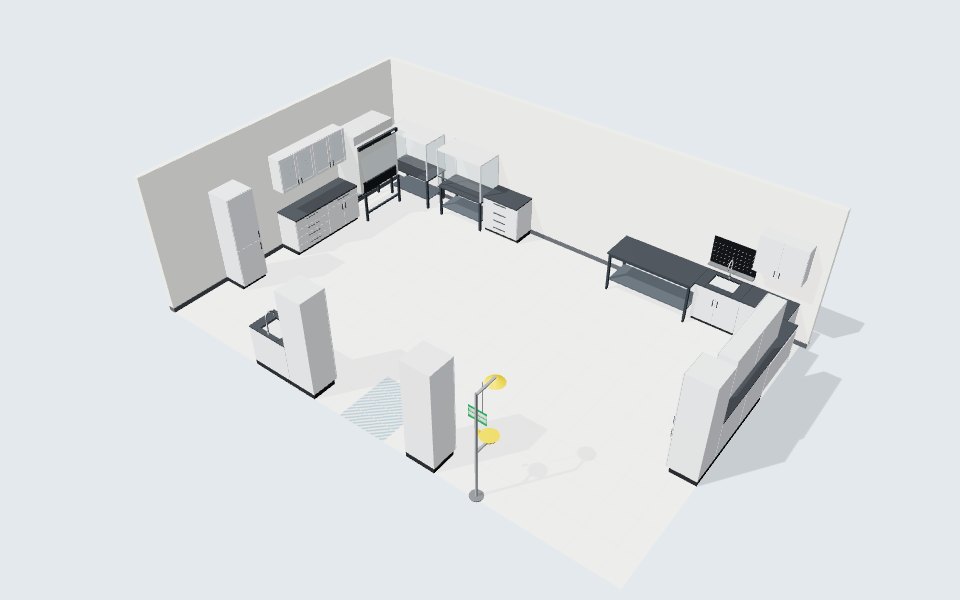
The starting layout is a 10 × 6.5 m (33 × 21 ft) room with a pre-amplification zone at the left end, holding two PCR workstations and a biosafety cabinet for extraction, and a post-amplification zone at the right end with a thermocycler table, gel sink and analysis bench. The centre of the back wall stays empty as a buffer, and each zone has its own coat storage beside the single door, with the hand-washing sink and shower nearby. Adapt it in the lab planner or book a consultation.
Starting layout: bill of materials
24 items in a 10 × 6.5 m room with a 3 m ceiling. Budgetary list prices; adjust anything in the planner.
| Code | Product | Qty | Unit |
|---|---|---|---|
| BC-4D-0900 | Base cabinet, 4 drawers Painted steel, Arctic white · Phenolic resin, charcoal | 3 | $2,170 |
| BC-DD-0900 | Base cabinet, drawer over doors Painted steel, Arctic white · Phenolic resin, charcoal | 2 | $1,800 |
| BC-HD-0900 | Base cabinet, hinged doors Painted steel, Arctic white · Phenolic resin, charcoal | 1 | $1,660 |
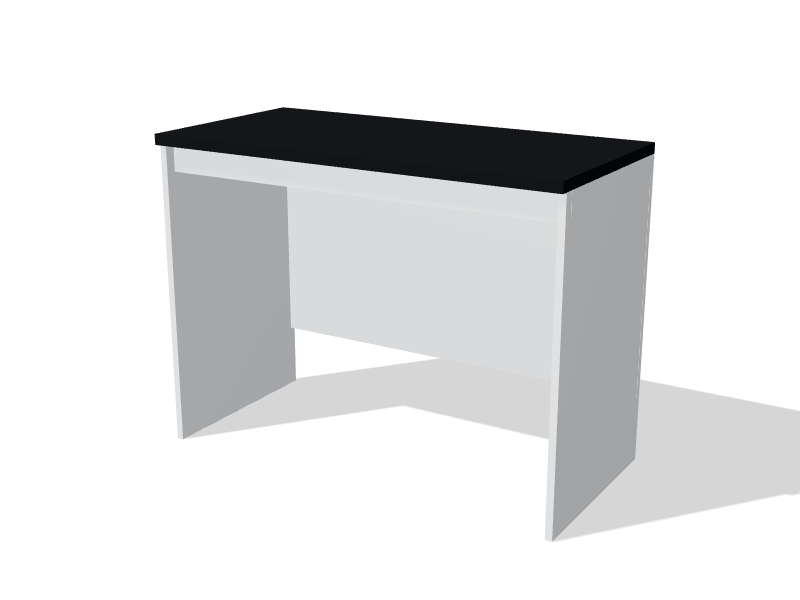
| BC-KS-1200 | Knee space with modesty panel Painted steel, Arctic white · Phenolic resin, charcoal | 1 | $980 |
| BC-SK-0900 | Sink base with epoxy sink & faucet Painted steel, Arctic white · Phenolic resin, charcoal | 2 | $2,630 |
| BS-A2-1200 | Biosafety cabinet, Class II A2 | 1 | $14,800 |
| ES-CB-0600 | Emergency shower & eyewash | 1 | $1,850 |
| MT-C-1800 | Mobile lab table Phenolic resin, charcoal | 1 | $1,980 |
| PB-EP-0900 | Epoxy pegboard drying rack | 1 | $890 |
| PW-UV-1200 | PCR workstation with UV | 2 | $5,800 |
| TC-ST-0600 | Tall storage cabinet Painted steel, Arctic white | 4 | $1,690 |
| WC-GL-0900 | Wall cabinet, glass doors Painted steel, Arctic white | 2 | $1,080 |
| WC-SD-0900 | Wall cabinet, solid doors Painted steel, Arctic white | 3 | $950 |
| Starting layout total | $60,900 |