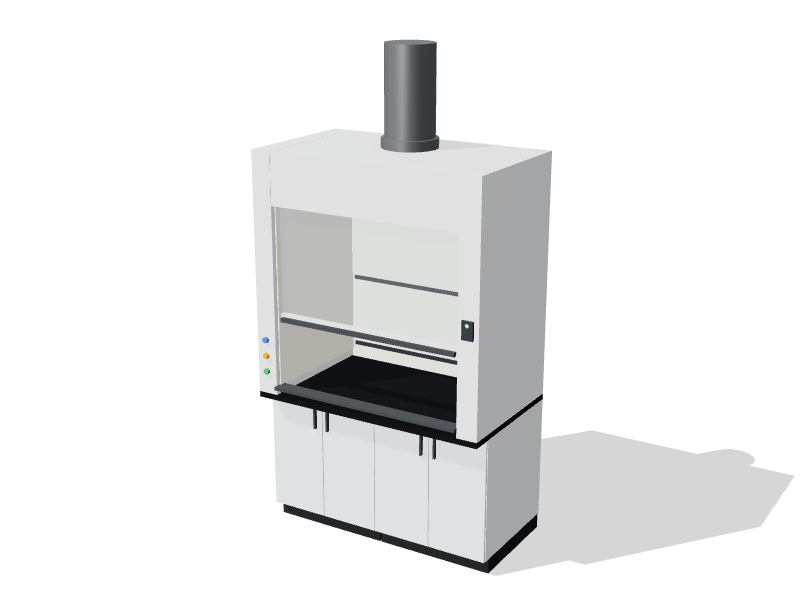
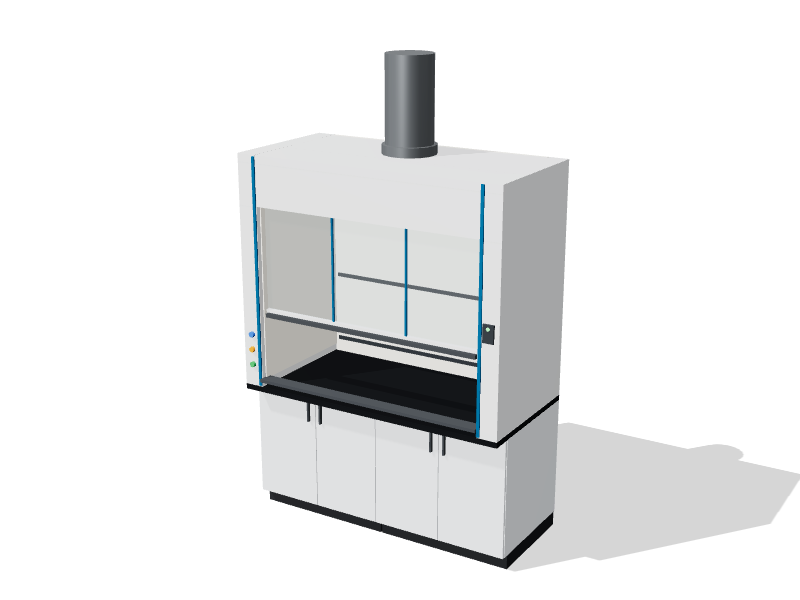
Labs with several fume hoods are rarely quiet. The constant rush of air is so familiar that people stop noticing it, but they still feel it: conversations get louder, phone calls move into the corridor, and concentration suffers over a long day. Noise also has safety consequences. An airflow alarm has to be heard over the background, and users bothered by a loud hood sometimes ask for it to be turned down, which can quietly undermine containment. Most hood noise can be designed out, and much of what remains in an existing lab can be traced and reduced.
Where the noise comes from
Hood noise is rarely one thing. It usually combines several sources, each with its own character and fix.
| Source | What you hear | Main fix |
|---|---|---|
| Air entering the hood and passing the baffles | Hiss or whistle at the opening | Correct baffle settings; repair damaged or loose parts |
| Duct airflow near the hood | Rushing or roaring from the ceiling | Lower duct velocity near occupied rooms; smooth fittings |
| VAV valves and balancing dampers | Hiss that changes as sashes move | Select valves for low pressure drop; locate them where duct runs can absorb noise |
| Exhaust fan | Low rumble carried through the duct and the structure | Roof location, vibration isolation, flexible connections, silencers |
| Supply diffusers and terminal units | Hiss from the ceiling | Larger, lower-velocity diffusers |
| Equipment in or under the hood | Hum or rattle from pumps and stirrers | Ventilated pump cabinets, isolation pads, quieter pumps |
Low-frequency fan rumble travels a long way through ducts and building structure, and it is hard to fix after construction. High-frequency hiss from valves and openings is easier to treat but more irritating at close range.
Design moves that keep labs quiet
Set the criterion early
Ask the mechanical engineer what acoustic criterion the project uses, often expressed as a noise criteria (NC) rating, and confirm that it applies at the hood face as well as in the middle of the room. If no target is written down, nobody designs to one.
Keep the fan away from people
Roof-mounted exhaust fans at the end of the duct run are standard for safety reasons, and they also keep the loudest component away from occupied space. Select the fan to run near its best efficiency point; a fan forced to operate far from it is usually noisier. Isolate it from the roof structure with springs or pads and use flexible connections at the inlet, in a material that suits the exhaust chemistry.
Watch duct velocity and fittings
Branch ducts serving the hood are commonly designed at lower velocities than the mains for this reason. Abrupt transitions, short-radius elbows and dampers close to the hood collar all generate noise right where people stand. The guide to exhaust ducts, fans and stacks covers the wider system.
Choose and place VAV valves carefully
A variable air volume valve that works across a large pressure drop is noisier than one selected with a comfortable margin. Placing valves where a length of duct separates them from the room helps.
Treat silencers with care
Ordinary duct silencers hold fibrous acoustic fill that can absorb chemical vapour and shed fibres into the airstream. Lab exhaust systems commonly use packless silencers, or silencers with the fill protected by a film facing, chosen for chemical compatibility with the exhaust.
Keep supply air gentle
Large, low-velocity diffusers are quieter and also reduce cross drafts at the hood. Good acoustic and containment design point in the same direction here.
Consider room finishes
Labs are full of hard, cleanable surfaces that reflect sound. Where the lab's cleaning and chemical exposure allow, a washable acoustic ceiling can take the edge off reverberation.
Fixing a noisy hood in an existing lab
- Measure before changing anything. Use a sound level meter at the hood face and in the room, with the hood running and, briefly, with it off. This separates hood and exhaust noise from supply air and equipment noise.
- Check the fan. Worn bearings, loose or misaligned belts, an unbalanced wheel or failed isolators all raise noise. These are maintenance items.
- Check dampers and valves. A balancing damper throttled almost closed near the hood can whistle. Rebalancing the branch may solve it.
- Check the hood. Loose baffles, a damaged sash guide or an object in a baffle slot can whistle or rattle. See baffles and slot adjustment.
- Check the flow. A hood running above its design face velocity is noisier and wastes energy. Rebalancing to design flow helps both, but it must be done by a qualified balancer and followed by a containment check.
Never fix noise by turning a hood down below its certified flow or switching off its fan.
Questions to ask your designer
- What noise level is predicted at the hood face at design flow, and how was it calculated?
- Where are the exhaust fan, VAV valves and balancing dampers relative to the lab?
- Are silencers packless or film-faced, and compatible with the exhaust chemistry?
- How are the fans isolated from the structure?
- Will the airflow alarm be clearly audible over the predicted background? The guide to airflow monitors and alarms covers alarm specification.
- Who measures noise after installation, and against what target?
For a new lab or a ventilation upgrade, our engineering team can review hood selection and exhaust design together.