A chemical fume hood and a biosafety cabinet look alike from across the room: an enclosure, a glass sash, air drawn in at the front. They protect against different hazards, and using one in place of the other is a common and serious error. The short version: a fume hood protects you from chemicals by sending them outside, and a biosafety cabinet protects you, your work and the room from biological particles by passing air through HEPA filters.
What each device protects
| Device | Protects the user | Protects the work | Chemical vapours | Typical use |
|---|---|---|---|---|
| Chemical fume hood | Yes | No | Yes, exhausted outdoors | Solvents, acids, reactions, digestion |
| Class II A2 biosafety cabinet | Yes | Yes | Only minute amounts, and only with a canopy exhaust connection | CL2 microbiology, cell culture |
| Class II B2 biosafety cabinet | Yes | Yes | Small amounts, as the risk assessment allows; hard-ducted, nothing recirculated | Biological work involving volatile toxic chemicals |
| Laminar flow clean bench | No | Yes | No | Sterile, non-hazardous preparation |
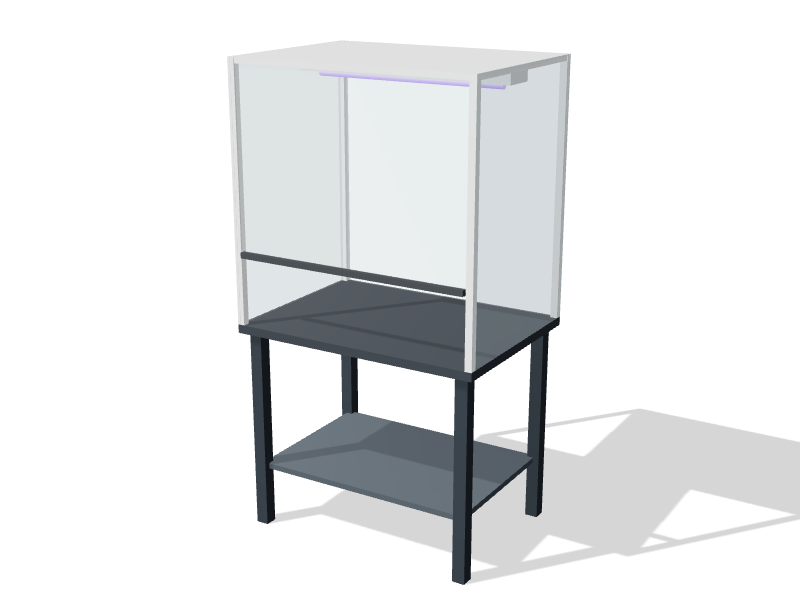
| PCR workstation | No | Yes, from contamination | No | Setting up PCR reactions |
How the airflow differs
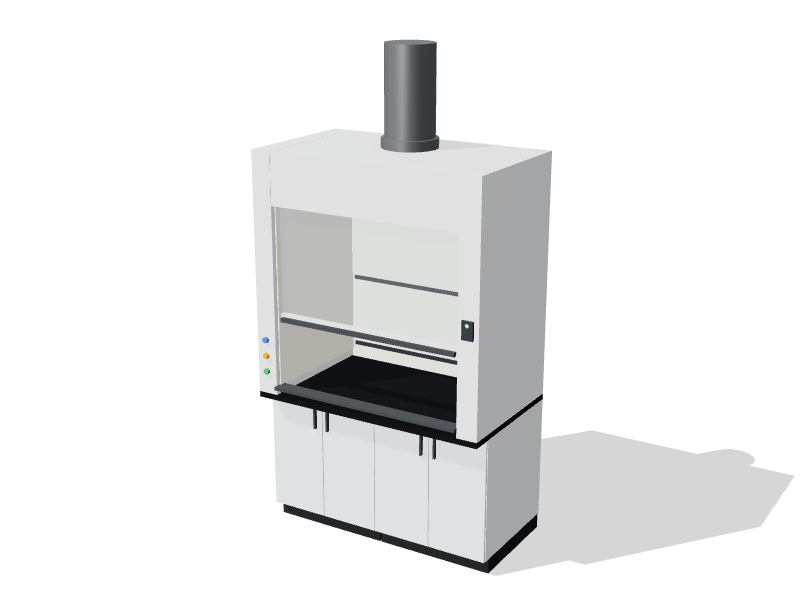
A chemical fume hood draws room air in across the whole sash opening, typically at 0.4 to 0.5 m/s (80 to 100 fpm). The air sweeps through the work zone, past the baffles and up the duct to an outdoor stack. Nothing is filtered and nothing comes back. The air inside the hood is turbulent room air, so anything placed in a hood is exposed to whatever the room carries. The guide to how a fume hood works covers the details.
A Class II biosafety cabinet splits the job. Room air enters through the front grille, which protects the user. HEPA-filtered air flows down over the work surface, which protects the work from contamination. Air leaving the cabinet passes through a HEPA exhaust filter, which protects the room and the environment. In a Class II A2 cabinet, roughly 70 percent of the air recirculates inside the cabinet and about 30 percent is exhausted, and NSF/ANSI 49 sets a minimum inflow of 0.5 m/s (100 fpm) at the front opening.
That recirculation is why a biosafety cabinet is the wrong tool for most chemistry. A HEPA filter traps particles. It does not stop vapours or gases, so solvent vapour can build up inside an A2 cabinet, pass back into the work zone or into the room, and reach the fan motor. Flammable solvents in a recirculating cabinet create a fire risk.
Mixed chemical and biological work
Many procedures involve both hazards. A few patterns help, but the final choice belongs to your biosafety officer and the procedure's risk assessment.
- Minute quantities of volatile chemicals with biological agents: a Class II A2 cabinet with a canopy (thimble) connection to the building exhaust can handle trace amounts. The canopy connection tolerates small fluctuations in building exhaust better than a hard duct.
- Larger volatile chemical use with biological agents: a Class II B2 cabinet exhausts all its air through a hard duct. It needs reliable building exhaust, an interlock or alarm for exhaust failure, and a large volume of makeup air.
- Large solvent volumes with non-infectious biological material: a fume hood is usually the right device. Sterility can be handled in other ways, or the work split into steps.
- Infectious agents with significant chemistry: consider separating the steps. Inactivate the agent in the biosafety cabinet with a validated method, then move the treated material to a fume hood for the chemical step.
- Open flames: avoid gas burners in biosafety cabinets. Flames disrupt the airflow and the heat can damage the filters; use electric sterilizers or disposable loops instead.
Radioactive material used with biological agents brings CNSC licence conditions into the decision as well.
Where clean benches and ductless hoods fit
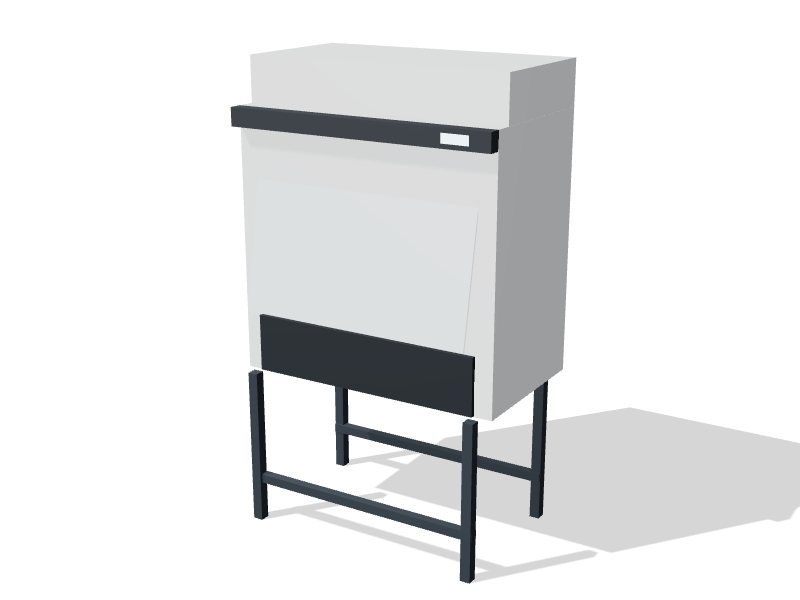
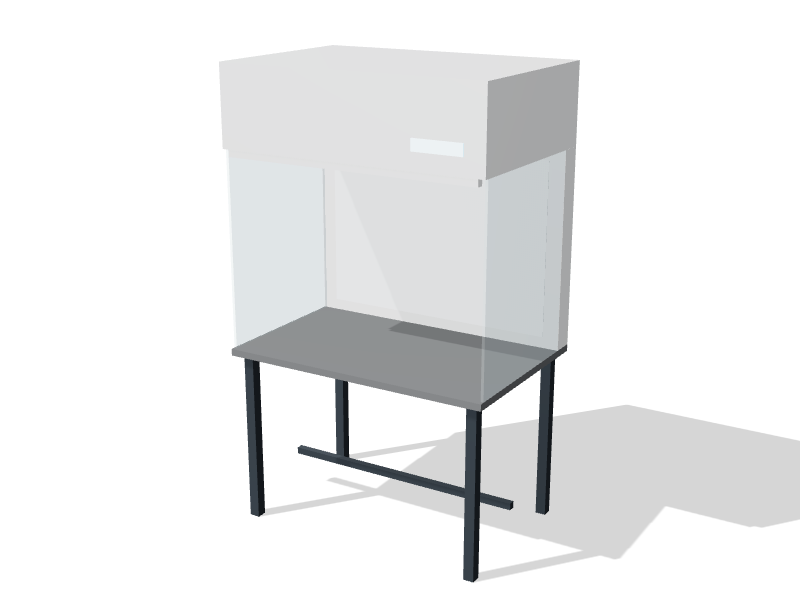
A laminar flow clean bench blows HEPA-filtered air across the work surface and out toward the user. It keeps the work clean and protects the user from nothing. Never use one with infectious agents, hazardous drugs, toxic powders or volatile chemicals. Hospital pharmacies compounding hazardous drugs use biosafety cabinets or containment isolators under USP <800> and the NAPRA model standards instead. The guide to clean benches and PCR workstations covers where they belong.
A ductless filtered fume hood is a chemical device with carbon filters. It does not replace a biosafety cabinet, even when fitted with a HEPA filter, because it is not built or certified to biosafety cabinet standards.
Questions to settle before you buy
- Which biological agents and risk groups are involved, and what containment level does the work require under the Canadian Biosafety Standard?
- Which chemicals are used, in what quantities, and are any volatile, flammable or toxic?
- Does the procedure need the work kept sterile?
- Is a canopy or hard-duct exhaust connection available, and is the building exhaust reliable enough for it?
- Who will certify the device? Biosafety cabinets are certified to NSF/ANSI 49 or an equivalent such as EN 12469, usually at installation, after any move or repair and at least annually. Fume hoods follow ASHRAE 110 methods with criteria from Z9.5 and CSA Z316.5.
- Where will it go? A biosafety cabinet is just as sensitive to doors, traffic and supply air as a fume hood.
The biosafety cabinet classes guide explains Class I, II and III cabinets in more depth.