Clean benches and PCR workstations look similar to biosafety cabinets, and they sit in many of the same labs. They do a different job. Both protect the work from contamination. Neither is designed to protect the person using it. Mixing them up is one of the more common equipment errors in biology labs.
What each enclosure protects
| Equipment | Protects the work | Protects the user | How air moves | Typical use |
|---|---|---|---|---|
| Horizontal clean bench | Yes | No | HEPA air blows from the back of the bench toward the user | Media preparation, electronics, plant tissue culture |
| Vertical clean bench | Yes | No | HEPA air blows down onto the work and out the front | Sterile preparation of non-hazardous materials |
| PCR workstation | From stray DNA and drafts | No | Still-air enclosure with UV, often with HEPA recirculation | Setting up PCR reactions |
| Class II biosafety cabinet | Yes | Yes | Inflow at the front, HEPA downflow, HEPA exhaust | Infectious material and most cell culture |
If the material could harm the user or escape into the room, the answer is a biosafety cabinet or a fume hood, not a clean bench. The guide to biosafety cabinet classes covers how to choose one.
Laminar flow clean benches
A clean bench draws room air through a prefilter, pushes it through a HEPA filter, and sends it across the work surface in a steady, laminar stream. Particles and microorganisms from the room are swept away before they reach the work. When working properly, the air leaving the filter face commonly meets ISO 14644-1 Class 5, the same class used for critical zones in cleanrooms; see ISO 14644-1 cleanroom classes.
Horizontal and vertical benches suit different work:
- Horizontal flow. Clean air reaches the work first, with nothing between the filter and the item except what the user places there. Keep hands and other objects downstream of critical items, never between them and the filter. Everything on the bench, including any powder or aerosol, is blown toward the user's face.
- Vertical flow. Air comes down from above and leaves through the front opening and sometimes through the work surface. Less air blows directly at the user, but the bench still offers no protection. Tall items cast "shadows" below them where airflow is weaker.
Never use a clean bench for infectious agents, primary human cells or other potentially infectious specimens, cytotoxic or other hazardous drugs, sensitizing powders, or volatile and toxic chemicals. The bench will carry them straight to the user.
Good practice at a clean bench:
- Run the blower for the warm-up time the maker specifies before starting work.
- Keep the filter face and the work area clear of paper, boxes and clutter.
- Disinfect the work surface, usually with 70% alcohol, before and after use.
- Avoid flames, which disturb the airflow and can damage the filter.
- Have airflow velocity, filter integrity and particle counts checked at installation and at the interval your quality system sets.
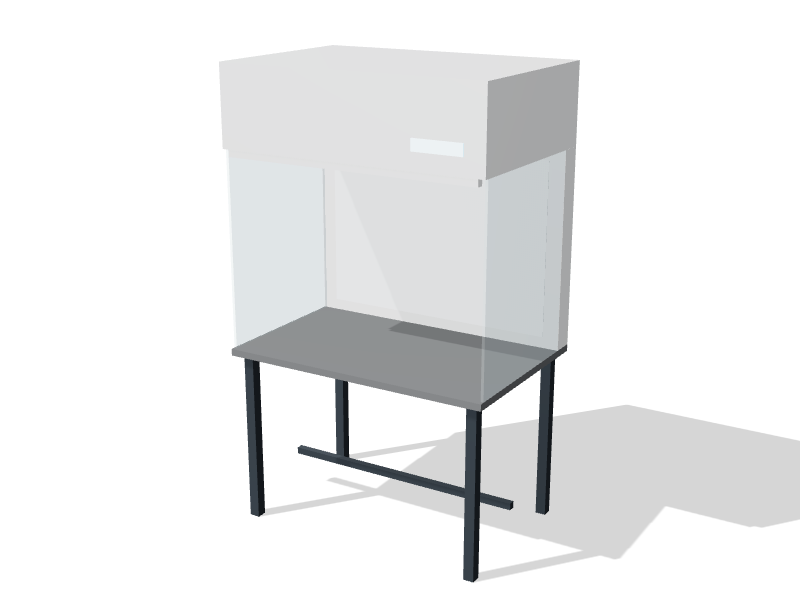
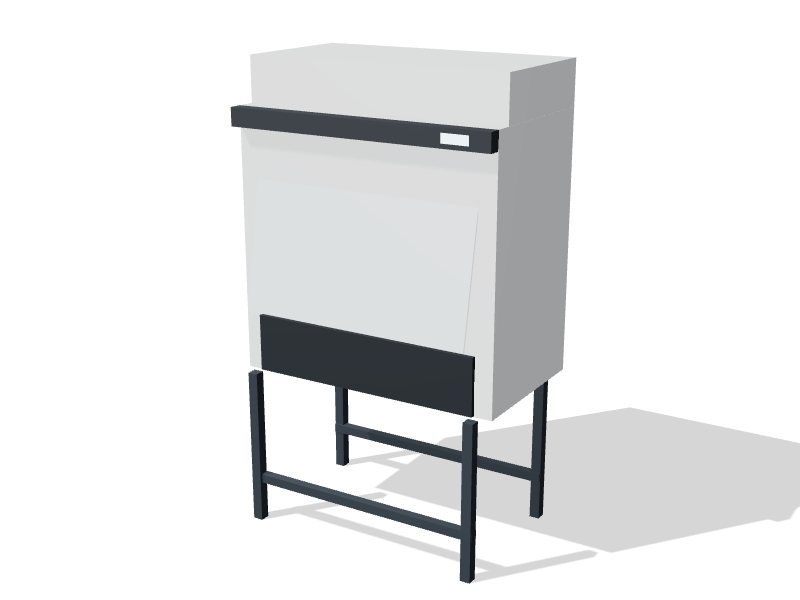
Our horizontal clean bench is intended for this kind of non-hazardous sterile work.
PCR workstations
PCR copies DNA millions of times, so a trace of stray DNA can produce a false result. The main threat is amplified product from earlier runs, carried on aerosols, gloves, pipettes and surfaces. A PCR workstation gives reaction setup a clean, still space away from that contamination.
A typical workstation has:
- A clear enclosure that blocks drafts and gives a defined work area. Some use panels that block UV-C light.
- UV-C lamps that run between sessions. UV light damages stray DNA on exposed surfaces so it can no longer be amplified.
- Often, a HEPA-filtered recirculating fan that keeps the air inside free of particles.
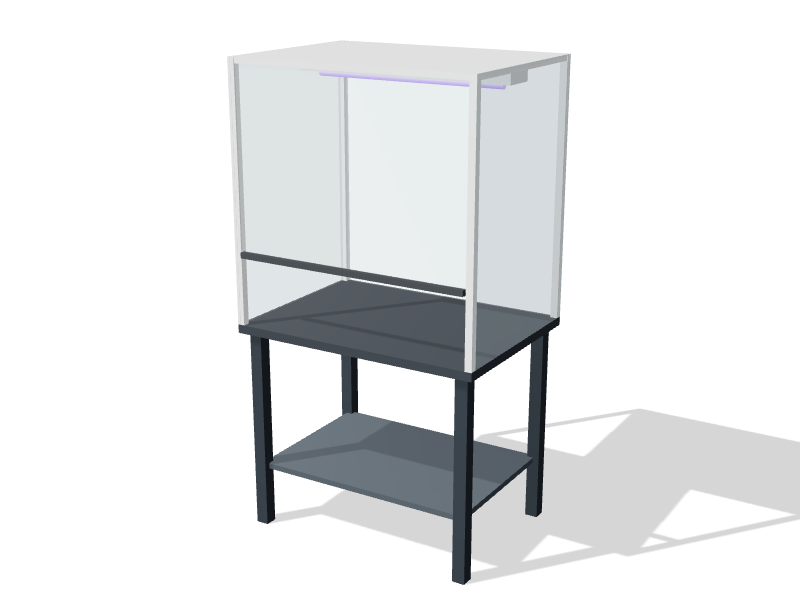
Our PCR workstation follows this pattern, with a UV-C cycle and HEPA-filtered recirculation.
UV has limits. It only treats surfaces in direct line of sight, so the undersides of racks and the inside of pipettes stay untreated. Its effect depends on dose and on lamp age, and lamps need replacing on the maker's schedule. UV-C is also harmful to eyes and skin, so it should never run while someone is working, and timers or interlocks should prevent that. Regular cleaning with a dilute bleach solution, followed by water or alcohol to remove the residue, remains the core decontamination step.
A PCR workstation is not a containment device. Extracting nucleic acids from potentially infectious specimens belongs in a biosafety cabinet. The extracted, inactivated material can then go to the PCR workstation for setup.
Laying out a PCR lab
The enclosure is only part of contamination control. The layout matters just as much. A molecular biology and PCR lab is typically organized around one-way flow:
- Reagent preparation, where master mixes are made, with no samples or amplified product present.
- Sample preparation, where nucleic acids are extracted and template is added.
- Amplification, where thermal cyclers run.
- Post-amplification analysis, where tubes are opened and products are analyzed.
Ideally, each step has its own room. Where space is short, use separate areas with their own pipettes, lab coats, consumables and waste. Nothing from the post-amplification area should go back to an earlier step. Many labs keep pre-PCR rooms at slightly positive pressure and post-PCR rooms at negative pressure. Closed-tube real-time PCR also helps, because tubes are not opened after amplification.
Choosing the right enclosure
- Is the material potentially infectious, toxic or volatile? Use a biosafety cabinet or fume hood.
- Does the work only need protection from airborne particles? Use a clean bench, horizontal or vertical.
- Is the concern stray DNA during reaction setup? Use a PCR workstation, within a one-way workflow.
- Place every enclosure away from doors, diffusers and busy aisles.
- Plan for filter testing, UV lamp replacement and surface cleaning from day one.
You can arrange pre- and post-PCR zones in the lab planner.