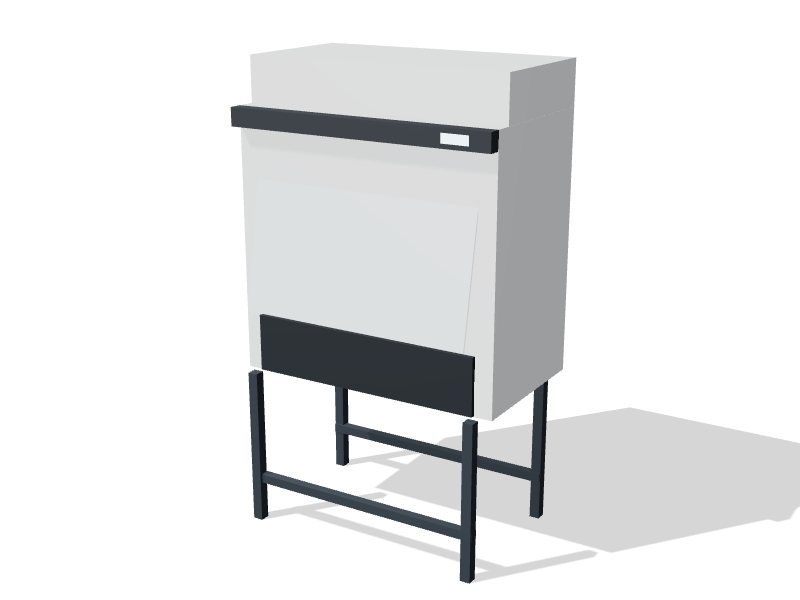
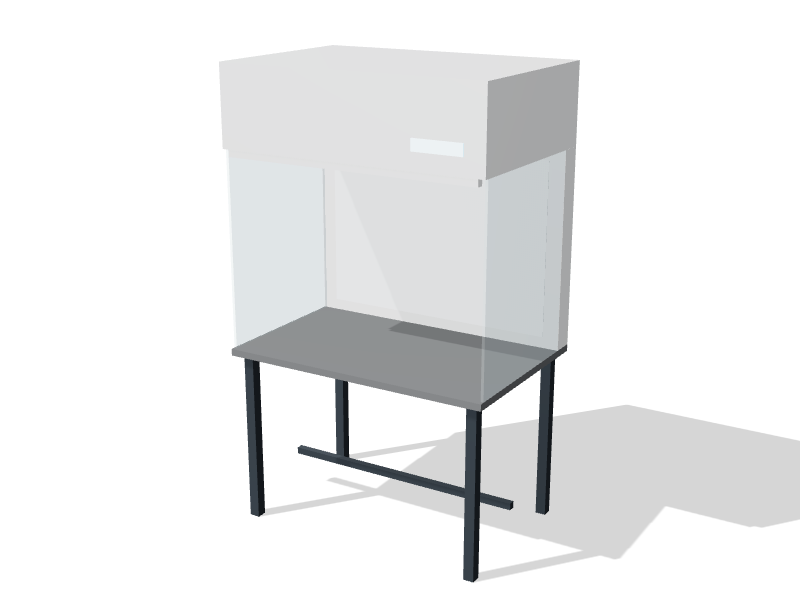
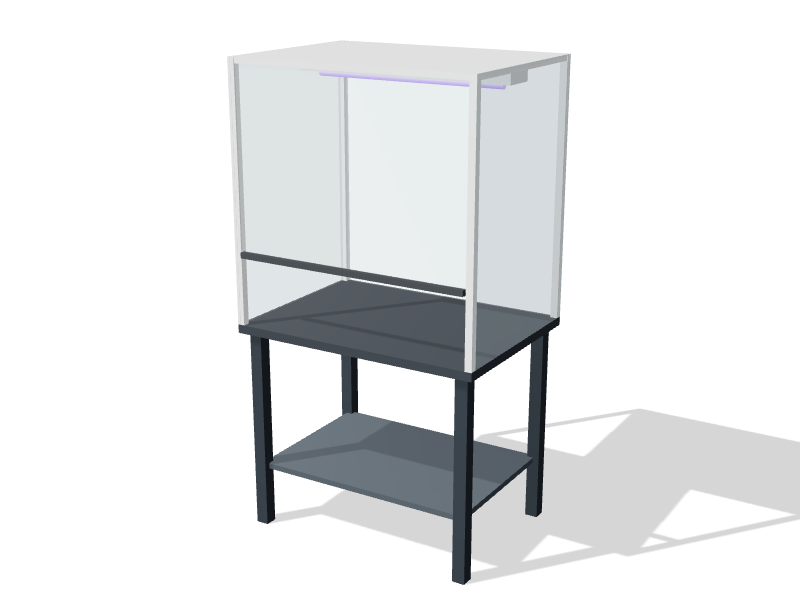
A biosafety cabinet (BSC) is a ventilated enclosure that protects people, and often the work and the environment, from biological agents. Cabinets come in three classes, and the most common class comes in several types that handle exhaust air differently. Choosing the wrong one can leave workers unprotected or put a heavy, unnecessary load on the building's exhaust system.
Three kinds of protection
BSCs are described by what they protect:
- Personnel protection. Room air flows inward through the front opening, so aerosols generated inside do not escape toward the user.
- Product protection. Filtered air flows down over the work surface, so room contaminants do not reach the cultures or samples.
- Environmental protection. Exhaust air passes through a filter before it leaves the cabinet.
The filters are HEPA filters, which capture particles very efficiently, including the droplets and particles that carry microorganisms. They do not capture gases or vapours. That single fact explains most of the differences between types: if volatile chemicals are part of the work, the cabinet has to send that air outside rather than back into the room.
Class I, II and III compared
| Class or type | Protects | How air moves | Typical use |
|---|---|---|---|
| Class I | Personnel, environment | Unfiltered room air in, HEPA-filtered exhaust, no clean downflow | Enclosing aerosol-producing equipment where product protection is not needed |
| Class II, type A2 | Personnel, product, environment | About 70% of air recirculated, about 30% exhausted through HEPA, to the room or through a canopy connection | Most CL2 microbiology and cell culture |
| Class II, type B1 | Personnel, product, environment | Hard-ducted; most of the air exhausted | Biological work with small amounts of volatile chemicals |
| Class II, type B2 | Personnel, product, environment | Hard-ducted; all air exhausted, none recirculated | Biological work with volatile toxic chemicals or radionuclides |
| Class III | Maximum protection | Gas-tight cabinet with glove ports, HEPA supply and filtered exhaust | High-risk agents and some CL4 work |
Class II cabinets dominate in practice. NSF/ANSI 49, the standard most cabinets are built and field-tested to, sets their minimum inflow velocities: 0.38 m/s (75 fpm) for type A1 and 0.51 m/s (100 fpm) for types A2, B1 and B2. Type A2 also requires the contaminated air spaces inside the cabinet to be under negative pressure or surrounded by negative-pressure spaces, which is one reason it has largely replaced type A1 in new installations. The Class II A2 is the default cabinet in most biological labs, including our Class II A2 cabinet.
Type C1, added to NSF/ANSI 49 more recently, combines recirculated downflow with a dedicated exhaust zone for chemical work and is designed to connect to building exhaust. If you are considering one, ask how the specific model behaves when the building exhaust fails.
Class III cabinets are sealed, so the user works through attached gloves. Their supply and exhaust air is filtered, and the cabinet runs at a negative pressure of at least about 120 Pa (0.5 in w.g.) relative to the room.
Choosing a type
- Biological agents only, no volatile chemicals. A Class II A2 that recirculates to the room or connects through a canopy. A canopy connection carries heat and smells out of the room and allows minute quantities of volatile chemicals.
- Small amounts of volatile chemicals or radionuclides. A canopy-connected A2 for minute quantities, or a B1 or C1 for more. Where the dividing lines fall depends on the chemicals and quantities involved.
- Larger amounts of volatile toxic chemicals. A type B2, accepting its demands on the building.
Ducted cabinets put real demands on the building. B-type cabinets need dedicated exhaust that runs continuously, with alarms and interlocks. If the exhaust fails on a B2, air can be pushed out through the front opening toward the user, so the supply fan must stop when exhaust is lost. Canopy connections are more forgiving: an air gap at the canopy isolates the cabinet from swings in building exhaust, and an alarm warns when canopy airflow drops.
A BSC is not a chemical fume hood, and a fume hood is not a BSC. If the main hazard is chemical, start with fume hood or biosafety cabinet.
Containment level drives the requirement. Under the Canadian Biosafety Standard, CL2 labs use a certified BSC for work that may produce infectious aerosols, and CL3 labs carry out open-vessel work with infectious material inside a BSC. The containment level entry and the CL2 microbiology lab page show how this plays out in a typical lab.
Two working practices affect the choice of accessories. Open flames disrupt the airflow and can damage the HEPA filters, so use electric microincinerators or sterile disposables instead of burners. UV lamps are not a substitute for surface disinfection, and many biosafety programs discourage them.
Placement and certification
The air curtain at the front opening is easy to disrupt. Place cabinets away from doors, main walkways, supply diffusers and fume hoods, and allow room behind the user so others do not pass close behind. The guide to cross drafts and supply air explains why. Leave clearance above the cabinet for the exhaust filter, the canopy and certification access, and at the sides for service.
Under the Canadian Biosafety Standard, a BSC is certified on site when installed, after it is moved or repaired, and at least once a year, using NSF/ANSI 49 (or EN 12469 for European cabinets). It must be decontaminated before filters are changed or the cabinet is moved.
Questions to ask before you buy
- Which agents and containment level, and will any volatile chemicals or radionuclides be used inside?
- Which class and type, and in what width? 1200 mm (4 ft) and 1800 mm (6 ft) are common.
- Recirculating, canopy-connected or hard-ducted, and does the building have the exhaust capacity?
- What alarms and interlocks are included?
- Can the supplier show evidence that the model is listed to NSF/ANSI 49?
- Who will certify it on site, and how will it be decontaminated for filter changes and moves?
Your biosafety officer makes the final call on cabinet class and type.