Not every clean process needs a fully built cleanroom. A free-standing enclosure with fan filter units on top can protect an assembly line in days, while a sealed modular room with airlocks and a pressure cascade can take months to plan and build. The right choice depends on the class you need, who regulates the work, how long the space must last and how much the process will change.
The three main approaches
Softwall cleanrooms
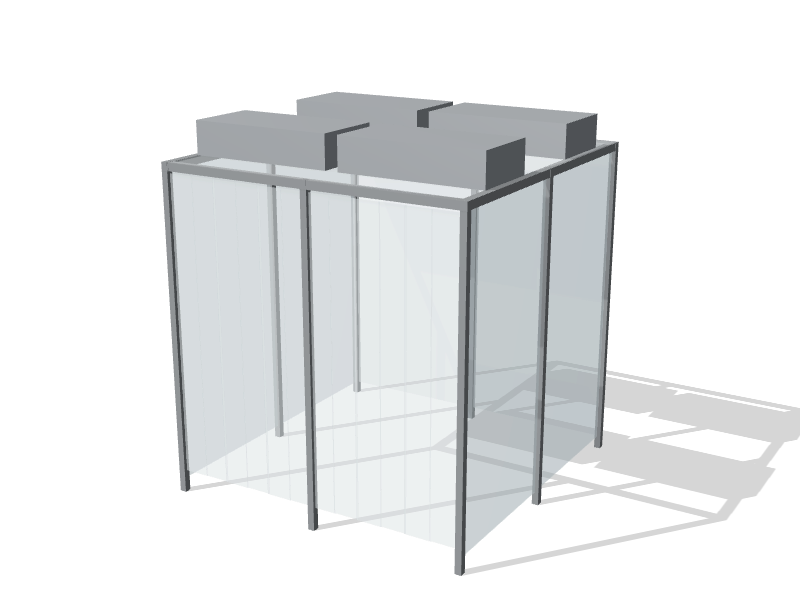
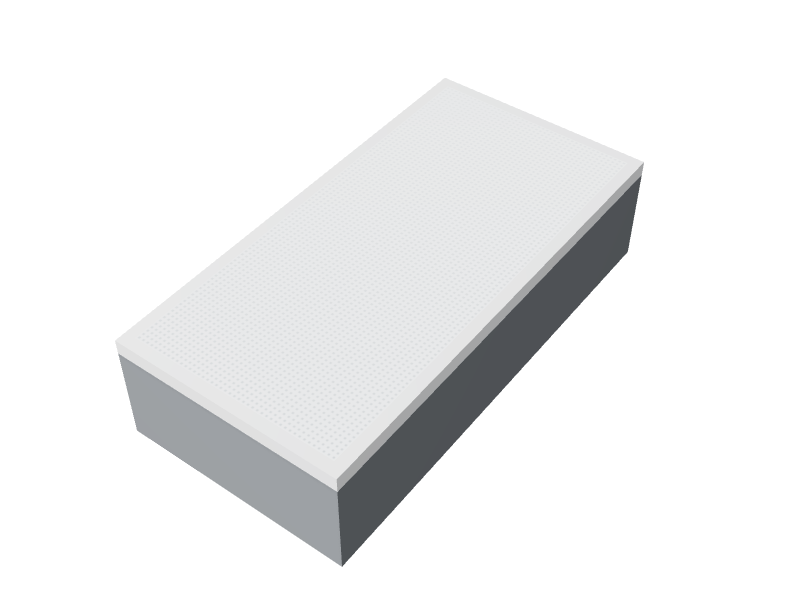
A softwall cleanroom has a steel or aluminum frame, a ceiling grid carrying fan filter units, and anti-static vinyl curtains that hang to just above the floor. Filtered air flows down through the enclosure and escapes under the curtains, which is what keeps particles from drifting in. Units can be free-standing, hung from the structure, or on castors.
Softwall enclosures are quick to install, comparatively inexpensive and easy to move, extend or reconfigure. With enough filter coverage they can reach ISO 7 or ISO 8 comfortably, and ISO 5 over a small zone. Their limits are just as clear. Pressure control is minimal, because the gap under the curtains is the main exit for air. There is no real pressure cascade, and the "airlock" is usually a strip-curtain vestibule. The enclosure depends on the host room for temperature and humidity, and the FFUs add heat to that room. Curtains are harder to clean thoroughly than rigid panels and can tear or crease.
Rigid-wall enclosures
A rigid-wall enclosure uses the same kind of frame but fills it with rigid panels, often acrylic, polycarbonate or coated metal, down to the floor or close to it. It seals better, can hold a modest positive pressure, and allows proper doors and pass-throughs. It is still free-standing and can be relocated, though with more effort than a softwall unit.
Modular hardwall cleanrooms
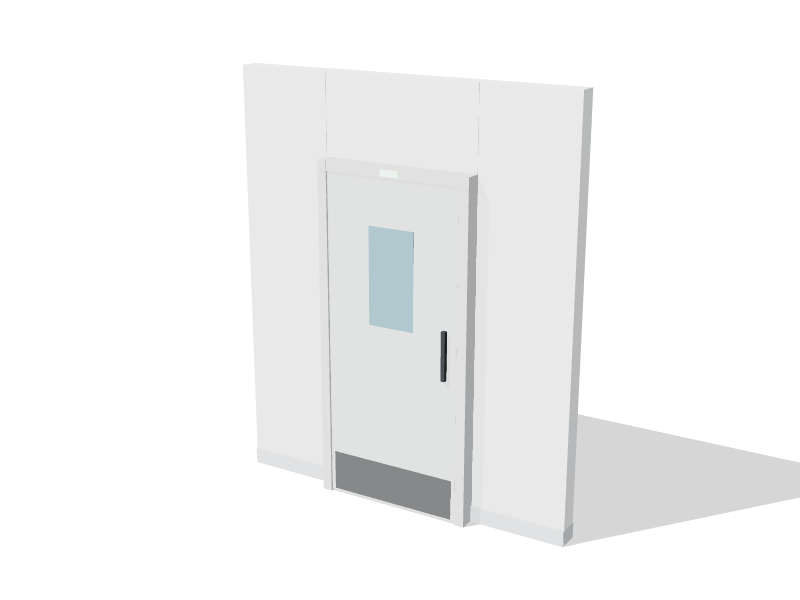
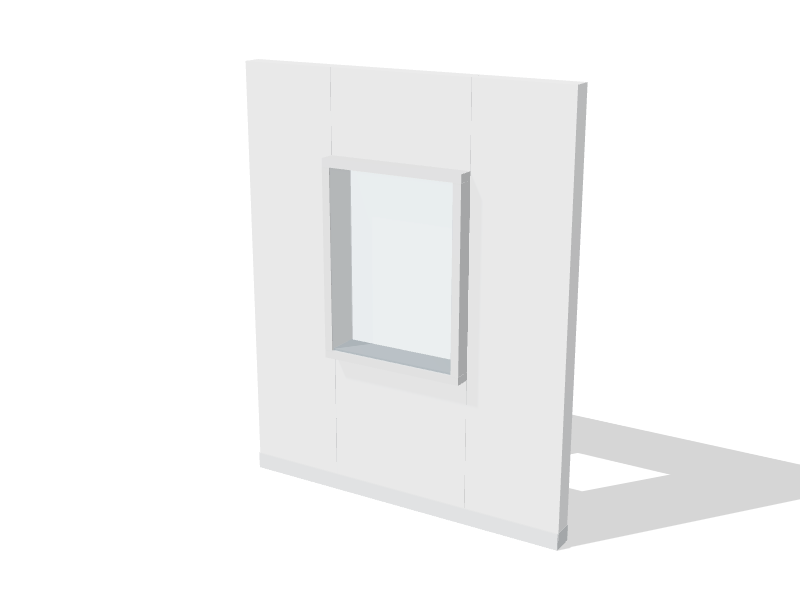
A modular hardwall cleanroom is built from sealed wall and ceiling panels, with flush windows, gasketed doors, interlocked airlocks and its own conditioned air supply. It can hold a stable cascade between rooms of different classes, survive aggressive cleaning, and meet the expectations of GMP inspectors and pharmacy regulators. It takes longer to design and build and costs more, but it is the only one of the three that functions as a building in its own right. The wall and ceiling systems guide covers the options in detail.
| Feature | Softwall | Rigid-wall enclosure | Modular hardwall |
|---|---|---|---|
| Pressure control | Minimal, air escapes under curtains | Modest positive pressure | Full cascade with airlocks |
| Typical classes | ISO 8 to ISO 7, ISO 5 zones | ISO 8 to ISO 6 | ISO 8 to ISO 5 and cleaner |
| Mobility | High | Moderate | Low, partly demountable |
| Cleanability | Fair, curtains need care | Good | Best |
| Fit for regulated sterile work | Rarely accepted | Limited | Expected |
How to choose
- Who sets the rules. GMP sterile manufacturing and sterile compounding inspectors expect sealed rooms with controlled pressure and documented cascades. A softwall enclosure seldom meets those expectations. Medical device assembly, electronics, optics and R&D often have more flexibility; see the medical device cleanroom overview.
- How long the space must last. For a pilot line, a temporary contract or a lease you may not renew, mobility has real value.
- How much the process will change. If equipment and layout shift often, a softwall or rigid-wall enclosure adapts more easily.
- What the host room provides. Free-standing enclosures rely on the room around them for temperature, humidity and a reasonably clean background. A dusty warehouse or an unconditioned shop makes every option harder.
- Fire and building review. A solid enclosure roof can block sprinkler coverage, and curtain and panel materials must meet flame-spread requirements. Check with the authority having jurisdiction before ordering, even for a free-standing unit.
Hybrids are common. A hardwall ISO 7 room can host a small ISO 5 softwall zone or a clean bench over the critical step, which keeps the expensive volume small.
Questions to ask your supplier
- What class can this enclosure achieve, in which occupancy state, with our number of operators?
- How many FFUs does it use, and how much heat will they add to our room?
- How is the enclosure anchored, braced or levelled, and can it be moved without dismantling?
- What are the curtain or panel materials, and are they compatible with our disinfectants?
- Do the materials meet flame-spread requirements, and how is sprinkler coverage handled?
- Can the enclosure be extended or upgraded to rigid panels later?
To see which approach suits your process, our cleanroom solutions page outlines common project types, or you can start with a consultation.