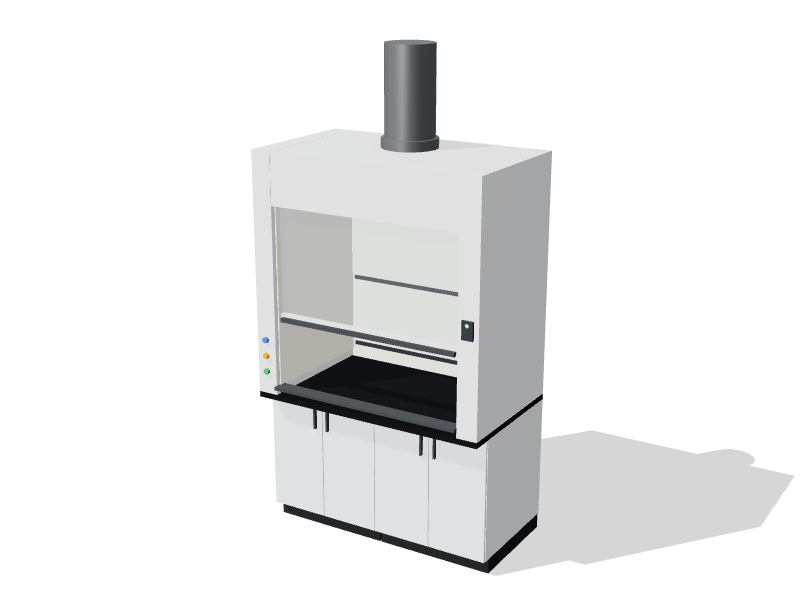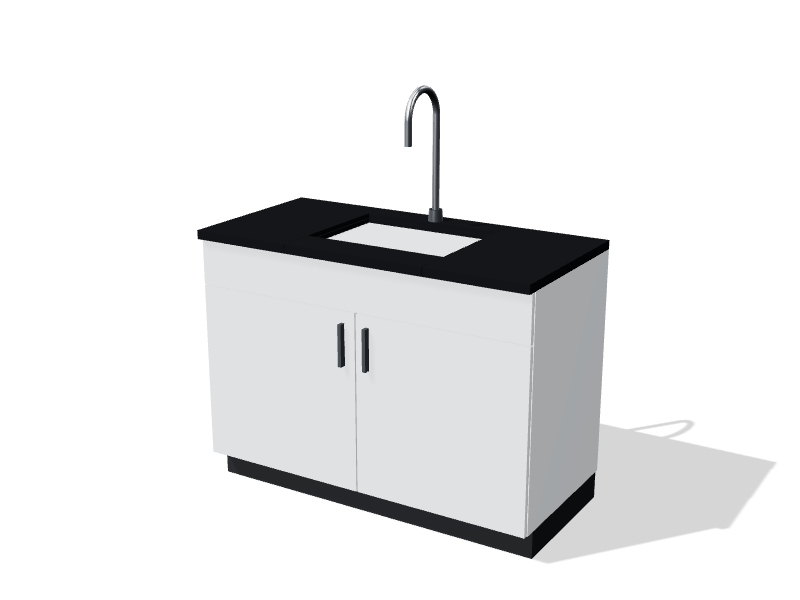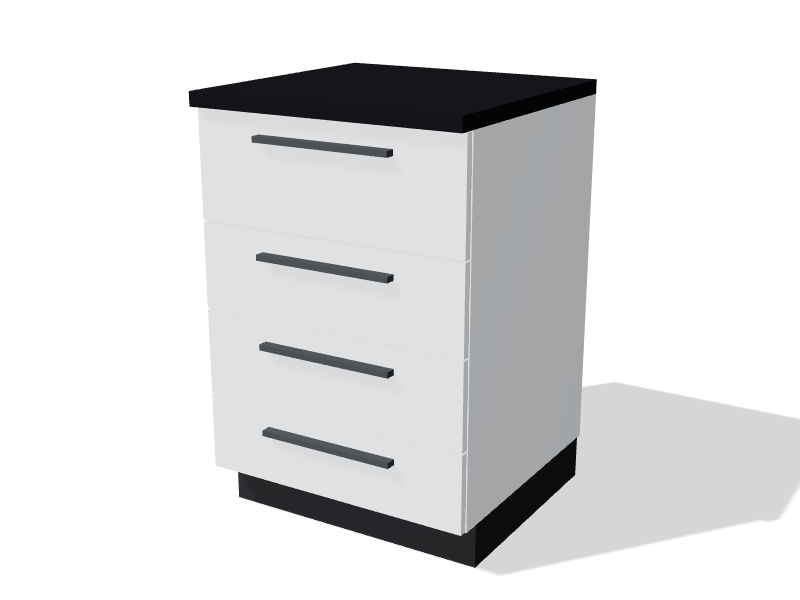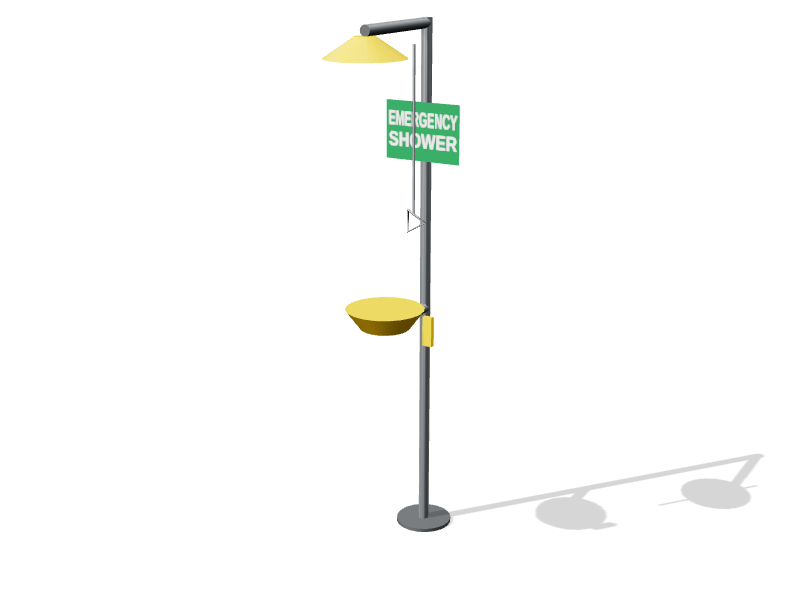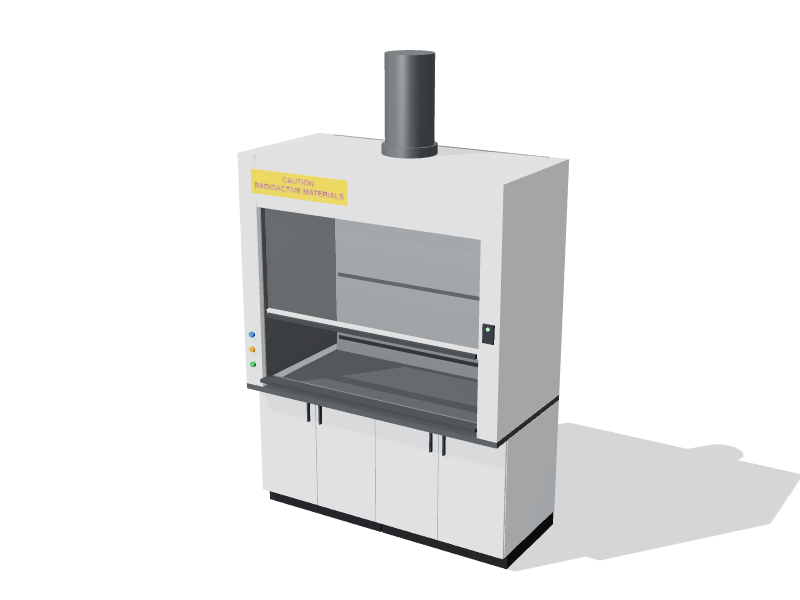
The 1800 mm model
FH-RI-1800 is the 1800 mm (71 in) wide version of the radioisotope fume hood. It is 860 mm deep and 2400 mm high, floor-standing. It also comes in 1500 mm.
Price by option at 1800 mm
| Option | Choice | List price |
|---|---|---|
| Finish | Painted steel, Arctic white | $18,200 |
| Finish | Painted steel, Slate blue | $18,200 |
| Finish | Solid phenolic, Pearl grey | $20,380 |
| Finish | Maple veneer | $19,660 |
| Finish | Stainless steel 304 | $26,390 |
What it's for
A radioisotope hood is used to handle unsealed radioactive materials that could become airborne or spread through spills: labelling reactions, work with volatile compounds such as radioiodine, and dispensing or diluting radiochemicals. It protects the user from airborne contamination, keeps contamination within a defined area, and gives a surface that can be decontaminated completely afterwards.
Construction and features
- A seamless stainless steel liner with no joints or crevices where contamination could lodge. Stainless tolerates common decontamination agents and repeated scrubbing.
- A coved stainless work surface with rounded inside corners and a raised edge that keep spills contained and easy to wipe up.
- A work surface reinforced to carry lead shielding. Lead bricks and shields for gamma emitters are heavy, and an ordinary hood surface can deflect under them.
When comparing radioisotope hoods, also look for removable baffles that can be decontaminated, an airflow monitor with alarm, and provision for filtration in the exhaust, such as HEPA or charcoal for radioiodine, where your licence requires it. Ask the supplier for the work surface load rating as a number, not just the word "reinforced".
Sizes and options
Where it fits
The main home is a dedicated radioisotope lab. Smaller numbers appear in a research chemistry lab synthesizing labelled compounds and in a molecular biology and PCR lab that still uses radiolabelled nucleotides.
Planning notes
- In Canada, work with nuclear substances is licensed by the CNSC. The licence conditions, the CNSC's design guidance for nuclear substance laboratories and your radiation safety officer set the requirements for the room, hood, exhaust and finishes.
- Check that the floor and the hood support can take the combined weight of the hood and its lead shielding.
- Plan the exhaust with the mechanical engineer: filtration, stack height and discharge location all affect where released material ends up, including nearby air intakes; see radioisotope fume hoods.
- Keep surfaces throughout the room smooth, nonporous and easy to decontaminate, including a sealed floor and casework finishes that tolerate decontaminants.
- Locate the contamination monitor, waste containers and shielded storage next to the hood but out of the walkway.
- Test the hood at commissioning and on a regular schedule, as described in commissioning and annual certification.
All sizes
| Code | Width | Depth × height | From |
|---|---|---|---|
| FH-RI-1500 | 1,500 mm (59 in) | 860 × 2400 mm | $16,400 |
| FH-RI-1800 | 1,800 mm (71 in) | 860 × 2400 mm | $18,200 |