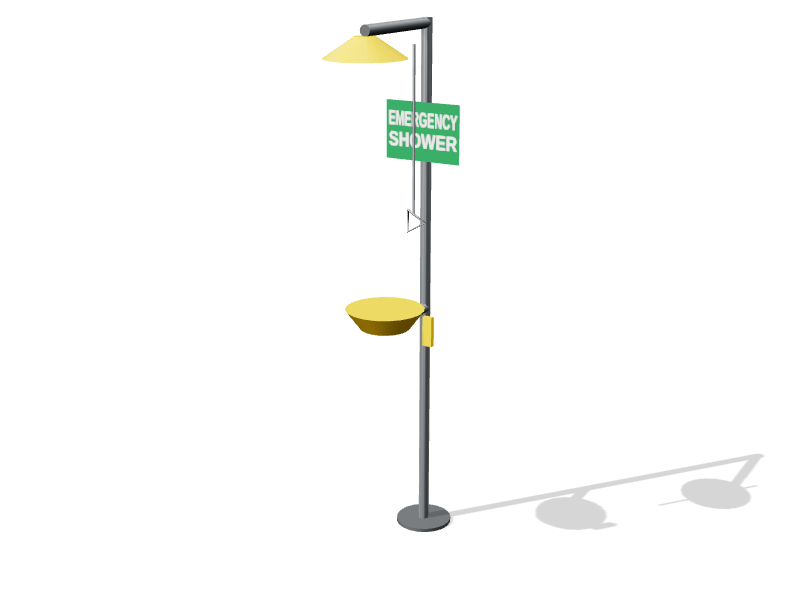
What it's for
A combination emergency shower and eyewash provides first aid in the seconds after a chemical splash to the body or eyes. Flushing at once, with plenty of tempered water, for a sustained period, is the most effective first response to many chemical exposures. The shower drenches the whole body; the eyewash delivers a gentle flow to both eyes at once while leaving the hands free to hold the eyelids open.
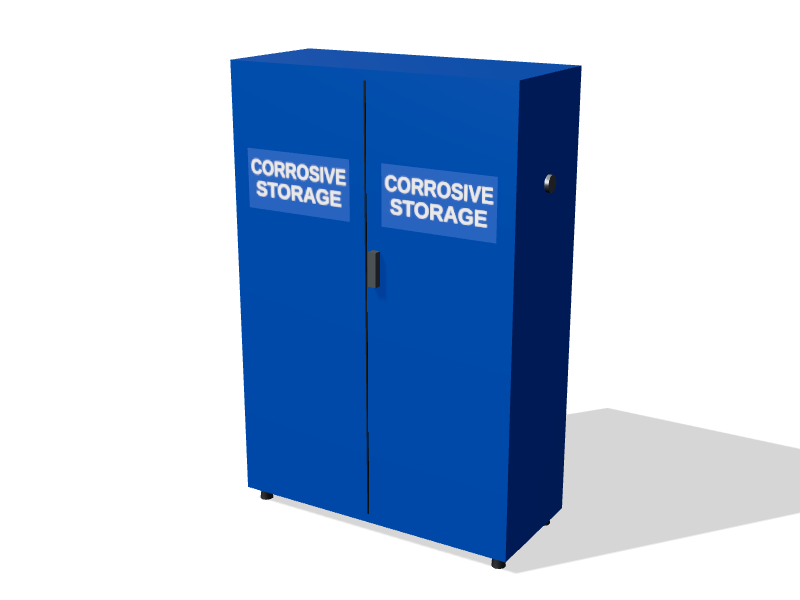
Any lab that stores or pours corrosives, for example from a corrosives cabinet, needs one close by.
Construction and features
The unit combines a showerhead and an eyewash on one frame, each with a stay-open valve: once activated, it keeps flowing until someone deliberately shuts it off, so the injured person can use both hands. The unit is designed around ANSI Z358.1, the standard Canadian employers and regulators most often look to for emergency eyewash and shower equipment. Ask for the manufacturer's documentation for the model, and verify the installed unit, because flow, water temperature and location depend on the installation as much as on the hardware.
On a good-quality unit, look for:
- A large pull rod or ring for the shower and a push flag or paddle for the eyewash.
- Eyewash dust covers that open automatically when the water starts.
- Corrosion-resistant construction and fittings.
- High-visibility signage and an inspection tag.
Sizes and options
Where it fits
Combination units are expected in an organic synthesis lab, a mining and geochemistry assay lab with its acid digestions, and a high school science lab, where students handle acids, bases and stains.
Planning notes
- Locate the unit within about 10 seconds' travel of the hazard, on the same level, with a clear path free of steps, obstacles and doors that swing against the user. Where strong acids or caustics are used, place it right beside the hazard. Keep it near the exit, never behind a door swing.
- Supply tempered water, typically 16 to 38 °C (60 to 100 °F), for the full 15-minute flush. Cold water discourages people from flushing long enough, so a thermostatic mixing valve is common.
- The shower delivers around 76 L/min (20 US gpm). Plan how that water will drain or be contained; a floor drain is the cleanest answer.
- Keep the floor area under the shower clear. No carts, bins or electrical outlets within the spray zone.
- Activate the unit weekly and inspect it annually, as Z358.1 describes; see emergency showers and eyewashes.
- Your safety officer or the local authority has the final word on the number and location of units.
All sizes
| Code | Width | Depth × height | From |
|---|---|---|---|
| ES-CB-0600 | 600 mm (23½ in) | 600 × 2300 mm | $1,850 |