Hood count and hood width are usually decided together, and both run into the same limit: the building's ability to exhaust air and replace it. Too few hoods and people do hazardous work on open benches or queue for hood time. Too many and the lab pays to ventilate hoods that sit idle. The right number comes from the work, checked against the ventilation budget.
Start from the work, not the floor area
Begin with a list of procedures that must be done in a hood, then ask four questions about each one.
- Who does it, and how many people do it at the same time?
- How long does it occupy the hood? A 10-minute transfer and a 3-day reflux place very different demands on hood time.
- How big is the apparatus? Width, height and any equipment such as a rotary evaporator that stays in the hood permanently.
- Does it need a special hood? Perchloric acid digestion, radioisotopes and some high-hazard work need dedicated hoods that cannot be shared with general chemistry.
Planning ratios vary widely by discipline. In synthetic chemistry, most bench work happens inside the hood, so labs commonly plan around one hood per researcher. Analytical labs, biology labs and quality control labs often share one hood among several people because only part of each procedure needs it. Teaching labs size hoods around the class section and the experiments on the schedule. The lab type pages for organic synthesis and teaching chemistry show how this plays out in typical rooms.
Do not forget the hood work that is easy to overlook: preparing waste containers, weighing toxic powders, cleaning glassware with solvents and running instruments that vent fumes.
Choosing widths
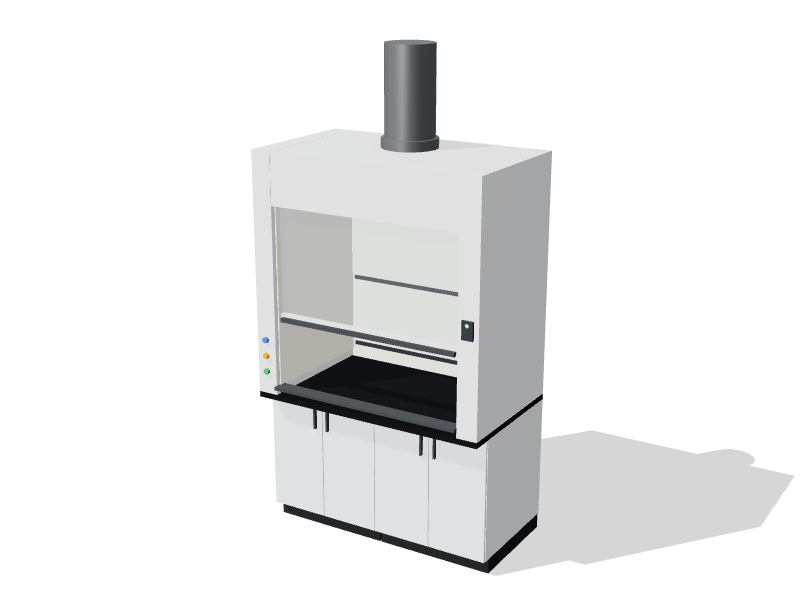
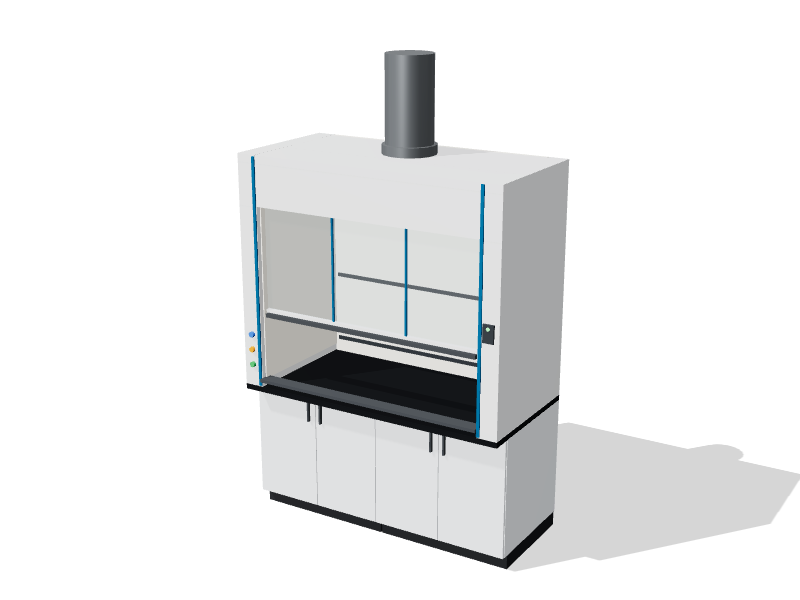
Benchtop hoods are commonly sold in nominal widths of 1200, 1500, 1800 and 2400 mm (4, 5, 6 and 8 ft). Nominal width is the outside dimension. The usable opening is narrower because of the hood posts and liner walls, so ask for interior dimensions before deciding.
| Nominal width | Typical fit |
|---|---|
| 1200 mm (4 ft) | One user, small-scale work, teaching, tight rooms |
| 1500 mm (5 ft) | One researcher with moderate apparatus |
| 1800 mm (6 ft) | A common choice for synthesis: room for a reaction setup plus a rotary evaporator |
| 2400 mm (8 ft) | Two users side by side, or a large apparatus; a combination sash helps control exhaust |
Width costs air. At 0.5 m/s (100 fpm) and a 460 mm (18 in) sash height, every extra 300 mm (1 ft) of opening width adds roughly 70 L/s (about 145 cfm) of exhaust whenever the sash is at working height. On a constant-volume hood, that air flows all day. Choosing an 1800 mm hood where a 1500 mm hood would do is a real operating cost, so match width to apparatus rather than defaulting to the largest size.
Depth matters too. Users should keep work at least 150 mm (6 in) behind the sash, and baffle slots at the back must stay clear. Subtract both from the interior depth to find the true working depth.
Tall work and special hoods
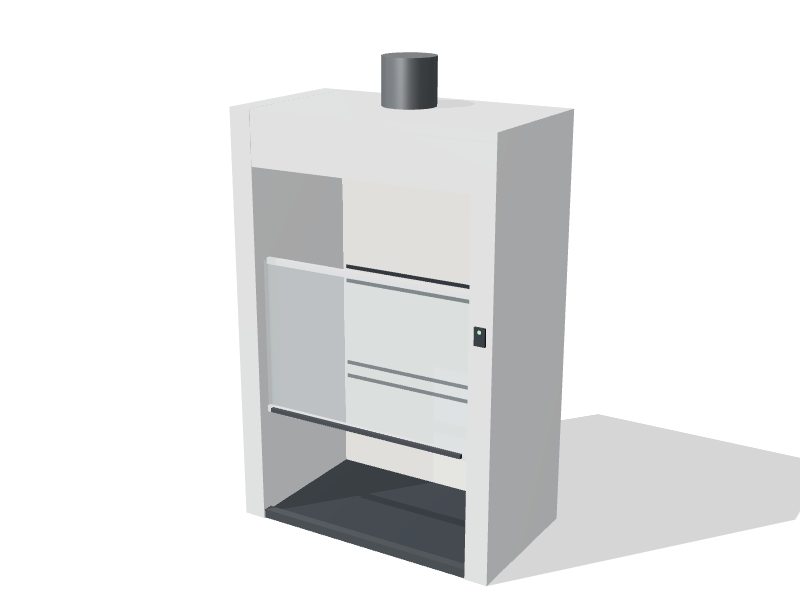
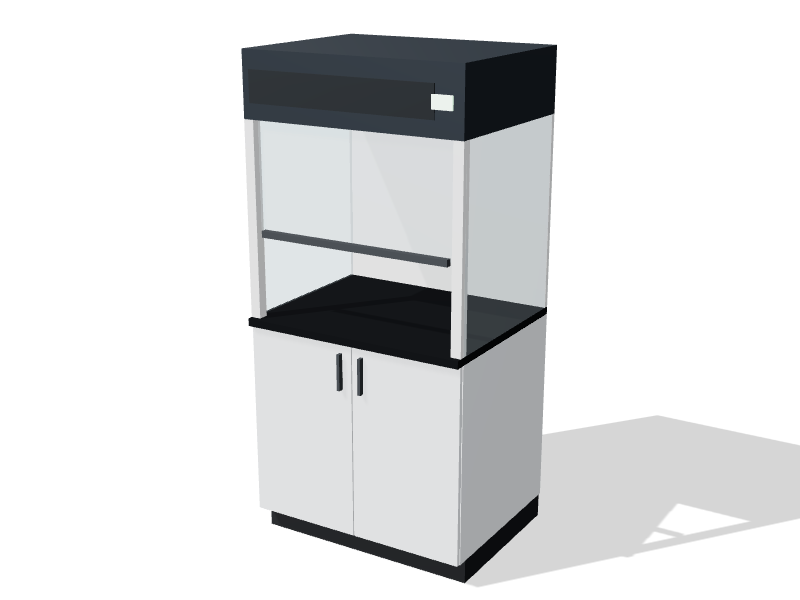
Standard benchtop hoods suit most work. Tall distillation columns, large reactors and equipment on carts need a lower work surface or a floor-mounted walk-in hood; see hoods for distillation and tall apparatus. A ductless filtered hood can serve limited, well-characterized work where ducting is impractical, within the limits described in the ductless fume hood guide.
The building has to keep up
Each ducted hood adds exhaust that must be matched by conditioned supply air. Before settling on a hood count, confirm with the mechanical engineer that the exhaust fans, shafts, supply system and heating plant can handle it.
- Diversity: in a VAV system, not every sash is open at once, so central fans can be sized below the sum of every hood at full flow. The diversity factor must reflect real use. Synthesis labs, where most sashes are open much of the day, support much less diversity than shared analytical labs.
- Room air: a room crowded with hoods needs a lot of supply air, which makes low-velocity diffuser layouts harder and cross drafts more likely.
- Future hoods: if the lab may grow, plan capacity now, including spare fan capacity, capped duct connections at likely hood positions and shaft space. On a lab module grid, reserving one hood position per module keeps that option open.
Once the count is set, VAV controls and good sash habits keep the exhaust budget under control.
Questions to answer before you settle the count
- What is the peak number of people who need hood space at the same time?
- What is the largest apparatus, by width and by height?
- Which procedures need a dedicated or special hood?
- Can the exhaust and supply systems serve this many hoods at the design sash height?
- Would fewer, wider hoods or more, narrower hoods suit the workflow better?
- Where would the next hood go if the group grows?
You can lay out hood counts and widths against benches and aisles in the lab planner before committing to a design.