Most work in a fume hood needs something piped or wired into it: cooling water for a condenser, nitrogen for an inert atmosphere, vacuum for a filtration, power for a stirrer hotplate. Services are specified with the hood, pre-piped by the manufacturer to connection points, and connected on site by the mechanical and electrical trades. Getting the list right at the start avoids hoses snaking under sashes and extension cords draped across the work surface.
What to plan for
| Service | Typical use in the hood | Planning notes |
|---|---|---|
| Cold water | Condensers, rinsing | Backflow protection; secure hoses with clamps; discharge to a cup sink |
| Natural gas | Burners, some heating | Emergency shut-off for the lab; many organizations now limit open flames in hoods |
| Vacuum | Filtration, rotary evaporators, drying | Central vacuum needs traps to protect it; a local pump may suit better |
| Compressed air | Drying glassware, aspirators | Oil-free and filtered for lab use |
| Nitrogen or argon | Inert atmospheres, solvent purging | From cylinders or a central supply, with a regulator at the source |
| Purified water | Rinsing, preparation | Fittings and piping that do not leach into the water |
| Electrical outlets | Hotplates, mantles, stirrers, pumps | On the hood exterior, ground-fault protected near water |
| Cup sink and drain | Condenser discharge, small rinses | Chemical-resistant drain line with a trap; not for chemical disposal |
Start from the procedures. List what each hood will be used for, then derive the services. A hood for acid digestion needs different fittings than one used for air-sensitive synthesis, and a hood used for teaching may need fewer services but tougher fixtures.
Controls outside, fixtures inside
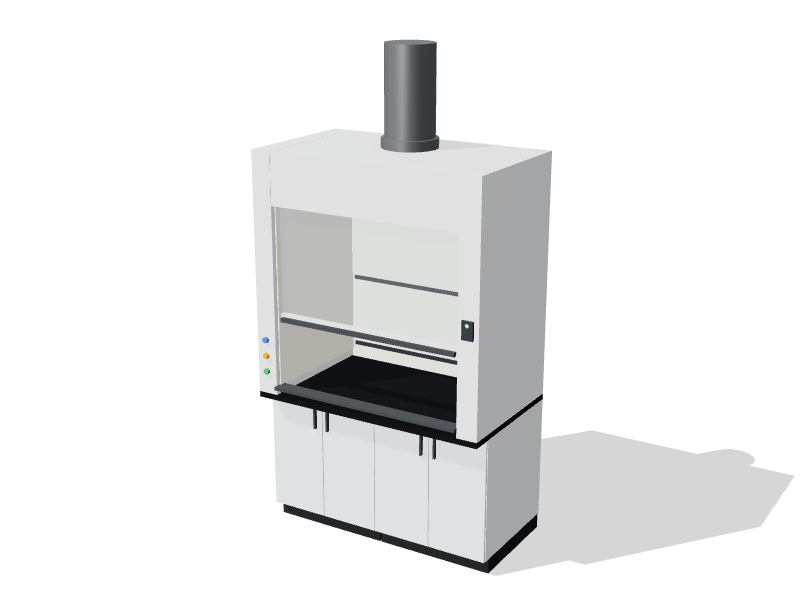
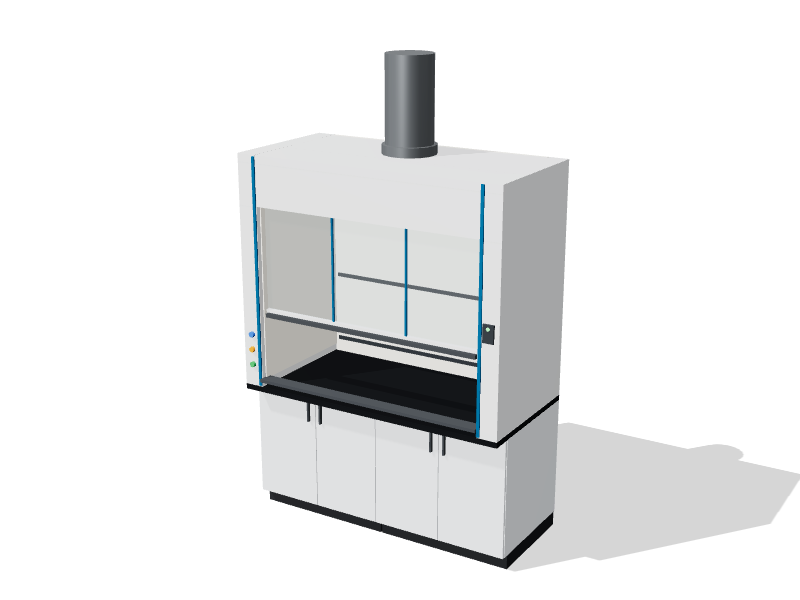
The rule that shapes every hood fixture layout is simple: users should not have to reach into the hood to turn something on or off. NFPA 45 expects service controls to sit outside the hood and within easy reach. Hood manufacturers meet this with remote-control valves: the outlet sits on the side wall of the liner, and the handle that operates it is on the front post of the hood, outside the sash.
Other habits that follow from the same principle:
- Mount electrical receptacles and switches on the hood exterior, not inside the chamber, so sparks and connections stay out of the vapour zone. Many hoods route cords under the airfoil sill so the sash can still close fully.
- Fit the hood light outside the chamber behind a sealed glass panel, so it can be serviced from outside.
- Use consistent, coloured handles and clear labels for each service across the whole lab, so nobody connects nitrogen thinking it is air.
- Put outlets on both side walls of wider hoods, so apparatus can be set up from either side and hoses stay short.
Water and drains
Water causes more hood damage than most chemicals. A condenser hose that slips off at night can flood the hood, the base cabinets and the floor below.
- Fit a vacuum breaker or other backflow protection on every water outlet, as plumbing codes require.
- Clamp hoses at both ends, and replace hardened or cracked tubing.
- Consider a recirculating chiller for condensers. It saves water, and a leak releases only the volume in the chiller loop rather than a continuous building supply.
- Use flow sensors that cut heating when cooling water stops, for long or unattended runs.
- Place the cup sink where condenser discharge hoses can reach it without crossing the work zone, and run water through traps that rarely see use so they do not dry out.
Drain lines from hood cup sinks must resist the chemicals likely to reach them and join the building's lab waste system. The guide to lab sinks and drainage covers materials and neutralization. Perchloric acid hoods add a dedicated washdown supply and drain trough, which are planned with the hood rather than added later.
Gases and vacuum
- Flammable gas: if natural gas is supplied, provide an emergency shut-off valve near the lab exit and make sure users know where it is.
- Inert gases: keep cylinders secured outside the hood, with regulators at the cylinder. In small rooms with heavy inert gas use, ask EHS whether an oxygen-depletion assessment is needed.
- Toxic or corrosive gases: these need gas cabinets, purpose-designed piping and often gas detection. Treat them as a separate design exercise with EHS and the engineer.
- Vacuum: solvent vapour pulled into a central vacuum system damages pumps and can spread through the building. Use cold traps, or a local pump in a ventilated base cabinet with its exhaust discharged into the hood.
Planning tips
- Write the service list per hood from the actual procedures, not from a standard template.
- Add one capped spare line for a likely future gas. It costs little at installation and a lot later.
- Show the pipe and conduit routes to each hood on the drawings, including how they reach the hood through a service chase or the ceiling.
- Make sure base cabinets have removable back panels for access to drains and valves.
- For tall work, specify service heights that suit the apparatus, as described in hoods for distillation and tall apparatus.