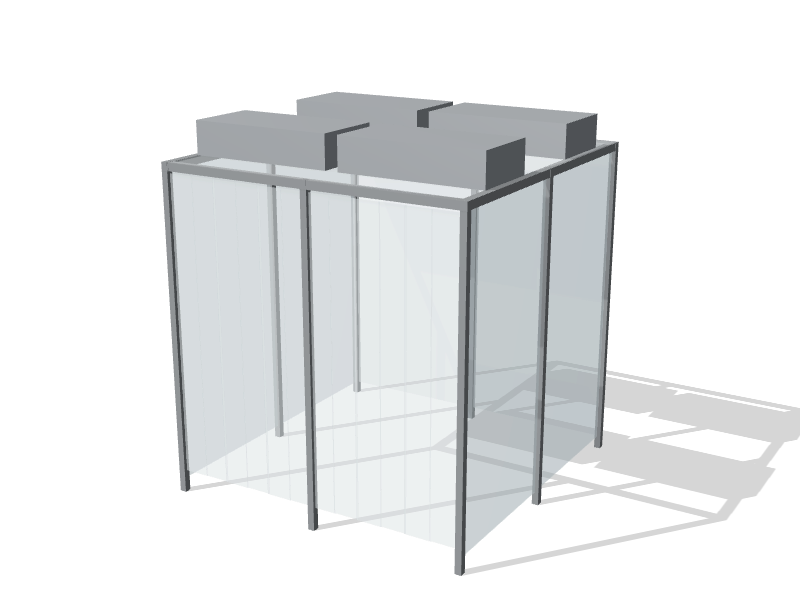
The 3600 mm model
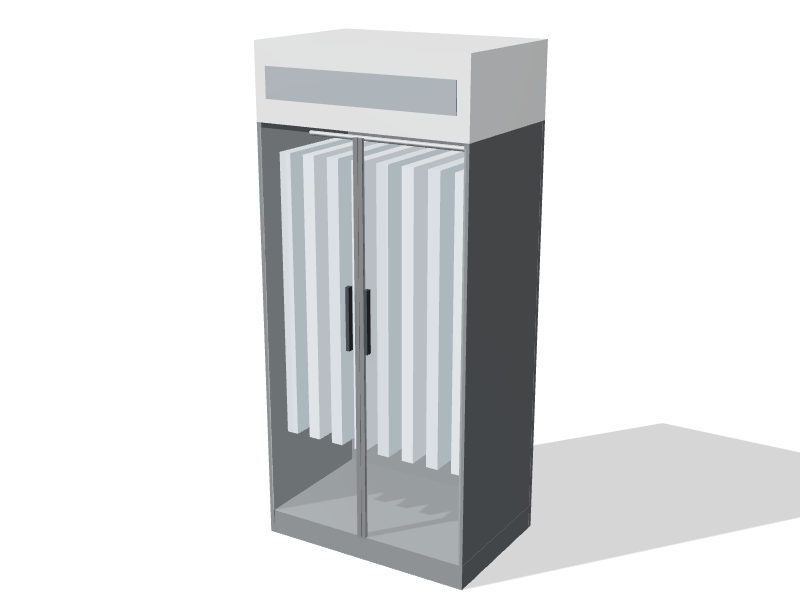
CR-SW-3600 is the 3600 mm (141½ in) wide version of the softwall cleanroom enclosure. It is 2400 mm deep and 2500 mm high, floor-standing. It also comes in 2400 mm.
What it's for
A softwall cleanroom is a room within a room: a frame with hanging curtains and fan filter units in its ceiling, set up inside an existing lab or production space. It creates a clean zone around a process without permanent walls, ductwork or a dedicated air handler. Softwalls suit projects that need clean conditions quickly, processes that may move, and organizations testing whether a full cleanroom is justified.
Construction and features
The enclosure is built on a free-standing steel frame that carries its own ceiling grid, filters and lights. Typical features of a good-quality softwall:
- A powder-coated or stainless steel frame, bolted rather than welded, so it can be taken apart and moved.
- Clear anti-static vinyl curtains hung from the frame, overlapping at the corners, with strip curtains or a split panel at the entry.
- A gap between the curtain hem and the floor. Air supplied by the FFUs escapes there, which keeps the inside slightly positive and sweeps particles outward.
- HEPA-filtered FFUs and sealed LED lights in the ceiling grid, wired back to a single power connection.
- Adjustable feet or locking casters, so the enclosure can be set level in place or rolled to a new position.
Sizes and options
Where it fits
Softwall enclosures are common in electronics and semiconductor work and medical device assembly, and in research labs that need a clean zone around one instrument or process.
Planning notes
- Check the host room. The enclosure draws its air from the space around it, so a dusty, hot or drafty host room makes its job harder. Stable temperature and a sealed, cleanable floor help most.
- Leave clearance above the frame for FFU intake and filter changes. A low ceiling, ductwork or cable tray directly overhead can starve the units.
- Account for heat. Fan motors and lights add heat that the host room's HVAC must remove.
- Talk to fire protection early. A solid roof over the enclosure can block sprinkler coverage, and the fire protection engineer and local authority decide what is acceptable.
- Plan a simple entry routine. A softwall has no true airlock, so people usually gown just outside the curtain, at a tacky mat or a gowning bench.
- Expect a softwall to hold a class, not a cascade. It cannot maintain large pressure differences or separate several grades; when the process needs that, compare it with a hardwall room using the softwall vs hardwall guide.
- Replace curtains once they are scratched or clouded. Worn vinyl is hard to clean and starts to shed.
All sizes
| Code | Width | Depth × height | From |
|---|---|---|---|
| CR-SW-2400 | 2,400 mm (94½ in) | 2400 × 2500 mm | $14,800 |
| CR-SW-3600 | 3,600 mm (141½ in) | 2400 × 2500 mm | $19,600 |