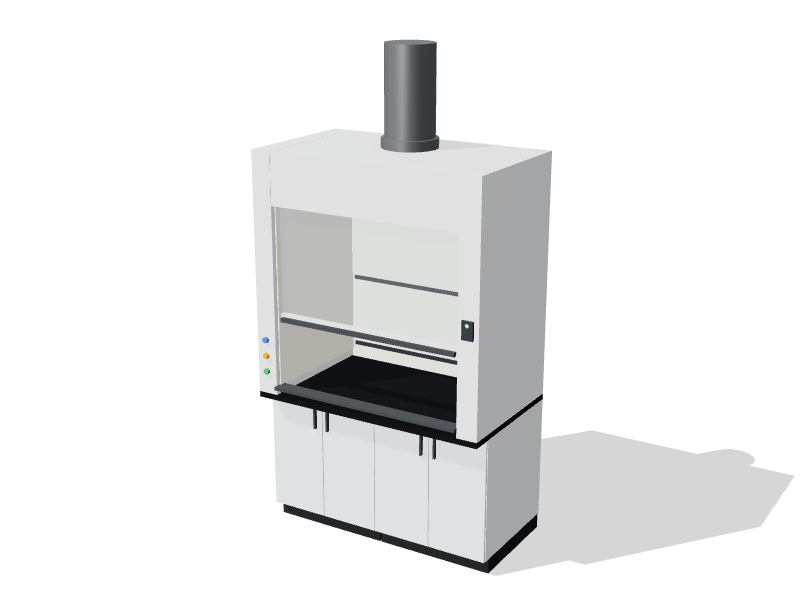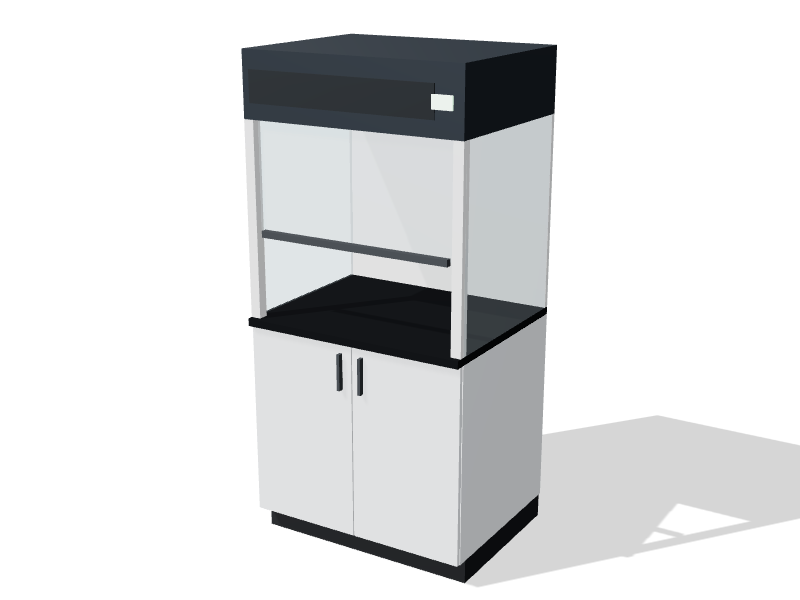
The 900 mm model
FH-DL-0900 is the 900 mm (35½ in) wide version of the ductless filtered fume hood. It is 700 mm deep and 1900 mm high, floor-standing. It also comes in 1200 mm.
What it's for
A ductless hood draws air in through the front opening, passes it through filters, and returns the cleaned air to the room. It is meant for small, predictable chemical tasks where running a duct to the roof is impractical: a demonstration in a classroom with no exhaust, a small staining step, or occasional solvent work in a lab with no ducted hood nearby.
The key phrase is well characterized. You need to know which chemicals will be used, in what quantities, and that the filter can capture every one of them.
Construction and features
The enclosure uses activated carbon filters, a form of ductless filtration. Carbon adsorbs many organic solvents well. Acids, ammonia, formaldehyde and other small or reactive molecules typically need specially treated carbon, and some chemicals are poorly captured by any filter. The unit comes on a mobile base so it can move between rooms, though it should stay put while in use.
When selecting, ask the supplier to review your full chemical list and confirm the filter type and expected filter life in writing. Also look for:
- A filter saturation or breakthrough sensor.
- An airflow alarm.
- A documented filter change procedure and a reliable supply of replacement filters.
ANSI/AIHA Z9.5 includes guidance on when recirculating hoods are acceptable; your EHS group will normally apply it and approve each use.
Sizes and options
The hood comes in 900 and 1200 mm widths (35½ and 47¼ in), 700 mm (27½ in) deep and 1900 mm (74¾ in) high including the mobile base. There are no finish or liner options. The filter specification is what matters, and it must match your chemistry.
Where it fits
Ductless hoods are a practical fit in a high school science lab for teacher demonstrations, a histology and pathology lab for small, defined staining tasks with filters chosen for those chemicals, and a molecular biology and PCR lab for occasional small-volume extractions.
Planning notes
- Do not use a ductless hood for unknown or changing chemistry, large volumes, highly toxic materials, perchloric acid or radioisotopes. Biological work needs a biosafety cabinet. See ductless filtered fume hoods for more on the limits.
- The filter is the safety system. Keep a log of what is used in the hood and replace filters on schedule or at the first sign of breakthrough.
- Filtered air returns to the room, so a large spill or a saturated filter puts fumes straight back into the lab. Keep quantities small.
- Keep the unit away from doors and walkways, just as with a ducted hood.
- Lock the casters during use and never move it with open chemicals inside.
All sizes
| Code | Width | Depth × height | From |
|---|---|---|---|
| FH-DL-0900 | 900 mm (35½ in) | 700 × 1900 mm | $7,400 |
| FH-DL-1200 | 1,200 mm (47 in) | 700 × 1900 mm | $8,600 |