What it's for
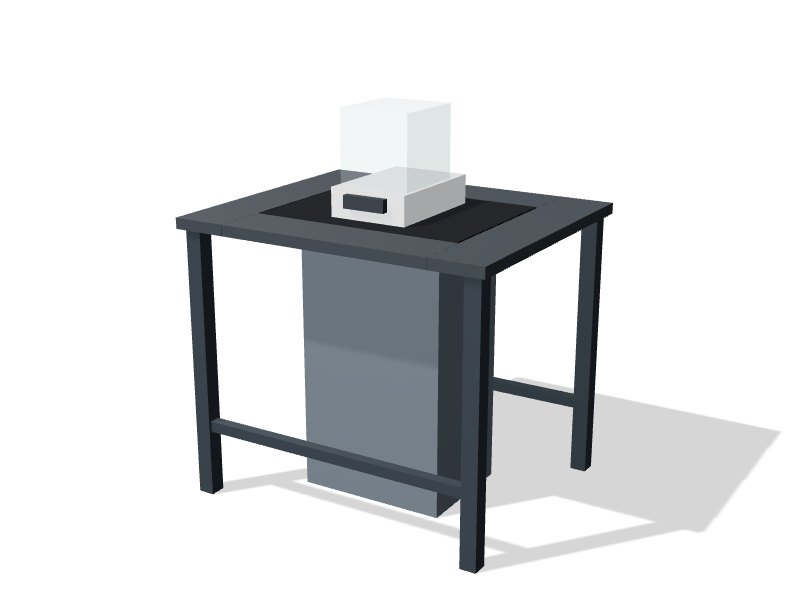
Analytical balances and microbalances read to fractions of a milligram. At that resolution, footsteps, door slams, nearby pumps and someone leaning on the bench all show up as drifting or unstable readings. A balance table gives the balance its own mass and its own support, so vibration from the surrounding bench and the people at it does not reach the weighing pan.
Construction and features
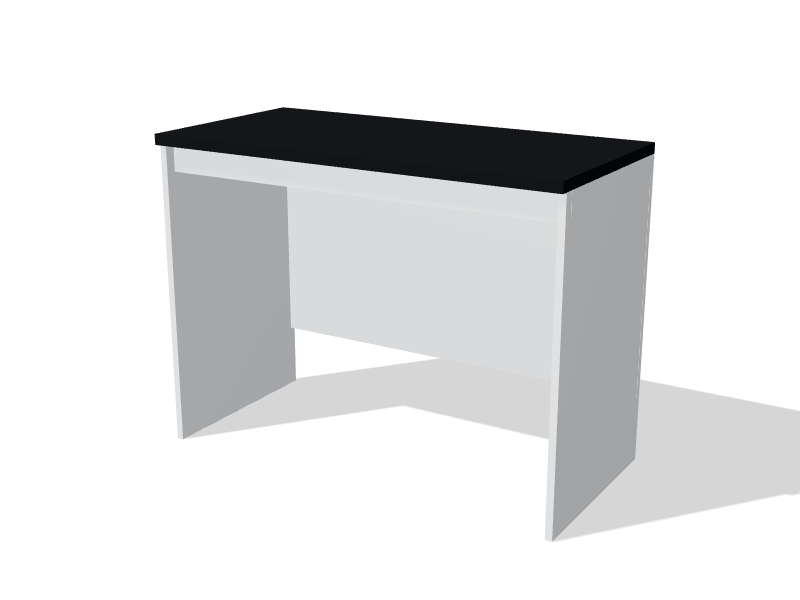
The weighing surface is a granite slab. Its high mass and stiffness damp vibration rather than amplify it, and the stone stays flat and stable over time. The slab sits on its own steel frame, isolated from the surrounding worktop: the table fits into a gap in the bench run without touching the adjacent tops, so someone writing or leaning on the neighbouring bench does not disturb the balance.
When comparing balance tables, look for:
- Isolation pads or feet between frame and slab.
- A welded frame that will not develop play over time.
- Leveling feet, so the slab can be set dead level.
- A clear answer on how the gap to the adjacent worktop is treated.
Sizes and options
The table comes in 900 and 1200 mm widths (35½ and 47¼ in), both 750 mm (29½ in) deep and 780 mm (30¾ in) high. The lower height suits seated weighing, which is how most precise work is done. The 1200 mm size leaves room for a second balance, or for a notebook and sample tray beside the balance. There are no finish or worktop options.
Where it fits
Balance tables belong wherever precise weighing happens: a pharmaceutical QC lab, an analytical chemistry lab, and a mining and geochemistry assay lab, where fire assay beads are weighed on microbalances.
Planning notes
- Location matters as much as the table. Keep it away from doors, main aisles, fume hoods, supply diffusers, and equipment such as centrifuges and vacuum pumps; see balance tables and vibration.
- On upper floors, a spot near a column or structural wall moves less than one in the middle of a floor span.
- Do not place a balance table beside a sink or under a shelf that could drip.
- Leave the gap between the balance table and the adjacent cabinets open, or close it with a soft strip. A rigid filler that touches both defeats the isolation.
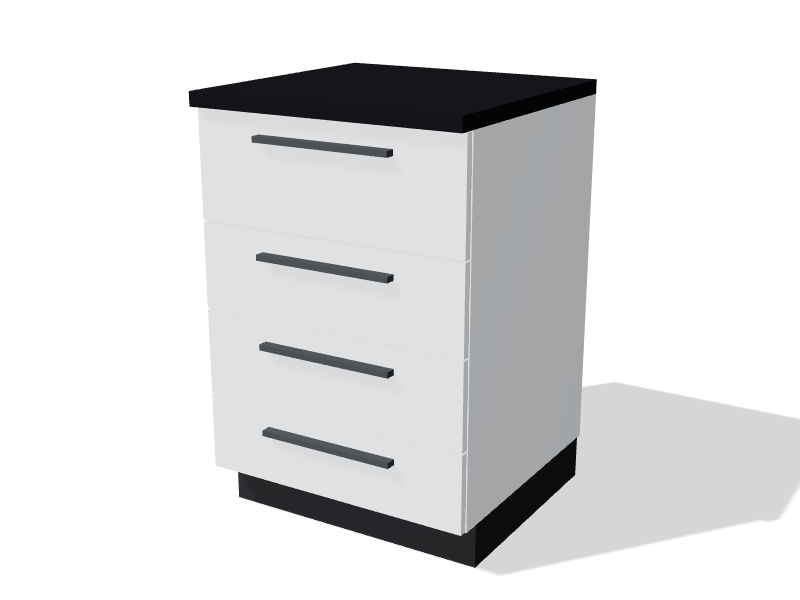
- Put a four-drawer base cabinet beside it for weighing boats, spatulas and sample vials.
- If a balance must sit near air currents, use a draft shield or balance enclosure and avoid opening doors during critical weighing.
All sizes
| Code | Width | Depth × height | From |
|---|---|---|---|
| BT-GR-0900 | 900 mm (35½ in) | 750 × 780 mm | $2,650 |
| BT-GR-1200 | 1,200 mm (47 in) | 750 × 780 mm | $3,100 |