What it's for
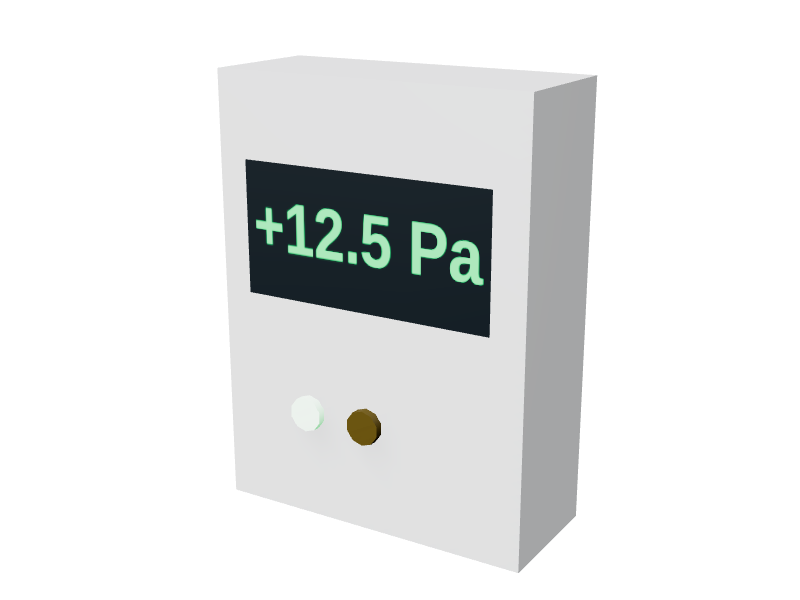
A cleanroom relies on air moving from cleaner rooms toward less clean ones. That direction comes from small pressure differentials between adjacent rooms, and nobody can feel them. A room pressure monitor makes the cascade visible. A display beside the door shows the current differential, and an alarm sounds if it drifts out of range. Staff check it before entering, and supervisors get early warning when a door is propped open, a filter is loading or an air handler trips.
Construction and features
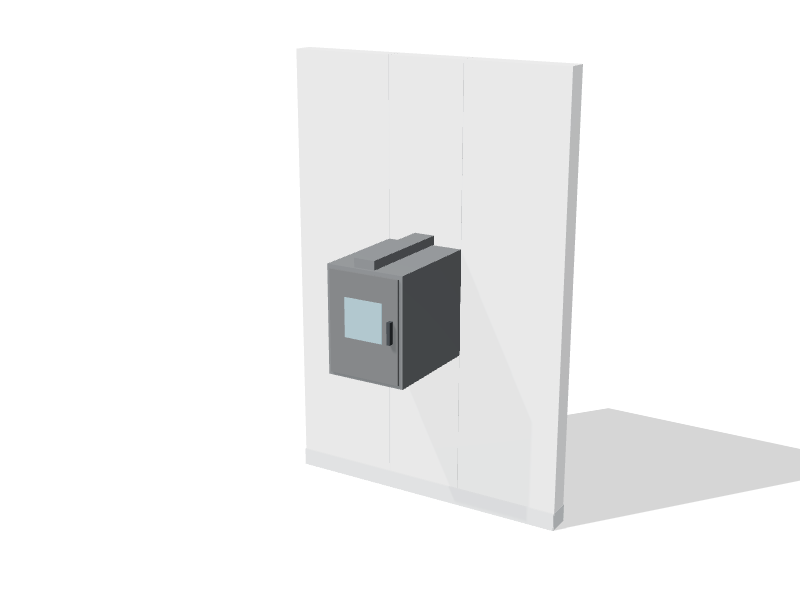
The monitor is a compact panel mounted flush in the wall beside the door it serves. A sensor inside measures the difference between the room and a reference space through a small port or tube. Features of a good-quality monitor:
- A clear numeric display in pascals, switchable to inches of water column, with a simple normal or alarm status indication.
- A flush, sealed face that wipes clean, with a gasketed bezel and no gaps around the edge.
- Adjustable high and low set points, each with a time delay so normal door openings do not trigger nuisance alarms.
- A local audible and visual alarm, with a mute that resets itself after a set time.
- Relay or analog outputs, or a network connection, to pass status and alarms to a building management or environmental monitoring system.
Sizes and options
Where it fits
Pressure monitors are expected wherever a cascade must be shown to hold. Pharmacy compounding cleanrooms need them for both positive-pressure sterile rooms and negative-pressure hazardous drug rooms. Medical device cleanrooms use them at each step from gowning to production, and they are standard across cleanroom suites.
Planning notes
- Fit one monitor per pressure relationship. Typically each door between rooms of different classification gets one, reading the room against the space it opens into. Mount it outside the entry so staff check it before opening the door.
- Choose the reference space deliberately. Reference the adjacent room or corridor, not the ceiling void or outdoors, unless the design calls for it.
- Locate sensing ports away from supply diffusers, return grilles and door swings, where air velocity distorts the reading.
- Set realistic alarm values. EU GMP Annex 1 gives 10–15 Pa (0.04–0.06 in w.c.) as a guidance value between adjacent grades, and pharmacy standards set their own minimums. Agree set points and delays with the HVAC engineer and quality team.
- Calibrate on a schedule, commonly once a year, and keep the record. An out-of-calibration monitor can show a healthy number while the room has lost its cascade.
- Seal the monitor and its sensing tube where they pass through the panel. A leaky penetration adds to the very leakage the monitor is meant to watch.
- Read the pressure cascade guide before fixing target values for a new suite.
All sizes
| Code | Width | Depth × height | From |
|---|---|---|---|
| CR-DP-0150 | 150 mm (6 in) | 60 × 200 mm | $640 |