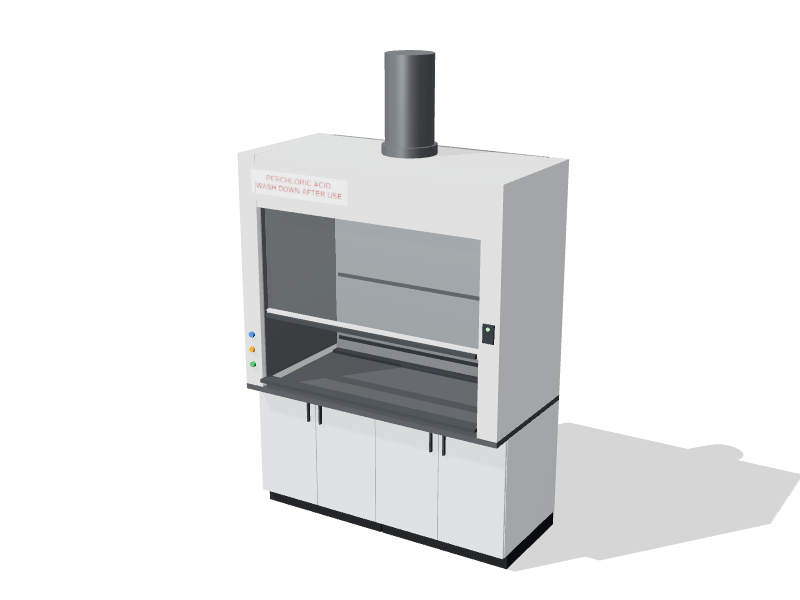
The 1800 mm model
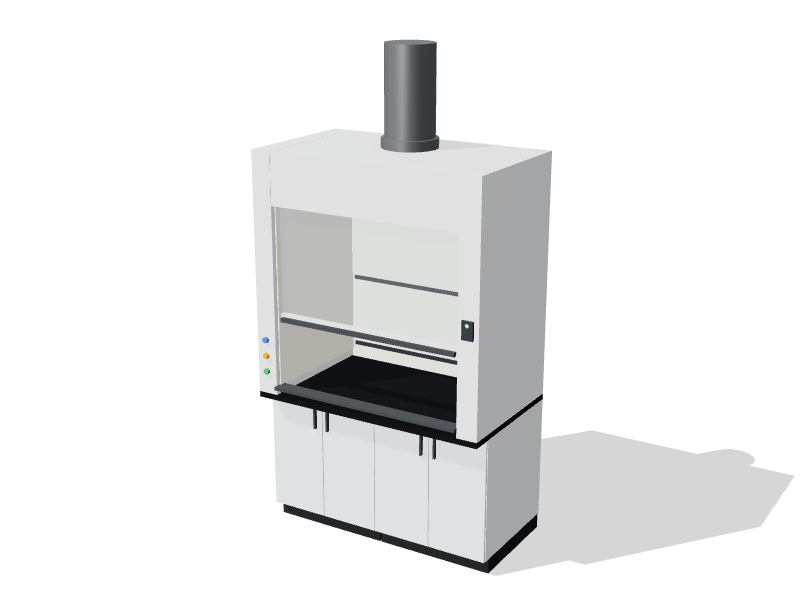
FH-PC-1800 is the 1800 mm (71 in) wide version of the perchloric acid hood with washdown. It is 860 mm deep and 2400 mm high, floor-standing. It also comes in 1500 mm.
Price by option at 1800 mm
| Option | Choice | List price |
|---|---|---|
| Finish | Painted steel, Arctic white | $21,900 |
| Finish | Painted steel, Slate blue | $21,900 |
| Finish | Solid phenolic, Pearl grey | $24,530 |
| Finish | Maple veneer | $23,650 |
| Finish | Stainless steel 304 | $31,760 |
What it's for
When perchloric acid is heated, its vapour can condense inside a hood and its ductwork and form metallic perchlorates. These deposits are sensitive to shock and heat and can explode. A perchloric acid hood is built so the deposits are washed away before they build up. It is needed for digestions and any other work that heats perchloric acid above room temperature, which is common in geochemistry, metals analysis and some environmental methods.
Construction and features
- A welded stainless 316 liner with continuous seams, so there are no joints or porous materials where perchlorates can collect.
- An integral washdown spray system that rinses the hood interior and the area behind the baffle. A matching washdown in the duct and fan completes the system.
- A coved work surface with a drain trough, so washdown water and spills run to a drain instead of pooling in corners.
When comparing perchloric hoods, also look for removable or hinged baffles for inspection, a washdown control valve mounted outside the hood, and no organic sealants or gaskets in contact with the airstream. Ask how the spray nozzles are arranged and what water flow and pressure they need.
Sizes and options
Where it fits
Typical users are a mining and geochemistry assay lab and an environmental testing lab running metals digestions. Some materials science labs need one for electropolishing or dissolving alloys with perchloric acid solutions.
Planning notes
- The hood needs a dedicated exhaust: its own duct and fan, not shared with other hoods, routed as straight and vertical as practical, in corrosion-resistant material with washdown along its length. The engineer of record designs this system; see perchloric acid hoods and washdown systems.
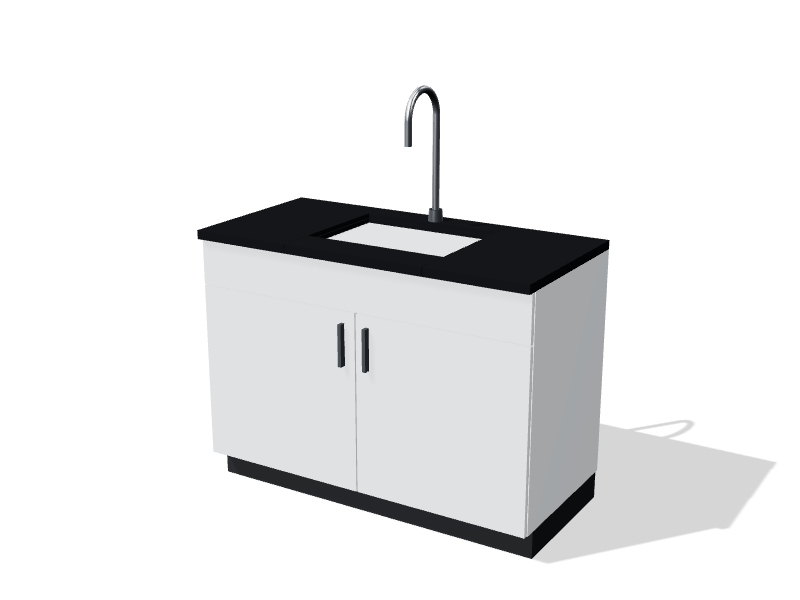
- Plan the water supply and drain at the same time. Washdown water carries acid, so the drain must be acid-resistant and meet local sewer rules.
- Use the hood only for perchloric acid work. Keep solvents, organics and combustible materials out of it, and label it clearly.
- Run the washdown after each use and inspect the duct and fan on a fixed schedule.
- Commissioning should check washdown spray coverage as well as airflow.
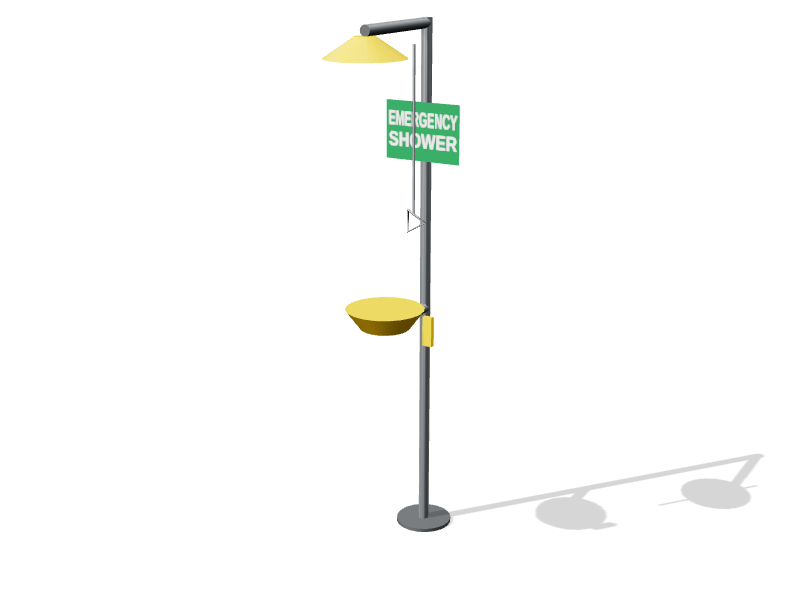
- Keep an emergency shower and eyewash close by.
All sizes
| Code | Width | Depth × height | From |
|---|---|---|---|
| FH-PC-1500 | 1,500 mm (59 in) | 860 × 2400 mm | $19,800 |
| FH-PC-1800 | 1,800 mm (71 in) | 860 × 2400 mm | $21,900 |