Who uses it and what happens there
Environmental testing labs analyze water, wastewater, soil, sediment, air and waste samples for consultants, municipalities, industry and regulators. Inorganic work covers metals by ICP-OES or ICP-MS, anions, nutrients and general chemistry. Organic work covers volatile and semi-volatile compounds by GC-MS, petroleum hydrocarbons and pesticides, most of them after solvent extraction. Many labs also run water microbiology. Samples arrive with preservatives and holding times, so receiving, logging and cold storage are part of the lab rather than an afterthought. Turnaround times are tight and sample counts high, so the layout has to keep samples moving from receiving to report without backtracking.
Hazards and containment
Solvent extraction uses dichloromethane, hexane and acetone in volume, so extraction hoods and flammable storage dominate the organics side. Metals digestion uses nitric and hydrochloric acids on hot blocks, and some methods use hydrofluoric acid. The samples themselves can be hazardous: contaminated soil, sewage and industrial waste of unknown composition. Sewage and sludge can carry pathogens, so open them in a hood or biosafety cabinet as your risk assessment directs.
The two sides of the lab also threaten each other's data. Extraction solvent fumes contaminate volatile organics analysis, and dust and corroding metal fittings contaminate trace metals work. Separation here is about data quality as much as safety.
Key equipment and casework
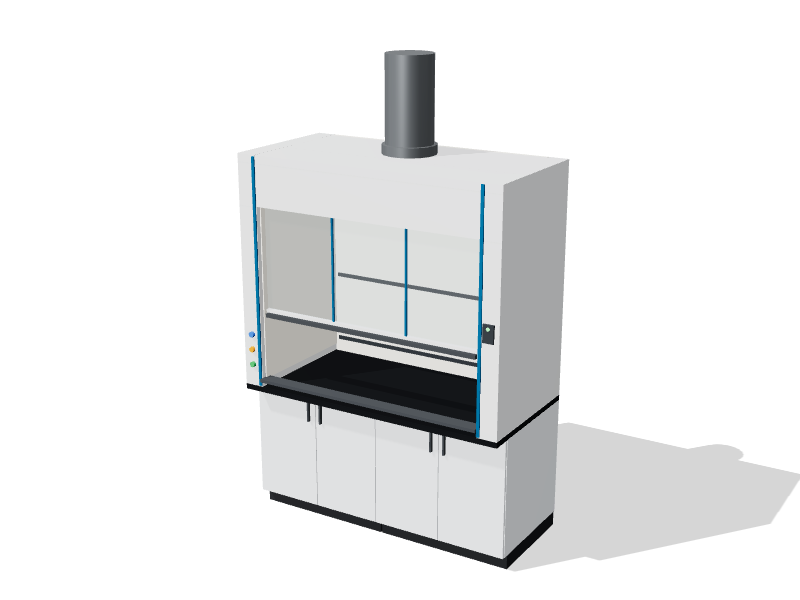
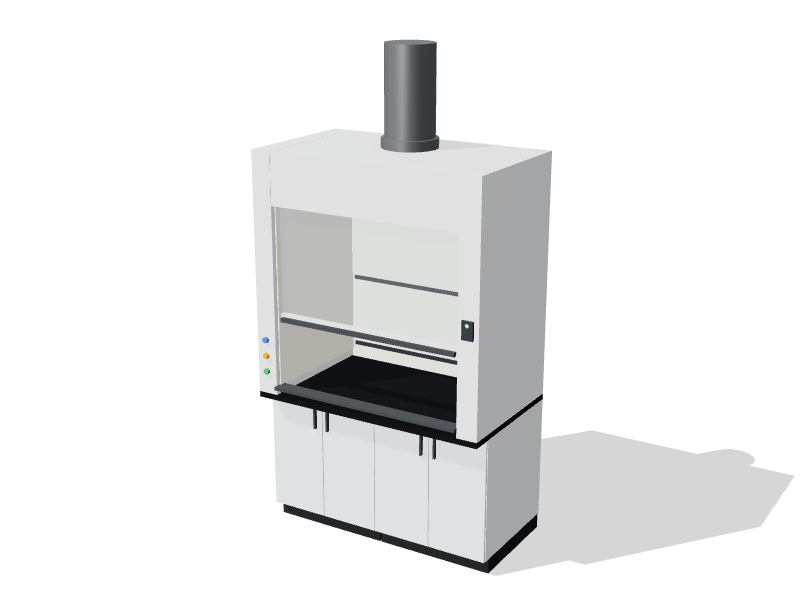
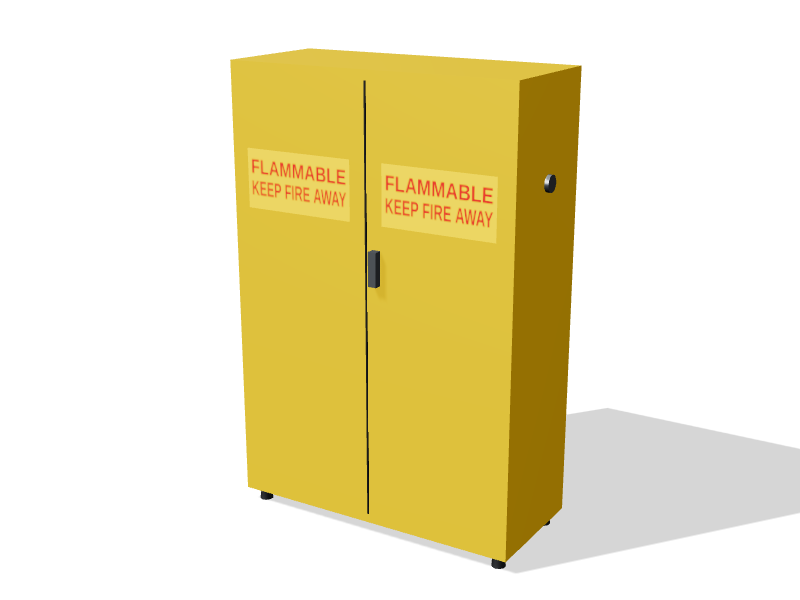
- Extraction fume hoods with solvent-resistant liners, and flammable storage nearby.
- Digestion hoods with a PVC liner, which resists hot acid fumes and avoids metal contamination of trace samples.
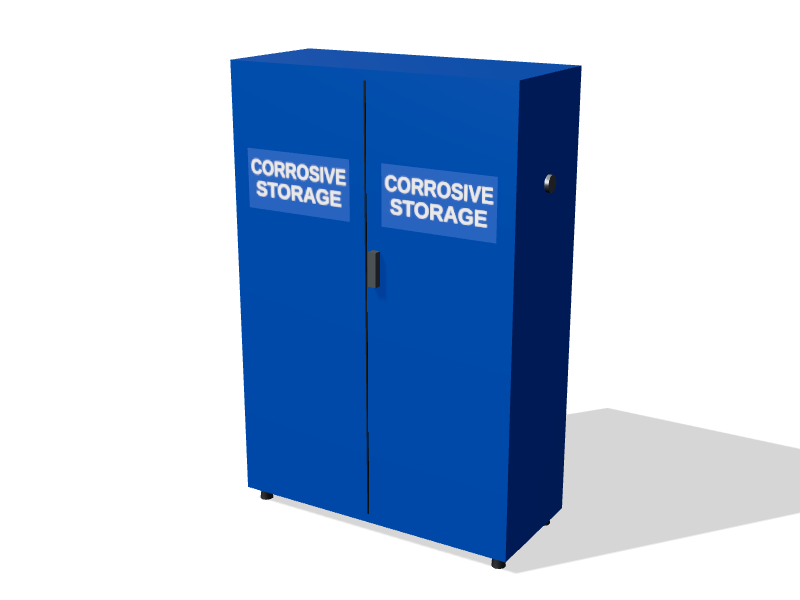
- Acid storage in a ventilated corrosive cabinet, on a different wall from the solvents.
- Instrument benches with point exhaust for ICP and AAS.
- Refrigerated sample storage at receiving, and balance tables away from the hoods.
- Island benches for sample handling, filtration and titrations.
Layout principles
Put sample receiving and cold storage by the entrance, so coolers and bottles do not travel through the lab. Split the room, or better the suite, into an organics side and an inorganics side, each with its own hoods, sinks and storage. Analyze volatile organics in a separate room that does not share air with extraction; it is commonly held slightly positive to the areas around it.
Keep metals preparation away from extraction and from metal fittings that can corrode. Allow 1.5 m (5 ft) of clear floor in front of hoods. Store flammable and corrosive liquids apart, following chemical segregation rules, and plan waste solvent collection close to the extraction hoods. Give the data and reporting station a spot away from both wet sides.
Finishes and worktops
Epoxy resin worktops suit both sides of the lab, resisting solvents, acids and heat. Painted steel casework works well when cabinets near the digestion hoods stay closed; in very acidic rooms, solid phenolic casework avoids corrosion. Choose the hood liner by chemistry: fiberglass or stainless steel for organics, PVC for acid digestion, and confirm suitability for any hydrofluoric acid use; see fume hood liner materials. Trace metals benches benefit from non-metallic hardware and fittings.
Utilities and services
The exhaust system is the largest service. Acid digestion exhaust may need corrosion-resistant ductwork and, where environmental permits require it, a scrubber. ICP instruments use argon in large amounts, often from a bulk liquid tank, while GC needs helium, hydrogen or nitrogen. Trace metals work needs high-purity water at the point of use. Sample refrigerators need emergency power or alarms so a failure does not void a batch of samples. Acid and solvent wastes are collected for disposal, or neutralized where local sewer bylaws allow.
Compliance points
- Provincial regulators commonly require accredited labs for compliance samples such as drinking water; accreditation to ISO/IEC 17025 comes through CALA or the Standards Council of Canada.
- NFPA 45 and the National Fire Code of Canada for solvent quantities and storage.
- CSA Z316.5 and ANSI/ASHRAE 110 for hood installation and testing.
- ANSI Z358.1 for showers and eyewashes, with hydrofluoric acid first aid supplies wherever HF is in use.
Your EHS office and accreditation assessor set the specific separation and storage requirements.
About the starting layout
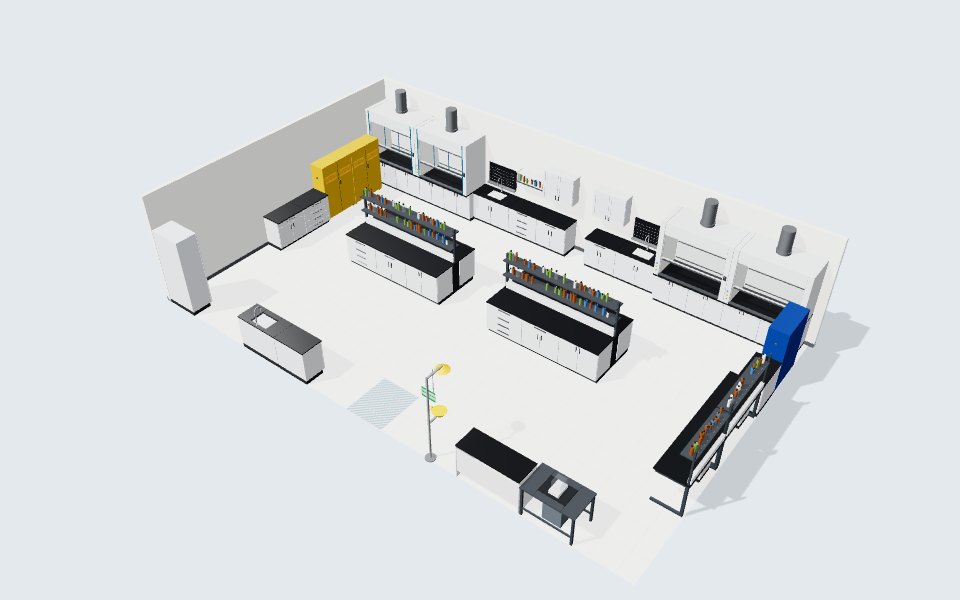
The starting layout is a 13 × 8 m (43 × 26 ft) room with an organics side on the left, with two high-performance extraction hoods and two flammable cabinets, and an inorganics side on the right, with two PVC-lined digestion hoods, a corrosive cabinet and instrument benches. Sample receiving with space for refrigerators sits by the door, an island serves each side, and a balance table and data station line the front wall. Adapt it in the lab planner or book a consultation.
Starting layout: bill of materials
30 items in a 13 × 8 m room with a 3 m ceiling. Budgetary list prices; adjust anything in the planner.
| Code | Product | Qty | Unit |
|---|---|---|---|
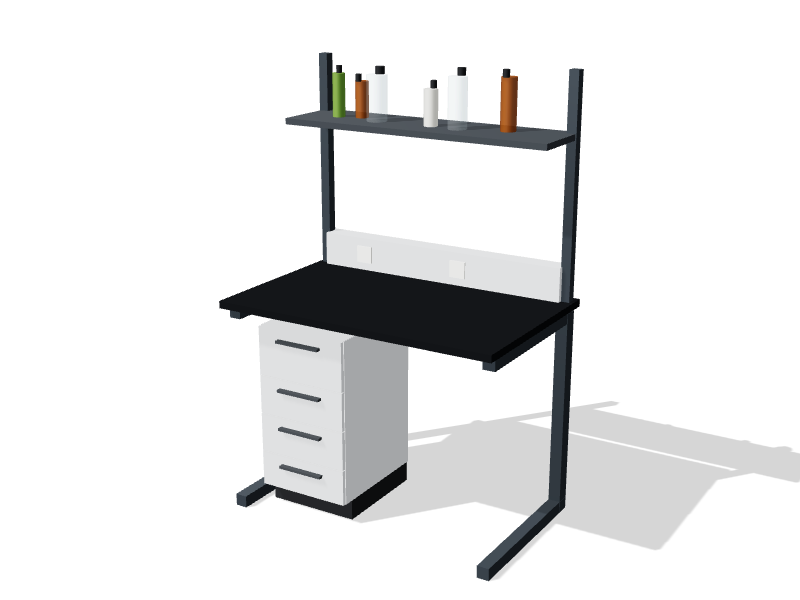
| AB-CF-1500 | Adaptable C-frame bench Painted steel, Arctic white · Epoxy resin, black | 1 | $4,730 |
| AB-CF-1800 | Adaptable C-frame bench Painted steel, Arctic white · Epoxy resin, black | 1 | $5,360 |
| BC-4D-0900 | Base cabinet, 4 drawers Painted steel, Arctic white · Epoxy resin, black | 3 | $2,270 |
| BC-DD-0900 | Base cabinet, drawer over doors Painted steel, Arctic white · Epoxy resin, black | 4 | $1,900 |
| BC-KS-1500 | Knee space with modesty panel Painted steel, Arctic white · Epoxy resin, black | 1 | $1,320 |
| BC-SK-1200 | Sink base with epoxy sink & faucet Painted steel, Arctic white · Epoxy resin, black | 3 | $3,180 |
| BT-GR-1200 | Anti-vibration balance table | 1 | $3,100 |
| ES-CB-0600 | Emergency shower & eyewash | 1 | $1,850 |
| FH-BP-1800 | Benchtop fume hood, bypass Painted steel, Arctic white · PVC liner (acid digestion) | 2 | $14,980 |
| FH-HP-1800 | High-performance low-flow hood Painted steel, Arctic white · Fiberglass liner | 2 | $14,900 |
| IB-RS-3000 | Island bench with reagent shelving Painted steel, Arctic white · Epoxy resin, black | 2 | $14,800 |
| PB-EP-0900 | Epoxy pegboard drying rack | 2 | $890 |
| RS-OP-0900 | Open reagent shelf Painted steel, Arctic white | 1 | $290 |
| SC-CR30-1090 | Corrosives cabinet, 30 gal | 1 | $2,290 |
| SC-FL45-1090 | Flammable liquids cabinet, 45 gal | 2 | $2,480 |
| TC-ST-0900 | Tall storage cabinet Painted steel, Arctic white | 1 | $2,050 |
| WC-GL-0900 | Wall cabinet, glass doors Painted steel, Arctic white | 2 | $1,080 |
| Starting layout total | $143,200 |