Labs in materials science make and test metals, ceramics, polymers, composites and thin films. University departments, manufacturers, failure-analysis groups and government labs use them for research, quality control and finding out why parts break. A typical day mixes several kinds of work: cutting, mounting, grinding and polishing samples; etching them to reveal grain structure; heat treating in furnaces; testing hardness and strength; and examining the results under optical and electron microscopes.
Hazards and containment
The hazards are broad rather than extreme:
- Acids and etchants, including mixtures with nitric, hydrochloric and sometimes hydrofluoric acid
- Heat from furnaces, hot plates and mounting presses
- Fine powders and nanomaterials, which can be inhaled and in some cases can ignite
- Compressed and inert gases for furnaces, which can displace oxygen in small rooms
- Moving machinery such as cut-off saws, polishers and universal testing machines
- Solvents for cleaning and degreasing samples
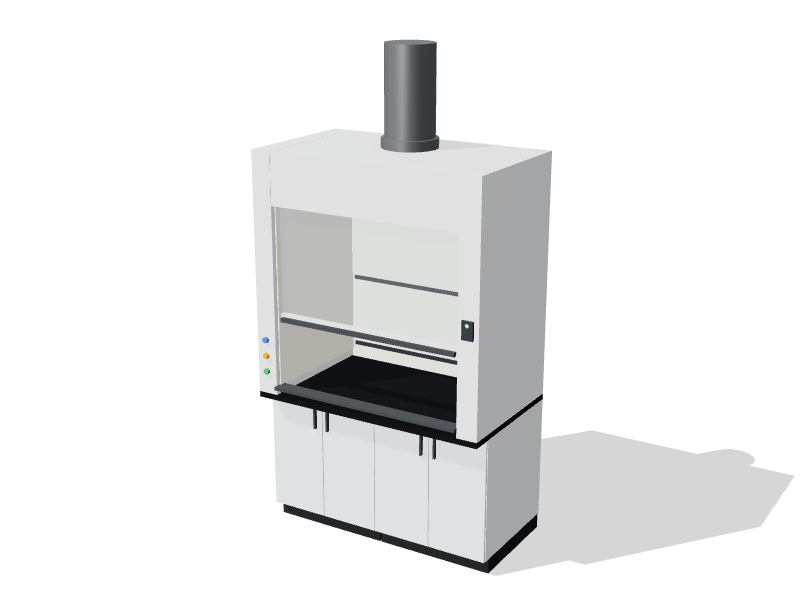
Etching and acid work belong in a fume hood. Powders and nanomaterials need a hood or ventilated enclosure designed for powders. Hydrofluoric acid needs its own written procedures, the right gloves and first-aid supplies (calcium gluconate gel) kept close by. Furnace exhaust and gas cylinders need local exhaust and secure restraints.
Equipment and casework
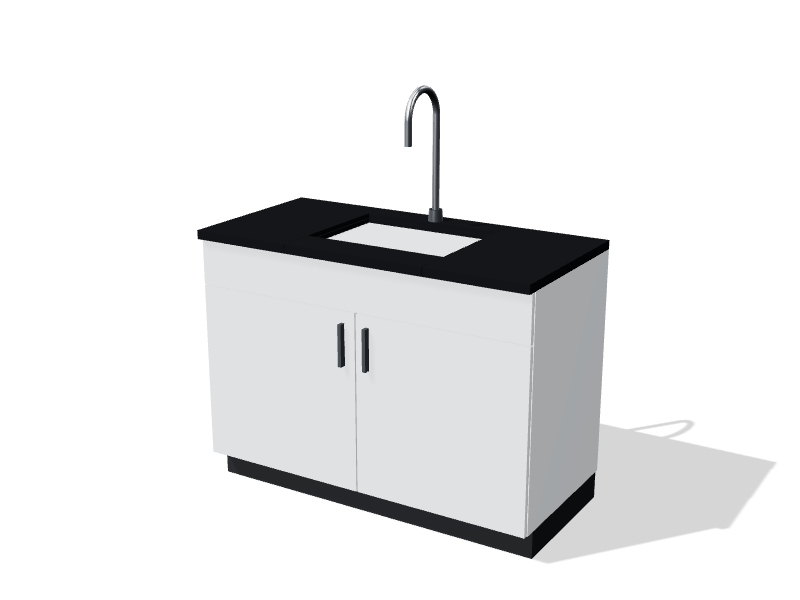
- Metallography prep: cut-off saw, mounting press and grinder-polishers with water supply and drains
- An etching hood with an acid-resistant liner, plus a second hood for solvents and powders
- Box, tube and vacuum furnaces on heat-resistant benches with no wall cabinets overhead
- A universal testing machine and hardness tester on open floor or heavy benches
- Optical microscopes and image analysis at seated stations
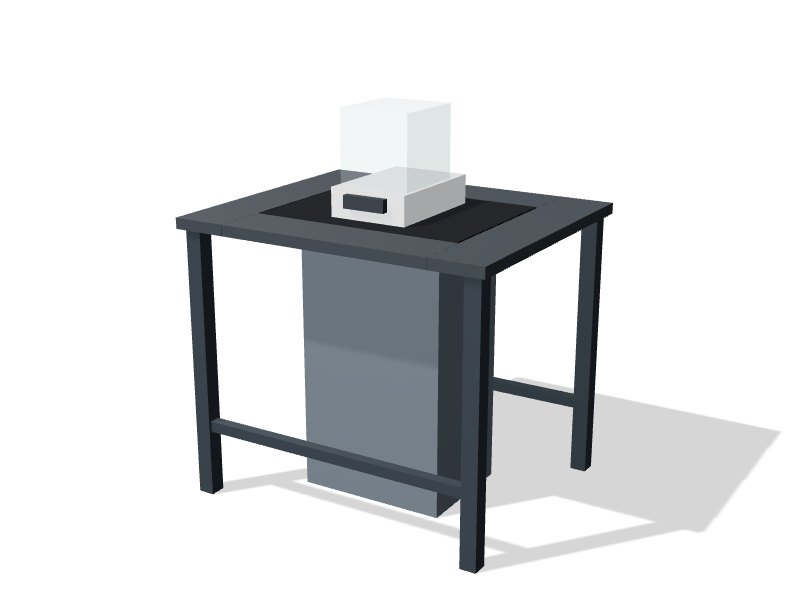
- Analytical balances on vibration-isolated tables
- Corrosives and flammable cabinets on separate walls, plus tall storage for consumables and specimens
Layout principles
Divide the room into wet and dry sides. The wet side holds hoods, sinks and the metallography prep run, where water, slurry and acid are part of the work. The dry side holds furnaces, mechanical testing and microscopy. Keep microscopes and balances away from saws, testing machines and hoods, because vibration and drafts degrade results.
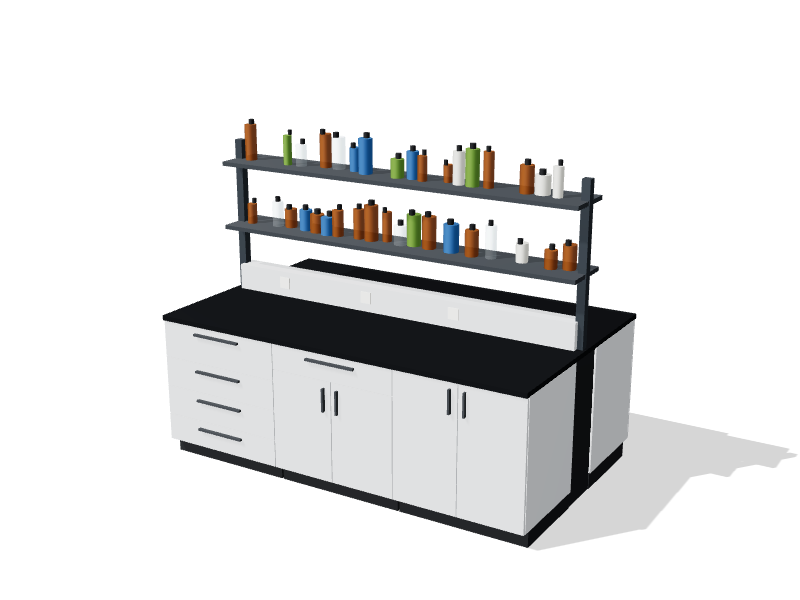
Put hoods on the wall farthest from the door. Place the corrosives cabinet next to the etching hood so acids do not travel across the room. Give furnaces their own stretch of bench with clear space above and around them, away from flammable storage. Leave open floor for the testing machine, with clearance for loading long specimens and a floor that can carry its weight. A central island makes a good layout table for sample tracking and small tools, with clear aisles all around.
The emergency shower and eyewash belong near the exit, on the path from the etching hood.
Finishes and worktops
Furnace and hot plate benches need heat resistance, and the prep run sees acids, slurries and water every day. Epoxy resin worktops handle both and take molded sinks, so they suit most of the room. Use painted steel casework for durability; it carries heavy equipment better than wood. For the etching hood, a PVC liner resists strong acids. For a full comparison, see choosing a lab worktop.
Utilities and services
- Hood exhaust, plus canopy or snorkel exhaust over furnaces
- Inert gases such as argon and nitrogen, and forming gas or hydrogen for some furnaces, with gas detection where needed
- Process cooling water for furnaces and vacuum systems
- Water supply and drains with a solids trap at polishers and saws
- High-amperage and three-phase power for furnaces and testing machines
- Compressed air for tools and fixtures
Compliance points in Canada
Hoods should meet CSA Z316.5 and be tested to ANSI/ASHRAE 110 where performance matters. NFPA 45 and the National Fire Code of Canada apply to chemical use and flammable storage. Provincial occupational health rules govern machine guarding, gas cylinders and exposure to dusts and acid mists, and WHMIS covers labels and safety data sheets. Labs that test to customer or regulatory specifications often hold ISO/IEC 17025 accreditation. Your EHS team sets the final controls for hydrofluoric acid and nanomaterials.
About the starting layout
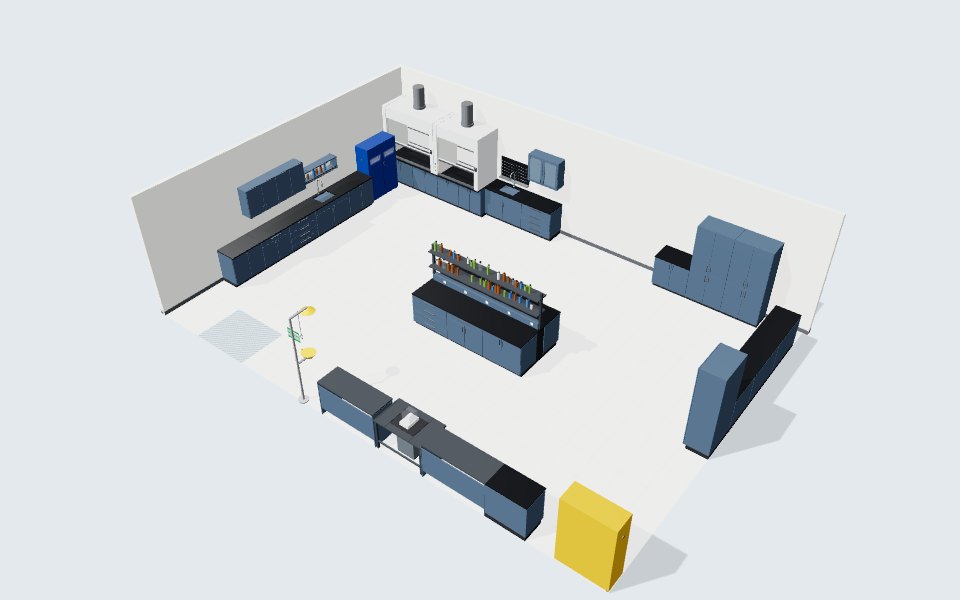
The 3D starting layout is a 12 by 8.5 m (39 by 28 ft) room with a PVC-lined etching hood and a second hood on the back wall, a metallography prep run with a sink, heat-resistant furnace benches, open floor for a universal testing machine, seated microscope stations with a balance table, and a central island. Adapt it in the lab planner or book a consultation.
Starting layout: bill of materials
29 items in a 12 × 8.5 m room with a 3.2 m ceiling. Budgetary list prices; adjust anything in the planner.
| Code | Product | Qty | Unit |
|---|---|---|---|
| BC-4D-0900 | Base cabinet, 4 drawers Painted steel, Slate blue · Epoxy resin, black | 4 | $2,270 |
| BC-DD-0900 | Base cabinet, drawer over doors Painted steel, Slate blue · Epoxy resin, black | 1 | $1,900 |
| BC-HD-0900 | Base cabinet, hinged doors Painted steel, Slate blue · Epoxy resin, black | 3 | $1,760 |
| BC-HD-1200 | Base cabinet, hinged doors Painted steel, Slate blue · Epoxy resin, black | 2 | $2,140 |
| BC-KS-1500 | Knee space with modesty panel Painted steel, Slate blue · Phenolic resin, charcoal | 2 | $1,160 |
| BC-SK-1200 | Sink base with epoxy sink & faucet Painted steel, Slate blue · Epoxy resin, black | 2 | $3,180 |
| BT-GR-1200 | Anti-vibration balance table | 1 | $3,100 |
| ES-CB-0600 | Emergency shower & eyewash | 1 | $1,850 |
| FH-BP-1500 | Benchtop fume hood, bypass Painted steel, Slate blue · Fiberglass liner | 1 | $10,900 |
| FH-BP-1800 | Benchtop fume hood, bypass Painted steel, Slate blue · PVC liner (acid digestion) | 1 | $14,980 |
| IB-RS-3000 | Island bench with reagent shelving Painted steel, Slate blue · Epoxy resin, black | 1 | $14,800 |
| PB-EP-0900 | Epoxy pegboard drying rack | 1 | $890 |
| RS-OP-1200 | Open reagent shelf Painted steel, Slate blue | 1 | $340 |
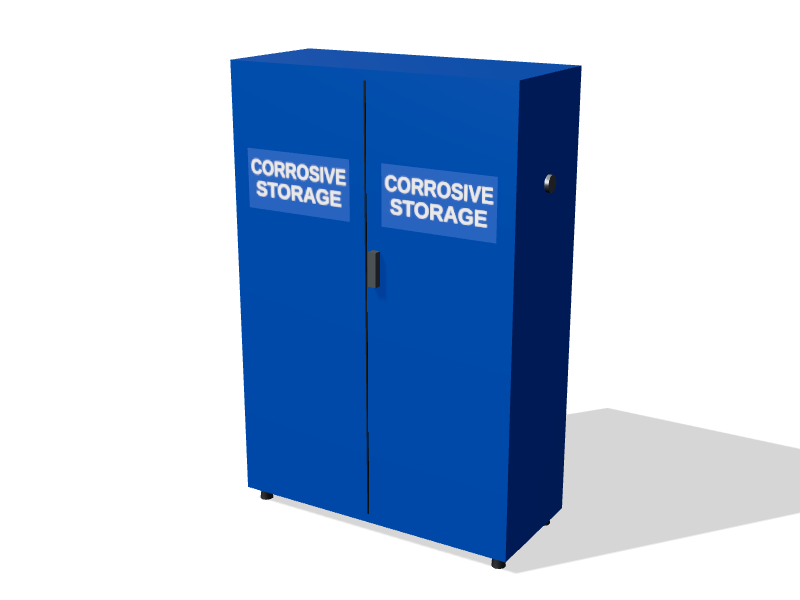
| SC-CR30-1090 | Corrosives cabinet, 30 gal | 1 | $2,290 |
| SC-FL45-1090 | Flammable liquids cabinet, 45 gal | 1 | $2,480 |
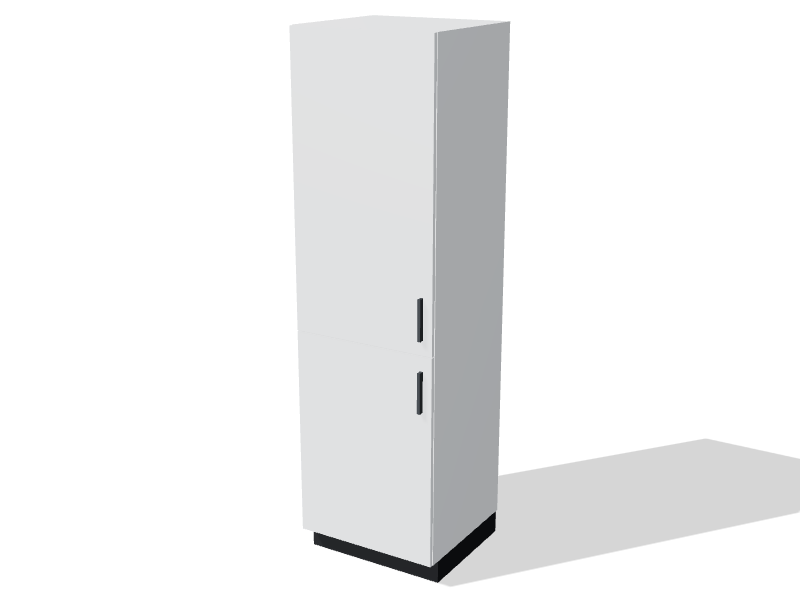
| TC-ST-0900 | Tall storage cabinet Painted steel, Slate blue | 3 | $2,050 |
| WC-GL-0900 | Wall cabinet, glass doors Painted steel, Slate blue | 1 | $1,080 |
| WC-SD-0900 | Wall cabinet, solid doors Painted steel, Slate blue | 2 | $950 |
| Starting layout total | $89,980 |