Forensic labs examine physical evidence for police services, coroners and the courts. The work spans biology and DNA, drug chemistry, toxicology, trace evidence such as fibres, glass and paint, firearms and toolmarks, and latent fingerprints. Large public labs split these into separate sections and rooms; smaller labs combine several disciplines in one suite. Either way, every item is tracked from the moment it arrives until it leaves, and every result has to stand up in court.
Hazards and containment
The lab protects two things: analysts and evidence. Analysts face biological hazards from blood and body fluids, chemical hazards from solvents and reagents, potent drugs such as fentanyl and its analogues in seized samples, and sharp items. Evidence faces contamination, especially DNA, which transfers easily from a person, a bench or another exhibit.
That gives forensic labs their defining rule: separate the zones. Keep bulk and unknown evidence away from clean DNA work, keep high-concentration samples away from trace-level samples, and keep amplified DNA (post-PCR) completely apart from extraction and setup (pre-PCR), ideally in separate rooms with their own equipment and lab coats. Powder handling of suspected opioids needs a hood or ventilated enclosure, and biological evidence that may release aerosols goes in a Class II biosafety cabinet.
Equipment and casework
- Evidence intake counter, photography station and secure lockers
- Large examination tables for clothing and bulky items, covered with fresh paper for each exhibit
- Stereo and comparison microscopes at seated stations
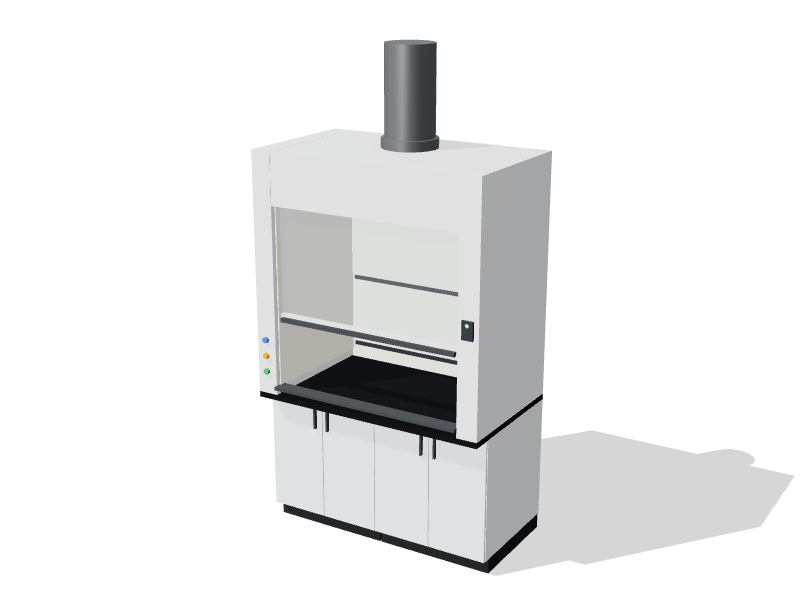
- Fume hoods, a balance and a sink for drug chemistry, with instruments such as GC-MS nearby
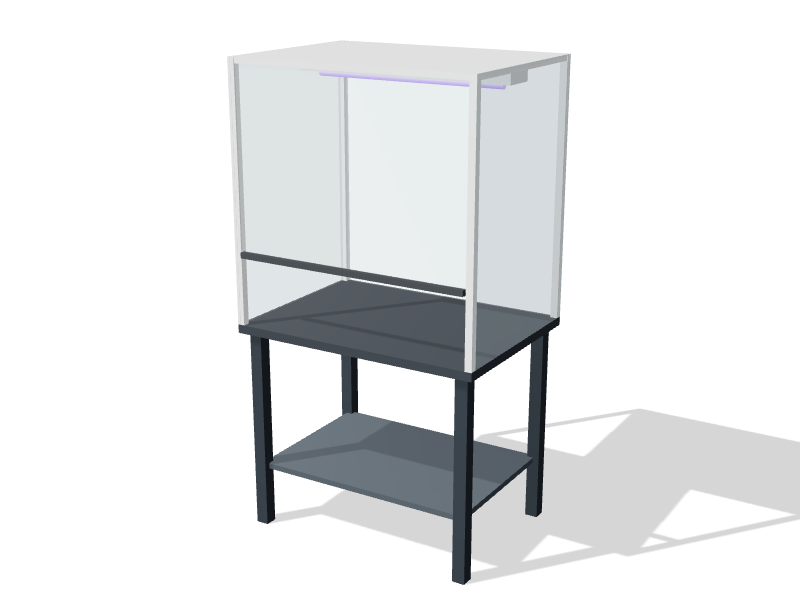
- A biosafety cabinet, PCR workstations and seated benches for DNA extraction and setup
- Flammable and corrosive cabinets kept apart, following chemical segregation rules
Layout principles
Plan the flow in one direction: evidence enters at an intake point, moves to examination, then to the specialist zone that needs it, and returns to secure storage. Staff should never have to carry evidence through a clean area to reach a dirty one.
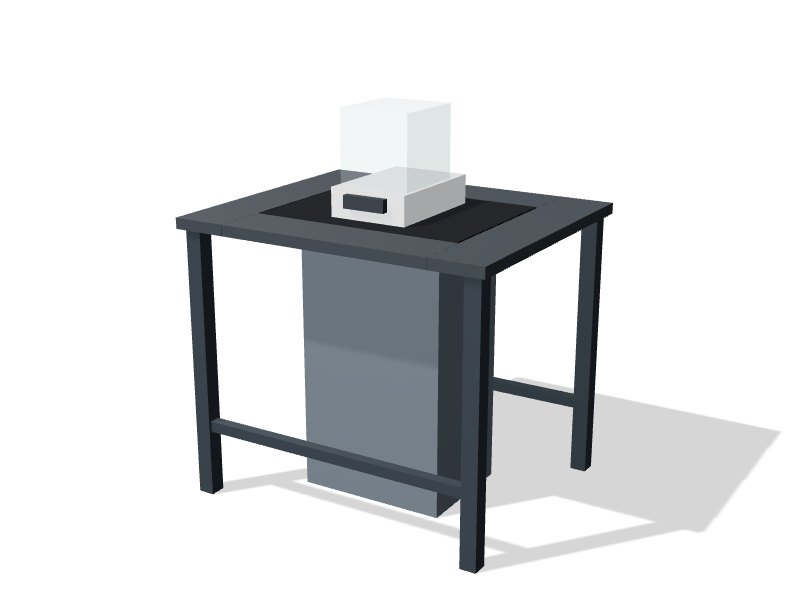
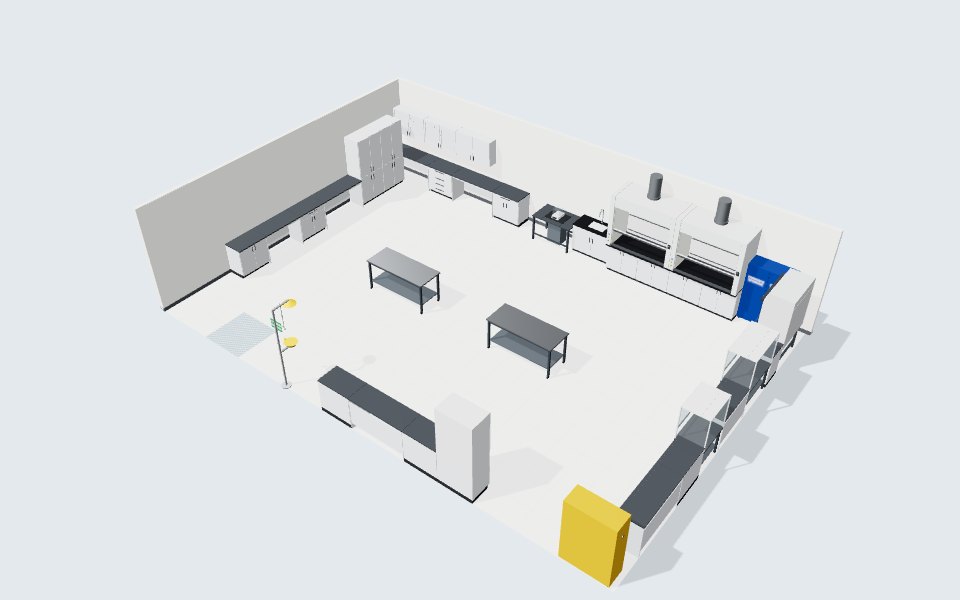
In a combined suite, give each zone its own wall. Put intake and locked evidence storage next to the entry, trace examination where light is good and traffic is low, drug chemistry hoods on the wall farthest from the door, and DNA work in the quietest corner with its own consumables. Place examination tables in the middle of the room with at least 1.2 m (4 ft) of clear space around them so analysts can walk all the way around an exhibit. Keep the balance away from hoods and doors, where drafts and vibration upset readings.
Locate the emergency shower and eyewash near the exit. Card access at the door and a log of who enters support chain of custody.
Finishes and worktops
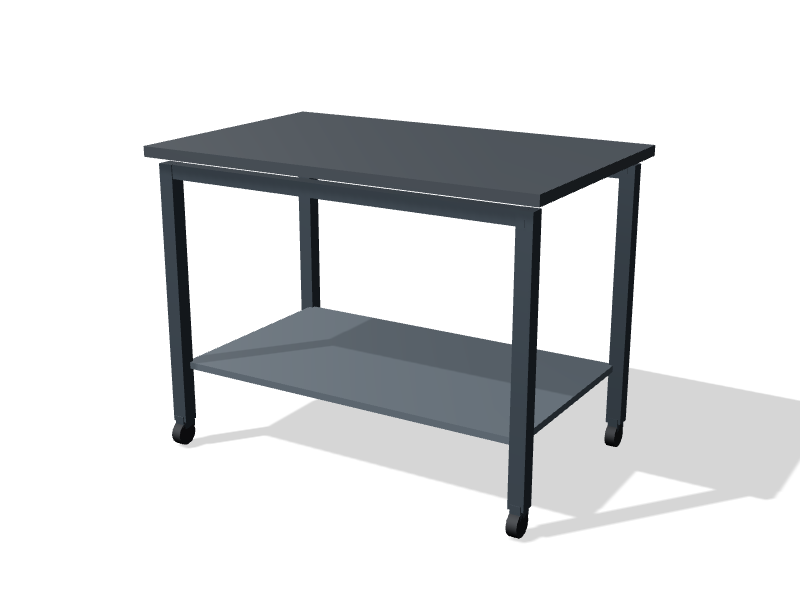
Surfaces have to stand up to daily decontamination with bleach and alcohol, which DNA labs use heavily. Phenolic resin worktops resist these cleaners and suit most of the room. Use epoxy at drug chemistry sinks and hoods, and consider stainless steel worktops for examination tables, where frequent bleach wipes and smooth seams help prevent carry-over between exhibits. Painted steel casework with sealed joints is a practical default. Avoid open shelving over DNA benches, because it collects dust.
Utilities and services
- Hood exhaust for drug chemistry, plus local exhaust for instrument vents and the fuming chambers used for fingerprints
- Gas supplies for GC and GC-MS, usually helium or hydrogen, with nitrogen for sample evaporation
- Purified water for DNA work and reagent preparation
- Dedicated power with UPS for instruments and the laboratory information system
- Data and security wiring for card access, cameras and evidence tracking
Compliance points in Canada
Canadian forensic labs commonly hold ISO/IEC 17025 accreditation, and assessors look closely at contamination control, evidence handling and records. Biological evidence falls under the Canadian Biosafety Standard, normally at CL2. Controlled substances need secure storage and tight records under federal rules. Hoods should be certified against CSA Z316.5, and the shower and eyewash should meet ANSI Z358.1. The lab's quality manager and biosafety officer set the final zoning rules.
About the starting layout
The 3D starting layout is a 13 by 9 m (43 by 30 ft) combined suite: evidence lockers and an intake station on the left wall, trace microscopy and drug chemistry hoods on the back wall, a DNA zone with a biosafety cabinet and two PCR workstations on the right, and two examination tables in the centre. Adapt the zones in the lab planner, or book a consultation if you are planning separate pre- and post-PCR rooms.
Starting layout: bill of materials
33 items in a 13 × 9 m room with a 3 m ceiling. Budgetary list prices; adjust anything in the planner.
| Code | Product | Qty | Unit |
|---|---|---|---|
| BC-4D-0600 | Base cabinet, 4 drawers Painted steel, Arctic white · Phenolic resin, charcoal | 1 | $1,750 |
| BC-4D-0900 | Base cabinet, 4 drawers Painted steel, Arctic white · Phenolic resin, charcoal | 3 | $2,170 |
| BC-DD-0900 | Base cabinet, drawer over doors Painted steel, Arctic white · Phenolic resin, charcoal | 2 | $1,800 |
| BC-HD-0900 | Base cabinet, hinged doors Painted steel, Arctic white · Phenolic resin, charcoal | 2 | $1,660 |
| BC-KS-1200 | Knee space with modesty panel Painted steel, Arctic white · Phenolic resin, charcoal | 2 | $980 |
| BC-KS-1500 | Knee space with modesty panel Painted steel, Arctic white · Phenolic resin, charcoal | 5 | $1,160 |
| BC-SK-1200 | Sink base with epoxy sink & faucet Painted steel, Arctic white · Epoxy resin, black | 1 | $3,180 |
| BS-A2-1200 | Biosafety cabinet, Class II A2 | 1 | $14,800 |
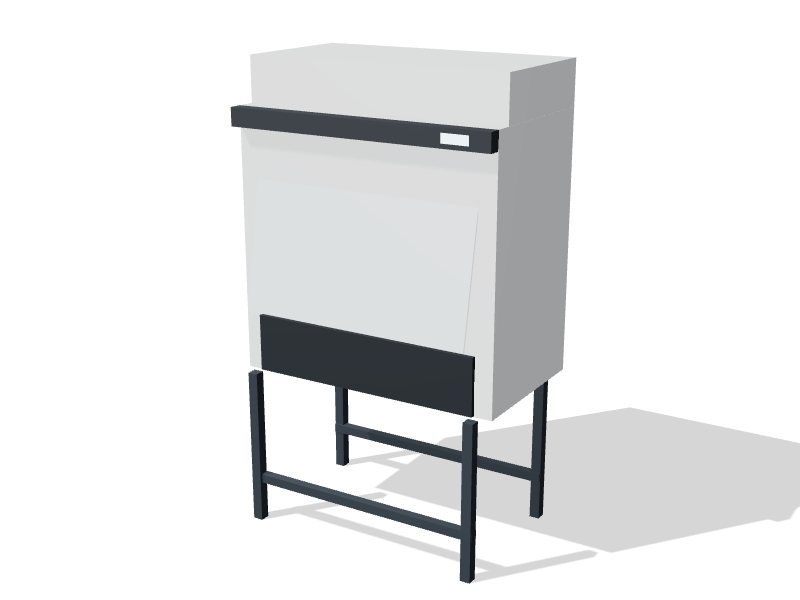
| BT-GR-1200 | Anti-vibration balance table | 1 | $3,100 |
| ES-CB-0600 | Emergency shower & eyewash | 1 | $1,850 |
| FH-BP-1800 | Benchtop fume hood, bypass Painted steel, Arctic white · Fiberglass liner | 2 | $12,100 |
| MT-C-1800 | Mobile lab table Stainless steel 316 | 2 | $2,660 |
| PW-UV-0900 | PCR workstation with UV | 1 | $4,900 |
| PW-UV-1200 | PCR workstation with UV | 1 | $5,800 |
| SC-CR30-1090 | Corrosives cabinet, 30 gal | 1 | $2,290 |
| SC-FL45-1090 | Flammable liquids cabinet, 45 gal | 1 | $2,480 |
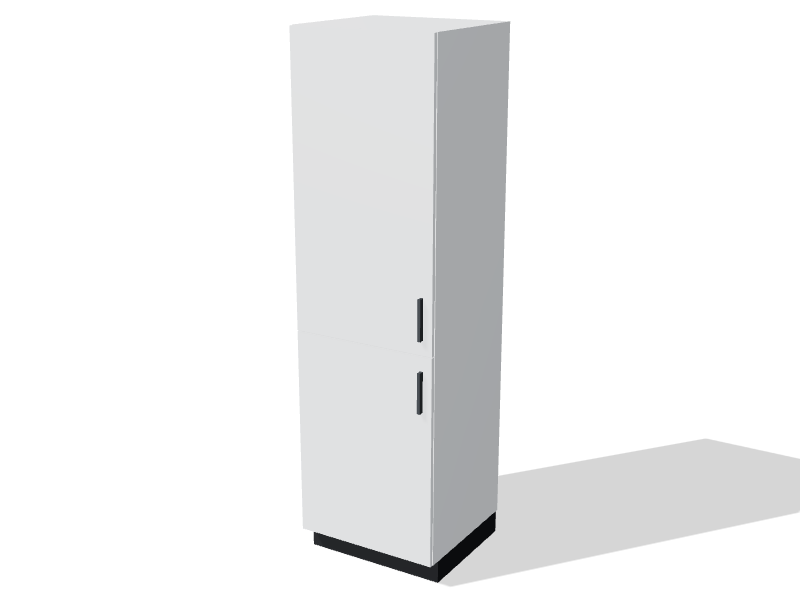
| TC-ST-0900 | Tall storage cabinet Painted steel, Arctic white | 3 | $2,050 |
| WC-GL-1200 | Wall cabinet, glass doors Painted steel, Arctic white | 2 | $1,290 |
| WC-SD-1200 | Wall cabinet, solid doors Painted steel, Arctic white | 1 | $1,140 |
| Starting layout total | $100,730 |