The 1200 mm model
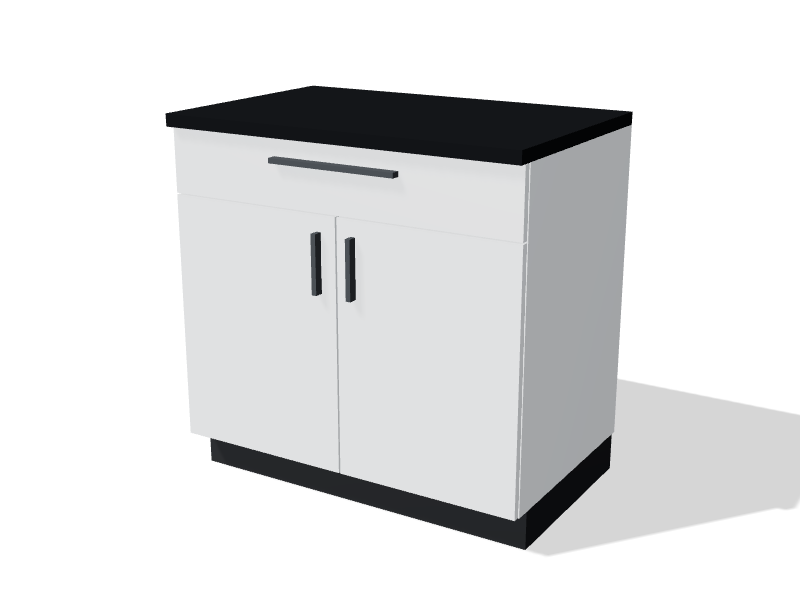
BC-DD-1200 is the 1200 mm (47 in) wide version of the base cabinet, drawer over doors. It is 560 mm deep and 900 mm high, floor-standing. It also comes in 600 mm, 900 mm.
Price by option at 1200 mm
| Option | Choice | List price |
|---|---|---|
| Finish | Painted steel, Arctic white | $2,310 |
| Finish | Painted steel, Slate blue | $2,310 |
| Finish | Solid phenolic, Pearl grey | $2,530 |
| Finish | Maple veneer | $2,460 |
| Finish | Stainless steel 304 | $3,130 |
| Worktop | Epoxy resin, black | $2,310 |
| Worktop | Phenolic resin, charcoal | $2,180 |
| Worktop | Stainless steel 316 | $2,640 |
| Worktop | No worktop | $1,810 |
What it's for
The drawer-over-doors cabinet is the default unit in most lab runs because it does two jobs in one footprint. The drawer holds the small things a person at that bench reaches for all day, such as labels, markers, tips, spatulas and gloves. The cupboard below takes bulk supplies, glassware and spare containers. When a planner does not yet know exactly what will be stored at a given bench, this is the safest choice.
Construction and features
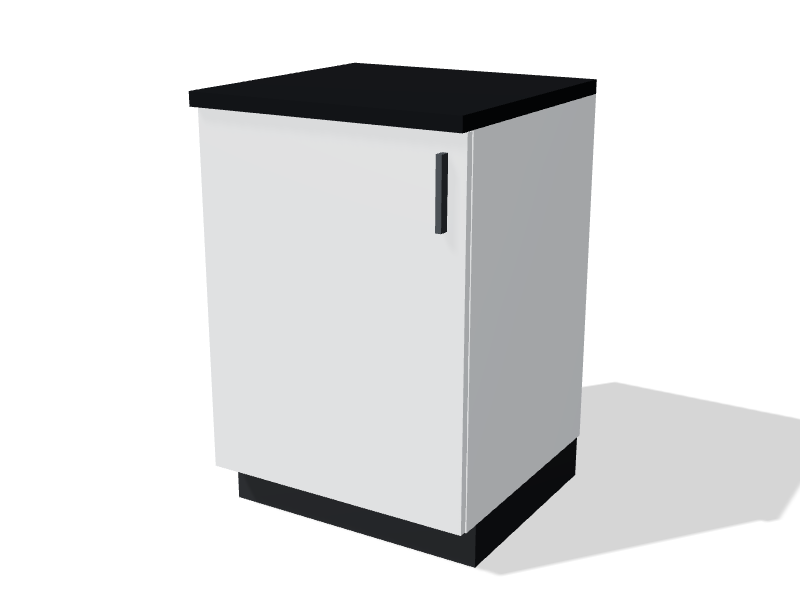
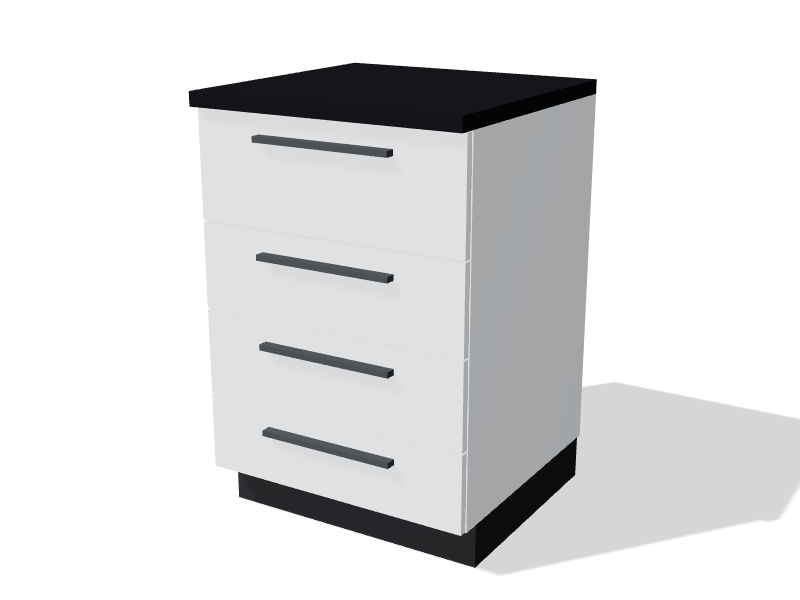
One shallow drawer sits directly under the worktop, above a cupboard with an adjustable shelf. In good-quality lab casework the drawer runs on slides with a positive stop, a horizontal rail between drawer and doors stiffens the carcass under a heavy worktop, and drawer fronts and doors line up across the whole run.
Construction typically depends on the finish:
- Painted steel: formed sheet steel with welded joints and a baked, chemical-resistant powder coat. The common choice for general wet chemistry.
- Solid phenolic: moisture- and corrosion-resistant panels for humid rooms and frequent wet cleaning.
- Maple veneer: wood casework for teaching rooms, dry instrument areas and spaces where a warmer look matters.
- Stainless 304: for washdown, sterile or very humid rooms where a painted finish would eventually fail.
The steel, wood or phenolic casework guide compares these in depth.
Sizes and options
Choose the cabinet finish (painted steel in Arctic white or Slate blue, solid phenolic, maple veneer or stainless 304) and the worktop: epoxy resin, phenolic resin, stainless 316, or none if a continuous top spans several cabinets.
Where it fits
Most perimeter runs in a high school science lab and an environmental testing lab are built largely from combination cabinets, with door or drawer units mixed in where a specific need appears. They also anchor the wall benches of a pharmaceutical QC lab, where the drawer keeps documentation and small consumables close to each analyst.
Planning notes
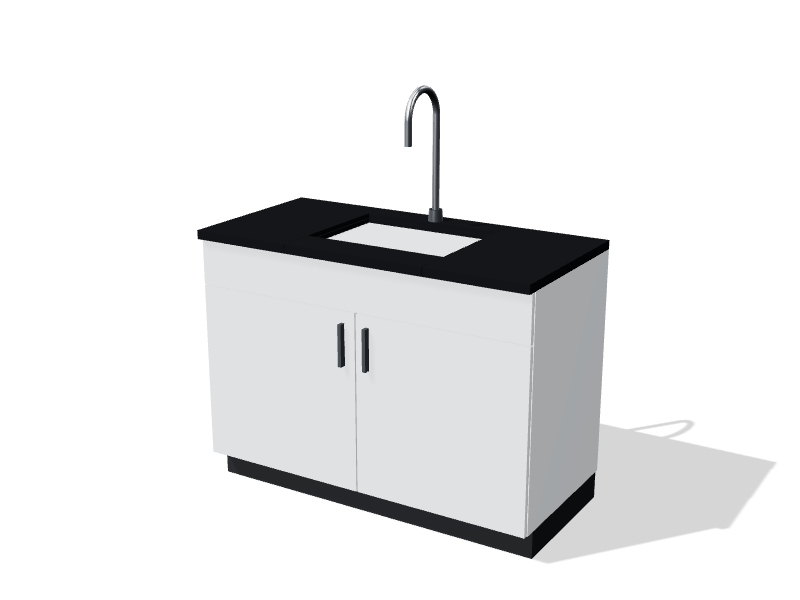
- Lay out a run in combination cabinets first, then swap individual units for drawers, doors, sinks or knee spaces as the use becomes clear. The drawer line and worktop stay continuous.
- Keep cabinets from one product line within a run. Mixed drawer heights look untidy and complicate a continuous top.
- In the 1200 mm unit the cupboard is wide. Ask for the shelf load rating and keep heavy items such as bulk salts and water jugs on the cabinet floor.
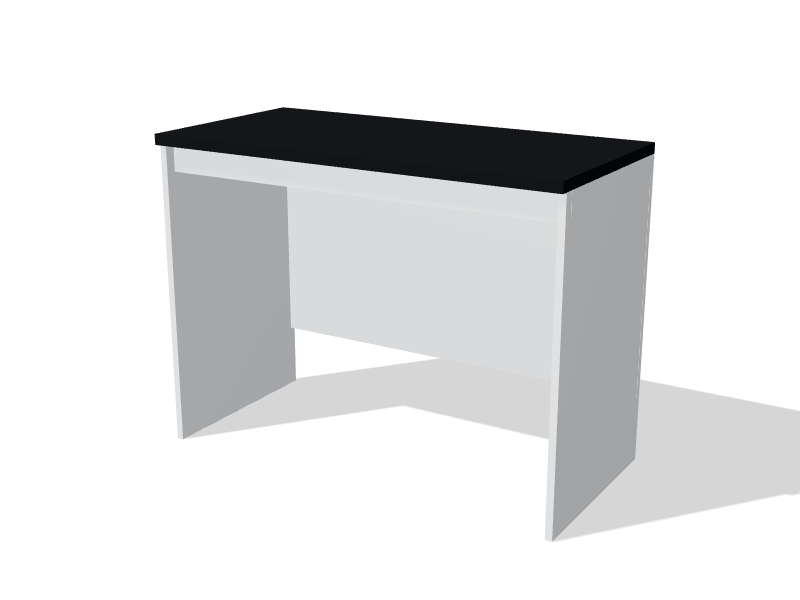
- At 900 mm (35½ in) the worktop suits standing work. For seated tasks, insert a knee space between combination cabinets rather than lowering the whole run.
- Check the run length in the lab planner so fillers and corners land where you expect.
All sizes
| Code | Width | Depth × height | From |
|---|---|---|---|
| BC-DD-0600 | 600 mm (23½ in) | 560 × 900 mm | $1,240 |
| BC-DD-0900 | 900 mm (35½ in) | 560 × 900 mm | $1,520 |
| BC-DD-1200 | 1,200 mm (47 in) | 560 × 900 mm | $1,810 |