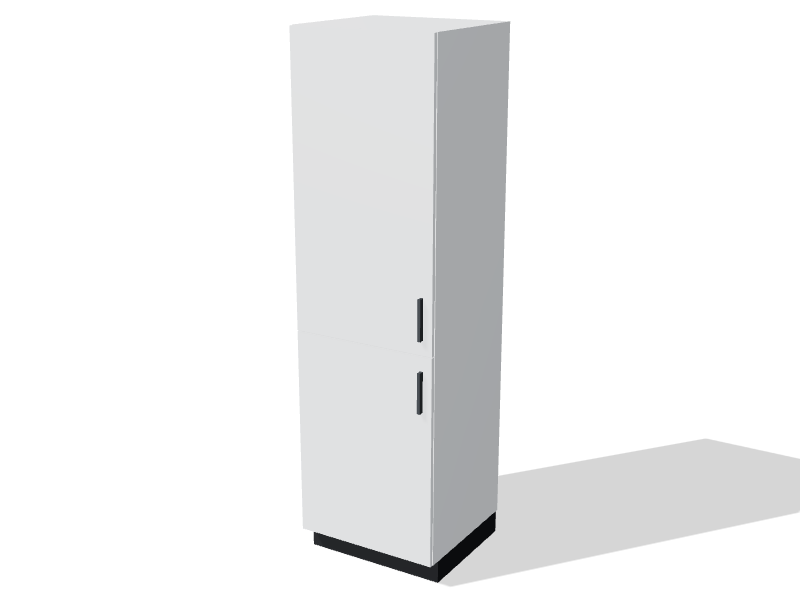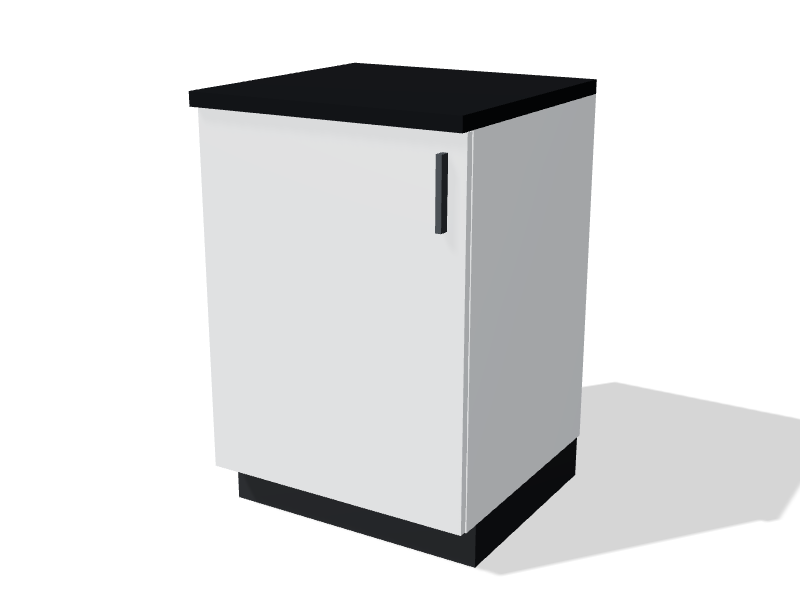
The 450 mm model
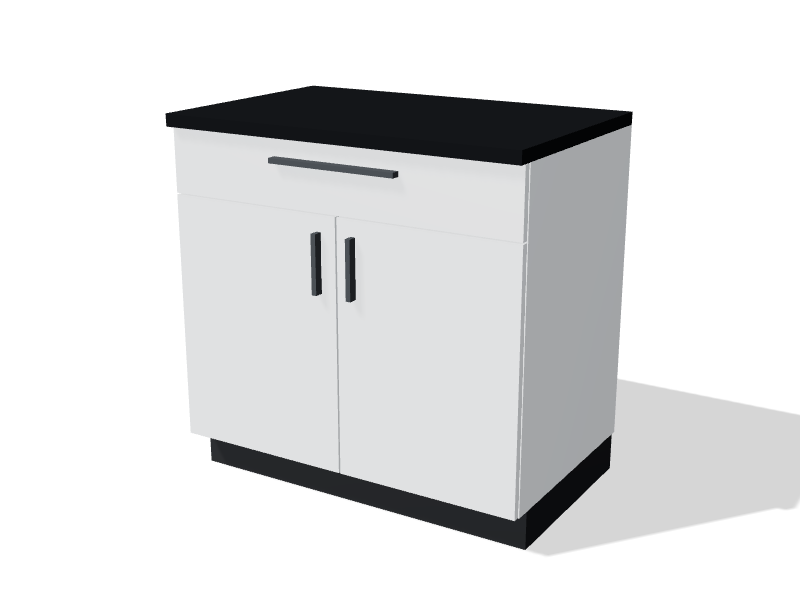
BC-HD-0450 is the 450 mm (17½ in) wide version of the base cabinet, hinged doors. It is 560 mm deep and 900 mm high, floor-standing. It also comes in 600 mm, 900 mm, 1200 mm.
Price by option at 450 mm
| Option | Choice | List price |
|---|---|---|
| Finish | Painted steel, Arctic white | $1,170 |
| Finish | Painted steel, Slate blue | $1,170 |
| Finish | Solid phenolic, Pearl grey | $1,290 |
| Finish | Maple veneer | $1,250 |
| Finish | Stainless steel 304 | $1,610 |
| Worktop | Epoxy resin, black | $1,170 |
| Worktop | Phenolic resin, charcoal | $1,120 |
| Worktop | Stainless steel 316 | $1,290 |
| Worktop | No worktop | $980 |
What it's for
A hinged-door base cabinet is the plain cupboard under a lab worktop. It takes the bulky items that do not suit drawers: cases of consumables, wash bottles in quantity, spare glassware, small instruments between uses, and sealed waste containers waiting for pickup. With one open interior and a single adjustable shelf, it adapts to whatever the lab stores this year instead of locking in a layout chosen at design time.
It is general storage, not safety storage. Flammable solvents belong in a flammable liquids cabinet, and concentrated acids and bases in a dedicated corrosives cabinet.
Construction and features
A good lab base cabinet is a rigid, self-supporting box, so the weight of the worktop and people leaning on it do not rack the carcass or misalign the doors. This unit has:
- Full-overlay doors that cover the cabinet face, giving a flat front with narrow gaps that is easy to wipe down.
- 270° hinges, so a door can swing back flat against the adjacent cabinet instead of sticking out into the aisle.
- An adjustable shelf that can be reset at different heights as storage needs change.
- A leveling toe kick, which lets the installer level a whole run on an uneven slab so the worktop sits flat with tight seams. The recess also lets people stand close to the bench.
In painted steel, cabinets of this type are typically formed and welded sheet steel with a baked, chemical-resistant powder coat. Solid phenolic tolerates moisture and frequent wet cleaning, maple veneer suits drier teaching and instrument rooms, and stainless 304 suits washdown or sterile areas. The SEFA 8 casework standards guide explains the load, finish and durability tests to ask a supplier about.
Sizes and options
Options are the cabinet finish (painted steel in Arctic white or Slate blue, solid phenolic, maple veneer or stainless 304) and the worktop (epoxy resin, phenolic resin, stainless 316, or none when a continuous top spans several cabinets).
Where it fits
Door cabinets appear in almost every wet lab. They carry much of the storage load in a research chemistry lab and a university teaching lab, where bulky student kits need a home between sessions. They also suit a food testing lab that goes through large volumes of sample containers and media supplies.
Planning notes
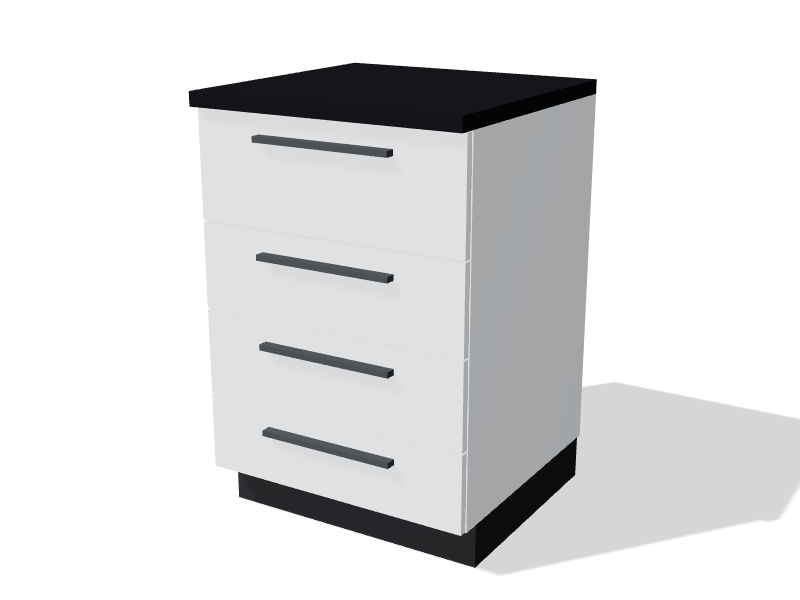
- Mix door and drawer units on purpose. A run of nothing but doors forces people to kneel and dig for small items.
- At an inside corner, choose the hinge side so the door can open fully without hitting the return run.
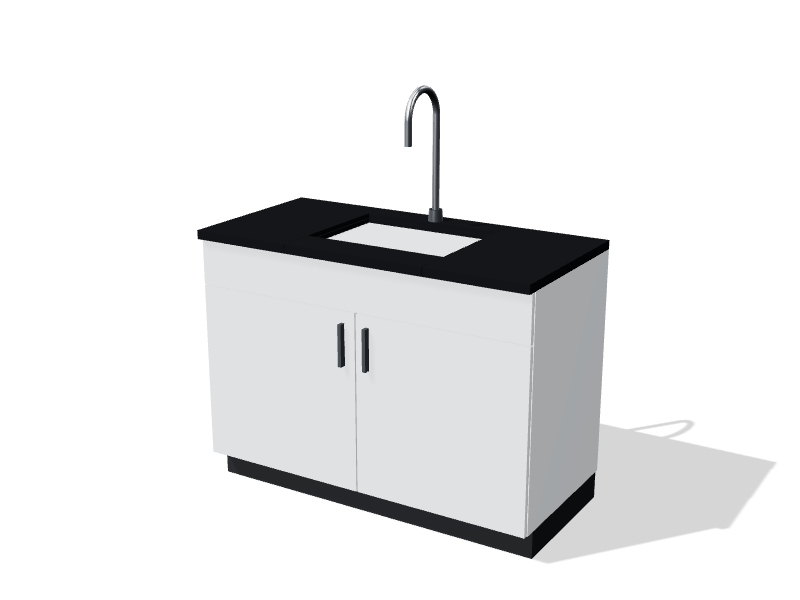
- If a drain line or service riser must pass through the cabinet, it takes part of the shelf. Decide which units carry services before ordering.
- Check the toe kick against the floor finish. Coved sheet flooring often needs to run up behind the kick.
- If waste containers will live here, ask your EHS group whether that waste stream needs ventilated or secondary-contained storage instead.
All sizes
| Code | Width | Depth × height | From |
|---|---|---|---|
| BC-HD-0450 | 450 mm (17½ in) | 560 × 900 mm | $980 |
| BC-HD-0600 | 600 mm (23½ in) | 560 × 900 mm | $1,090 |
| BC-HD-0900 | 900 mm (35½ in) | 560 × 900 mm | $1,380 |
| BC-HD-1200 | 1,200 mm (47 in) | 560 × 900 mm | $1,640 |