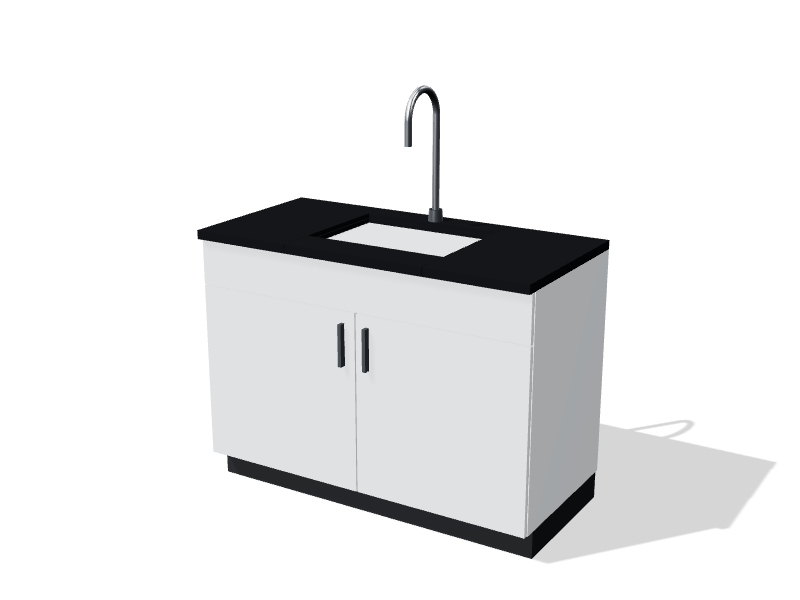
The 900 mm model
BC-SK-0900 is the 900 mm (35½ in) wide version of the sink base with epoxy sink & faucet. It is 560 mm deep and 900 mm high, floor-standing. It also comes in 1200 mm.
Price by option at 900 mm
| Option | Choice | List price |
|---|---|---|
| Finish | Painted steel, Arctic white | $2,730 |
| Finish | Painted steel, Slate blue | $2,730 |
| Finish | Solid phenolic, Pearl grey | $3,010 |
| Finish | Maple veneer | $2,920 |
| Finish | Stainless steel 304 | $3,790 |
| Worktop | Epoxy resin, black | $2,730 |
| Worktop | Phenolic resin, charcoal | $2,630 |
| Worktop | Stainless steel 316 | $2,970 |
| Worktop | No worktop | $2,350 |
What it's for
The sink base is where glassware gets rinsed, solutions are made up, samples are washed and hands are cleaned after work. Unlike the other base cabinets, it is mostly an access space: the area under the bowl is kept for the trap, supply lines and shut-off valves rather than storage.
Construction and features
The unit includes a molded epoxy sink, a gooseneck faucet and a cabinet with an open back, so plumbing from the wall or a service chase reaches the bowl without panels being cut on site. Epoxy resin is a long-standing lab sink material because it resists a broad range of acids, bases and solvents and tolerates hot water. Molded bowls typically have rounded inside corners that are easy to clean.
The faucet comes with a vacuum breaker. It stops dirty water from being siphoned back into the building supply if a hose is left submerged in a vessel or a sink fills while the faucet is open. Plumbing codes generally require backflow protection on lab water outlets, and the vacuum breaker provides it at the fixture.
The tall gooseneck spout leaves room to fill large flasks and rinse long glassware under the stream. When comparing sink cabinets, look for a cabinet floor and door backs that tolerate constant drips, easy access to the trap, and shut-off valves that can be reached without crawling into the cabinet.
Sizes and options
Choose a 900 or 1200 mm width (35½ or 47¼ in); both are 560 mm (22 in) deep and 900 mm (35½ in) high. The 900 mm unit suits a rinse and hand-wash station in a smaller lab. The 1200 mm unit leaves more worktop around the sink for staging dirty and clean glassware.
The cabinet finish can be painted steel, solid phenolic, maple veneer or stainless 304. Because a sink cabinet lives with splashes and humidity, solid phenolic or stainless usually lasts longest here. Worktop choices are epoxy resin, phenolic resin, stainless 316 or none.
Where it fits
Every wet lab needs at least one. A microbiology lab (CL2) needs a hand-washing sink near the exit of the containment zone, kept separate from any sink used for media or glassware. A water treatment plant lab and a mining and geochemistry assay lab work their sinks hard with sample washing and rinse water.
Planning notes
- Plan the drain early. Many municipalities limit what labs may discharge to sewer, and some buildings need acid-resistant drain lines or a neutralization tank; see lab sinks and drainage.
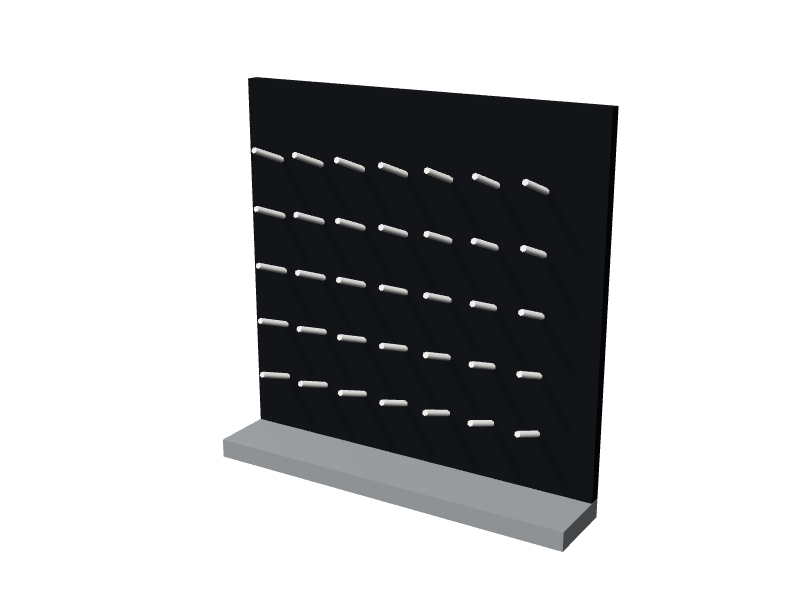
- Mount an epoxy pegboard on the wall behind the sink so its drip trough drains into the bowl.
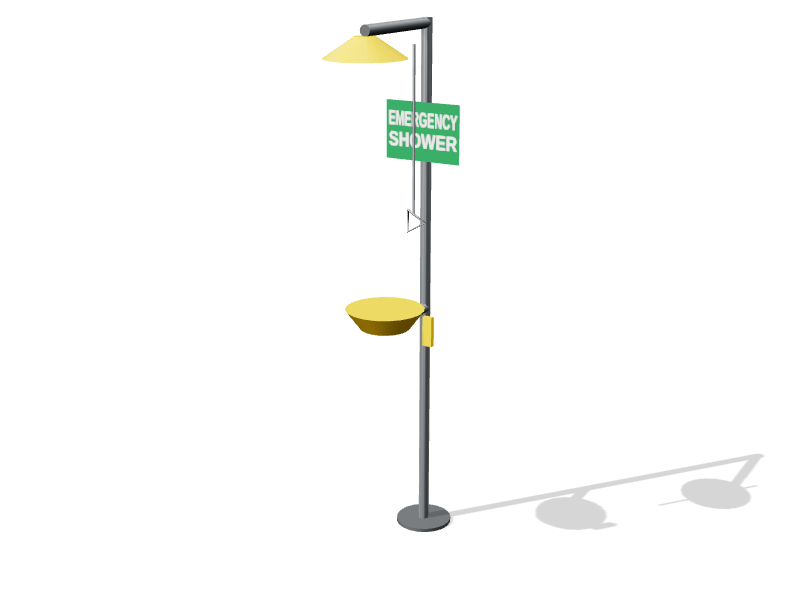
- A faucet-mounted eyewash is convenient, but it does not replace a plumbed emergency eyewash unless it meets ANSI Z358.1 and your safety officer accepts it.
- Keep sinks away from balance tables and from instruments that cannot tolerate splashes.
- Locate shut-off valves where a person can reach them in an emergency without removing panels.
All sizes
| Code | Width | Depth × height | From |
|---|---|---|---|
| BC-SK-0900 | 900 mm (35½ in) | 560 × 900 mm | $2,350 |
| BC-SK-1200 | 1,200 mm (47 in) | 560 × 900 mm | $2,680 |